



Why Yarn Quality Determines Textile Product Success
Yarn quality is the single most important variable in textile manufacturing. Every fabric, garment, or home textile product starts with yarn, and the quality of that yarn determines everything that follows in the production process.
A weak, uneven, or poorly conditioned yarn will cause breakage on the loom, uneven dyeing in finishing, and rejects at the final inspection stage. Importers who overlook yarn quality factors at the sourcing stage often discover the consequences only after committing to bulk orders, by which point the losses are significant.
New to textile sourcing? Vigour Impex helps importers source verified, quality-tested yarn and fabric from Pakistan. Explore our sourcing services at vigourimpex.com to understand how we support buyers from sample to shipment.
What Is Yarn Quality in Textile Manufacturing?
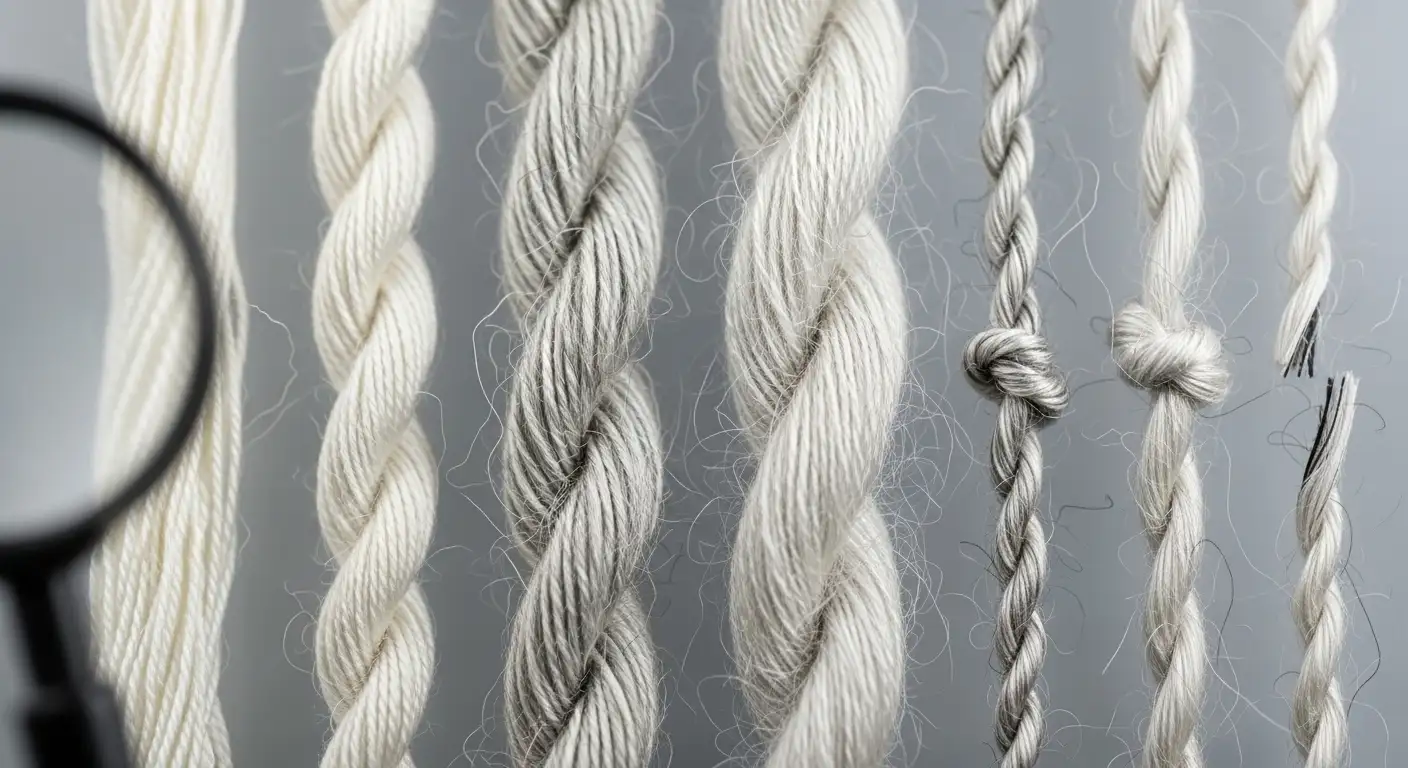
Yarn quality refers to a set of measurable physical properties that determine how a yarn will perform during weaving, knitting, dyeing, and finishing. It is not a single metric but a combination of factors that together define whether a yarn is fit for its intended purpose.
High-quality yarn produces consistent fabric with predictable performance. Low-quality yarn introduces variability, which translates directly into production inefficiency, higher waste rates, and inconsistent end products.
For importers, yarn quality is a procurement risk. Buying from suppliers who cannot demonstrate consistent quality means accepting uncertainty into every order, every production run, and every shipment.
Yarn quality is defined by its fiber composition, structural properties, and processing consistency. Importers should evaluate quality using standardized test reports, not just supplier claims or price as a proxy.
What Are the Most Important Yarn Quality Factors?
There are five core quality parameters for which every importer should require documentation before approving a yarn supplier. Each factor affects a different stage of the textile production process.
| Quality Factor | What to Check | Why It Matters |
| Fiber Strength | Tenacity in cN/tex | Prevents yarn breakage in production |
| Yarn Twist | Twist per meter (TPM) | Affects fabric structure and durability |
| Evenness (CV%) | Uster CV% report | Ensures consistent fabric appearance |
| Staple Length | Fiber length in mm | Longer staple = smoother, stronger yarn |
| Moisture Content | Regain percentage | Affects weight, dye uptake and feel |
Fiber Strength and Tensile Durability
Fiber strength determines how much tension a yarn can withstand before breaking. In weaving, yarn is placed under constant mechanical stress. A yarn with insufficient tenacity will break repeatedly, causing loom downtime, fabric defects, and production delays.
Strength is measured in centinewtons per tex (cN/tex). Importers should request tenacity test reports from accredited labs such as Intertek, SGS, or Bureau Veritas. Acceptable tenacity ranges vary by yarn type, but any supplier unable to provide this data should be treated as a risk.
Yarn Twist and Structural Stability
Twist is what holds fiber together in a yarn. The number of twists per meter (TPM) determines the yarn’s strength, softness, and behavior during fabric production. Too little twist and the yarn falls apart under tension. Too many twists and the fabric becomes stiff or prone to pilling.
Different end products require different twist levels. Woven fabrics typically require higher twist counts than knitted structures. Importers should specify twist requirements in their purchase orders and verify them through testing before bulk production.
Yarn Evenness and Uniformity
Evenness measures how consistent the yarn’s thickness is along its length. Uneven yarn produces fabric with visible thick and thin patches, which appear as defects in finished products. This is especially problematic for solid-color fabrics where any surface variation is immediately visible.
The standard measure for yarn evenness is the coefficient of variation (CV%), reported through Uster statistics. A lower CV% means more uniform yarn. World-class yarn typically falls in the top 25 to 50 percent of Uster statistics for its count and fiber type.
Fiber Length and Staple Quality
Longer staple fibers produce smoother, stronger, and more lustrous yarn. Short fibers create more joins per meter, which weakens the yarn and increases the likelihood of pilling in finished fabrics. Egyptian cotton and Supima cotton are examples of long-staple varieties that command higher prices precisely because of these quality advantages.
Importers sourcing cotton yarn should verify the average fiber length (measured in millimeters or inches) and request the fiber length distribution data from the supplier. Blended yarns should also disclose the fiber composition and the quality grade of each component.
Moisture Content and Conditioning
Moisture content affects yarn weight, dye uptake and hand feel. Yarn that is too dry becomes brittle and prone to breakage. Yarn with excessive moisture gains artificial weight, which means importers pay for water rather than fiber.
The standard measure is moisture regain percentage, which compares the weight of moisture in the yarn against the dry fiber weight. Standard regain values vary by fiber type. Cotton typically runs at around 8.5 percent, while wool can reach 16 to 18 percent. Importers should specify acceptable regain limits in their contracts.
The five quality factors importers must verify are fiber tenacity, twist count, evenness CV%, staple length and moisture regain. Each factor should be supported by a third-party lab test report before bulk orders are approved.
How Poor Yarn Quality Creates Expensive Production Problems
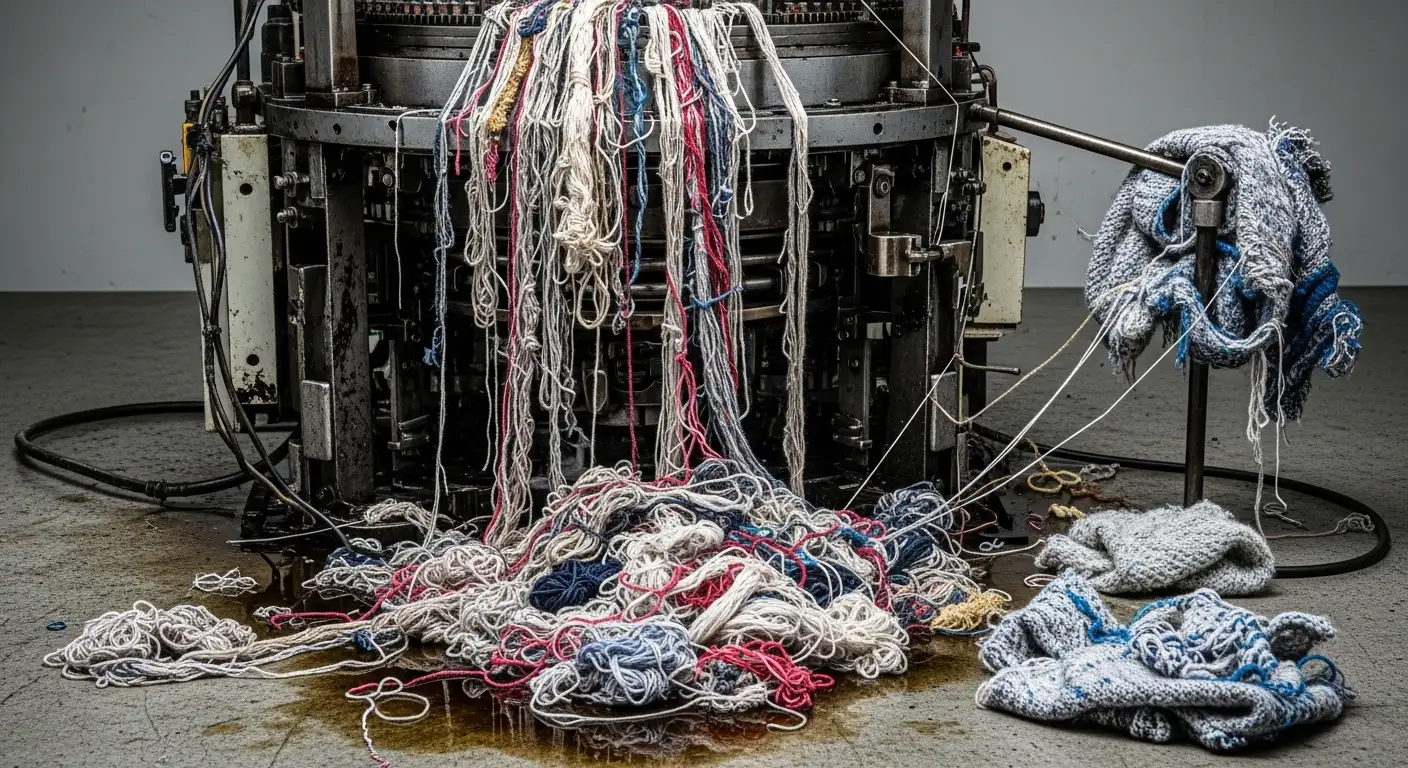
The cost of poor quality yarn is almost always higher than the cost of proper quality verification upfront. Importers who skip testing to save time or money at the sourcing stage typically pay far more in downstream consequences.
Uneven yarn causes fabric defects that lead to higher rejection rates at inspection. A factory running on low-quality yarn might see defect rates of 5 to 10 percent or higher, compared to under 2 percent for factories using verified quality inputs. Those rejected meters represent direct margin loss.
Weak yarn causes loom stoppages that reduce machine utilization and increase labor costs. Every stop-and-restart cycle on a weaving machine costs time and produces a defect at the point of breakage. High breakage rates can reduce a factory’s effective production output by 15 to 20 percent.
Inconsistent moisture content causes uneven dye uptake, which means fabrics come out of dyeing with shade variation across the roll. Shade variation is one of the most common causes of customer complaints and is almost impossible to correct after the fact without re-dyeing, which adds cost and delays delivery.
How to Verify Yarn Quality Before Bulk Orders?
Verification is not complicated, but it requires discipline. Importers who build a simple pre-order quality checklist into their sourcing process dramatically reduce their exposure to quality-related losses.
Requesting Lab Test Reports
Before approving any yarn supplier, ask for test reports from an accredited third-party laboratory. Reports should cover tenacity, elongation, evenness (CV%), twist, and moisture regain at a minimum. Reports from Intertek, SGS, or Bureau Veritas carry the most credibility with international buyers.
Check the date on the reports. Reports older than six months may not reflect current production quality, especially if the supplier has changed raw material sources. Request fresh reports from the current production batch whenever possible.
Evaluating Supplier Quality Control Systems
A supplier’s internal quality systems matter as much as their test results. A factory with robust in-process quality control catches problems early, before they become expensive. Ask suppliers about their testing frequency, the equipment they use, and how they handle non-conforming material.
Suppliers certified to ISO 9001 or with Uster quality management certification have demonstrated a commitment to systematic quality control. These certifications are not guarantees, but they indicate a level of organizational discipline that reduces sourcing risk.
Not sure how to evaluate a yarn supplier’s quality systems? Vigour Impex connects importers with pre-vetted Pakistani textile suppliers who meet international quality and compliance standards. Contact us before committing to bulk orders.
Ordering Sampling and Trial Production
Never approve a new yarn supplier based on documents alone. Order a sample lot of at least 100 to 200 kilograms and have it processed through your normal production workflow. Sampling reveals real-world performance issues that lab reports sometimes miss.
Run the sample through weaving or knitting, then through dyeing and finishing. Document the results, including breakage rates, fabric evenness, and dye uniformity. Use that data to make your bulk order decision and to set the quality benchmark for future deliveries.
Why Reliable Textile Sourcing Partners Matter for Yarn Quality
Most importers do not have the time, resources, or local presence to audit yarn suppliers in Pakistan or other sourcing countries on their own. This is where working with an experienced textile sourcing partner provides real, measurable value.
Sourcing partners also help importers translate quality requirements into language suppliers understand. Specifying yarn evenness as CV% less than 14 percent for a 30-count ring-spun cotton, for example, is more useful than saying you want good quality. Partners bridge that gap between what importers need and what suppliers can deliver.
Working with a vetted sourcing partner reduces risk and saves time. Learn more about Vigour Impex’s textile sourcing services
Final Thoughts: Smart Importers Focus on Yarn Quality First
Yarn quality is not a technical detail that only production managers need to understand. It is a commercial decision that directly affects your product quality, your customer relationships, and your margins.
Importers who treat yarn quality as a procurement priority rather than an afterthought make better sourcing decisions, build stronger supplier relationships, and deliver more consistent products to their buyers.
The verification process does not need to be complicated. Request the right documents, ask the right questions, and run trial production before committing to bulk. These three steps alone will protect you from the majority of yarn quality problems that cost importers money every year.
Ready to Source Yarn You Can Trust?
Vigour Impex works with importers across Europe and beyond to source quality-verified yarn and textile products from Pakistan. From first sample to final shipment, we manage quality, compliance, and communication so you do not have to. Get in touch today at vigourimpex.com and start sourcing with confidence.
Frequently Asked Questions
What determines yarn quality in textile manufacturing?
Yarn quality depends on fiber strength (tenacity), twist count, evenness (CV%), staple length, and moisture content. These properties are verified through standardized lab test reports from accredited bodies such as Intertek or SGS rather than visual checks alone.
How do importers test yarn quality before buying?
Importers request third-party lab reports on key parameters, review the supplier’s internal quality control processes, and order sample lots for trial runs in their own production. The most reliable method combines document checks with actual testing before approving bulk orders.
Why is yarn evenness important for fabric production?
Yarn evenness (measured as CV%) ensures consistent thickness along the length. Uneven yarn creates visible thick and thin areas in the fabric, resulting in obvious defects after weaving and especially after dyeing in solid colors. High evenness is critical for any fabric where surface appearance matters.
Can poor yarn quality affect finished textile products?
Yes, significantly. Poor yarn leads to frequent loom breakages, reduced production efficiency, uneven dyeing with shade variations, higher rejection rates during final inspection, and customer issues such as pilling, shrinkage, or inconsistent texture. The downstream costs from poor yarn quality usually far exceed the cost of proper quality checks before sourcing.