



For brands, retailers, and manufacturers alike, textile sourcing is one of the biggest line items on the balance sheet and one of the easiest places for costs to quietly spiral out of control. Rising raw material prices, shipping volatility, and inconsistent supplier performance can all chip away at margins. Yet cutting corners on quality to save money often backfires, leading to returns, damaged brand reputation and lost customer trust.
The good news is that reduce textile sourcing costs doesn’t have to mean sacrificing the quality your customers expect. With the right strategy, supplier relationships and sourcing structure, businesses can meaningfully lower costs while actually improving consistency and reliability. This guide walks through practical, proven approaches to textile cost reduction from supplier selection to supply chain management so you can build a leaner, smarter sourcing operation.
Why Textile Sourcing Costs Get Out of Control
Before optimizing anything, it’s worth understanding where inefficiencies typically creep in. Most businesses lose money in textile procurement not because of one single bad decision, but through a series of small, compounding inefficiencies:
- Fragmented supplier relationships: Working with too many small suppliers instead of consolidating with a few reliable partners increases administrative overhead, shipping costs, and quality inconsistency.
- Reactive rather than strategic buying: Ordering in response to immediate need, rather than planning ahead, often means paying rush premiums and missing bulk discount opportunities.
- Poor supplier vetting: Choosing suppliers based on price alone, without proper vetting, frequently leads to costly rework, delays, and inconsistent fabric quality.
- Lack of visibility into the supply chain: Without clear tracking across raw material sourcing, production and shipping, it’s difficult to identify where money is actually being lost.
Addressing these root causes is far more effective than simply negotiating harder on price and it’s the foundation of any serious textile sourcing strategies overhaul.
1. Consolidate Your Supplier Base
One of the most immediate ways to reduce textile sourcing costs is to work with fewer, larger, more capable suppliers rather than spreading orders across many smaller ones. Consolidation offers several advantages:
- Better pricing through volume: Larger order volumes with a single supplier typically unlock tiered pricing that smaller, fragmented orders never reach.
- Lower administrative costs: Managing fewer relationships means less time spent on contract negotiation, quality audits, and communication overhead.
- Simplified logistics: Consolidated shipments from a smaller number of wholesale fabric suppliers reduce freight costs and the complexity of coordinating multiple shipping schedules.
This doesn’t mean putting all your eggs in one basket maintaining at least one backup supplier for critical materials is smart risk management. But narrowing your primary supplier list to a handful of trusted, capable partners is one of the most effective textile sourcing strategies available to most businesses.
2. Diversify Sourcing Regions Strategically
Global sourcing decisions have a major impact on landed cost. While sourcing from a single region can simplify logistics, it also exposes your business to regional price fluctuations, tariff changes, and capacity constraints. Smart global textile sourcing balances cost, quality, and risk across regions.
Pakistan has become one of the most competitive options for cost-conscious buyers. Textile sourcing from Pakistan offers a compelling combination of factors: access to locally grown cotton (reducing raw material costs), a mature vertically integrated textile industry, competitive labor costs relative to quality output, and decades of export experience serving markets in the US, UK, and Europe.
Working directly with established textile manufacturers in Pakistan rather than through multiple layers of trading intermediaries can meaningfully lower per-unit costs while maintaining strong quality standards, since many Pakistani facilities handle the entire process in-house, from spinning and weaving to dyeing, finishing, and cut-and-sew.
3. Vet Suppliers Thoroughly Before You Commit
Poor supplier selection is one of the most expensive mistakes a business can make, even when the initial quoted price looks attractive. Learning how to find reliable textile suppliers upfront saves far more money over time than chasing the lowest bid.
A strong textile supplier selection process should include:
- Factory audits: Either in-person or via a trusted third-party inspection service, to verify production capacity, working conditions, and equipment quality.
- Sample evaluation: Requesting and thoroughly testing pre-production samples against your specifications before committing to a bulk order.
- Reference checks: Speaking with the supplier’s existing clients about reliability, communication, and how they handle problems when they arise.
- Financial stability review: Suppliers under financial strain are more likely to cut corners on materials or struggle to meet delivery timelines.
Reliable textile suppliers in Pakistan and other established sourcing hubs typically welcome this level of scrutiny, since it’s standard practice among experienced international buyers. A supplier who resists transparency is often a red flag worth taking seriously.
4. Use a Textile Sourcing Agent When It Makes Sense
For businesses new to a region or without dedicated procurement staff, working with a textile sourcing agent can significantly reduce both costs and risk. A good agent brings established relationships with vetted textile sourcing companies, local market knowledge, and negotiating leverage that an outside buyer typically doesn’t have on their own.
While an agent’s fee adds a layer of cost, it’s frequently offset by better pricing, fewer costly mistakes, and faster problem resolution. This is especially true for businesses sourcing from unfamiliar international markets, where cultural and logistical barriers can otherwise lead to expensive missteps. Many successful textile sourcing solutions for growing brands actually combine a mix of direct manufacturer relationships and agent-assisted sourcing for more complex or unfamiliar categories.
5. Optimize Order Volume and Timing
Bulk textile sourcing remains one of the most reliable ways to lower per-unit costs, but volume alone isn’t the whole story timing matters just as much.
- Plan orders around raw material price cycles. Cotton and synthetic fiber prices fluctuate seasonally and with global commodity markets. Buying ahead of anticipated price increases can meaningfully lower input costs.
- Consolidate smaller orders into larger production runs. Combining multiple SKUs or seasonal orders into a single larger production run reduces per-unit setup costs and often qualifies for better shipping rates.
- Avoid rush orders whenever possible. Expedited production and shipping typically carry significant premiums. Building a longer lead time into your planning process avoids these avoidable costs.
Effective bulk textile sourcing requires accurate demand forecasting, which means investing in better sales data and planning tools pays for itself many times over in avoided rush fees and overproduction waste.
6. Strengthen Textile Supply Chain Management
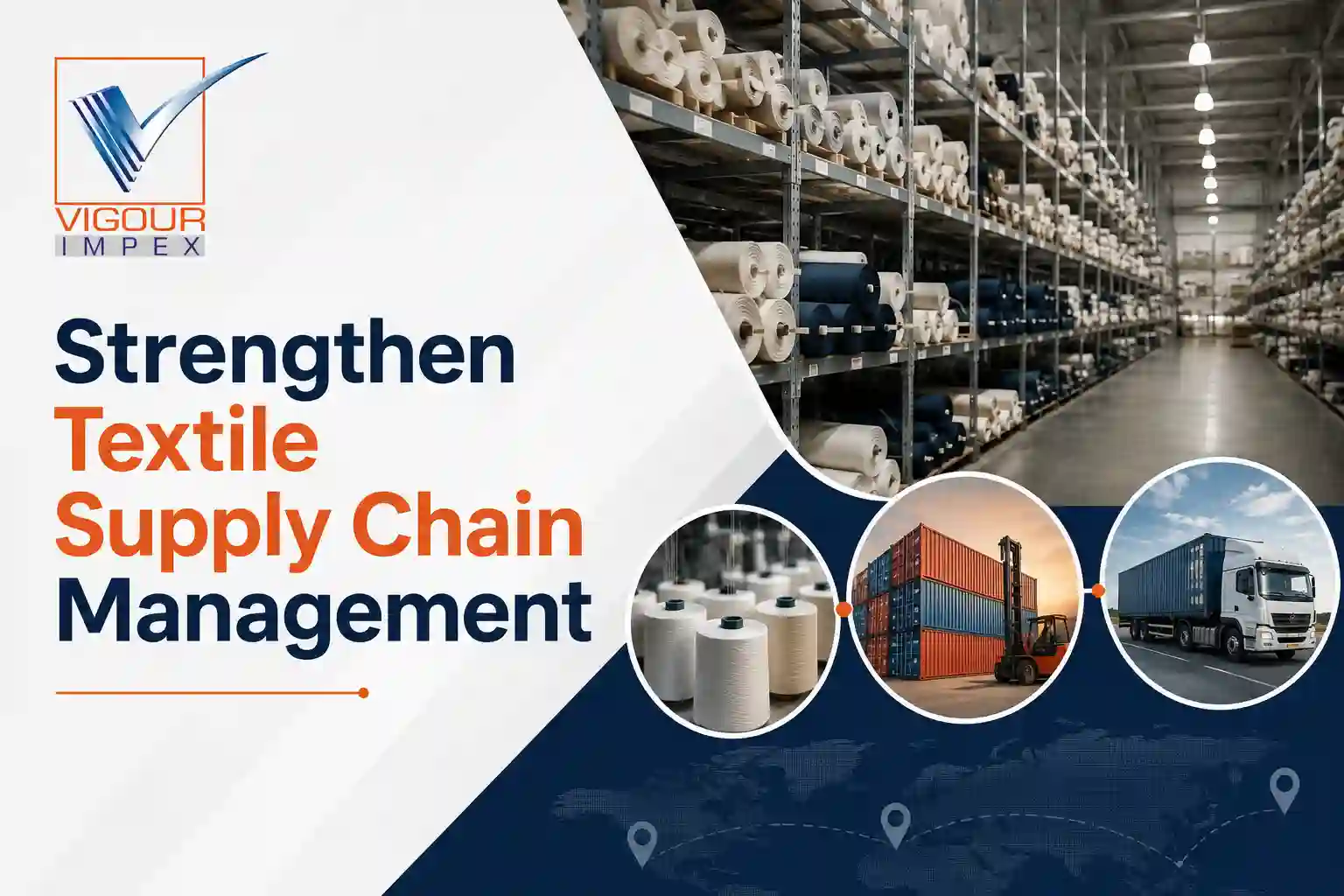
Cost-effective sourcing isn’t just about the initial purchase price it’s about managing the entire journey from raw material to finished, delivered product. Strong textile supply chain management identifies inefficiencies at every stage:
- Raw material sourcing: Locking in favorable terms with fiber and yarn suppliers, especially for vertically integrated manufacturers who control more of the process in-house.
- Production scheduling: Coordinating order timing to fill factory capacity efficiently, which often unlocks better pricing since manufacturers prioritize orders that keep their lines running smoothly.
- Freight and logistics optimization: Consolidating shipments, choosing the right shipping method for the timeline (sea freight over air freight when possible), and working with freight forwarders experienced in textile cargo.
- Inventory management: Avoiding both overstocking (which ties up capital) and understocking (which forces expensive rush reorders).
Businesses that treat sourcing as an integrated system, rather than a series of disconnected purchase orders, consistently achieve better cost-effective textile sourcing outcomes than those focused solely on negotiating unit price.
7. Never Sacrifice Textile Quality Control
It’s tempting to view quality control as a cost center to trim, but doing so almost always costs more in the long run through returns, chargebacks, and reputational damage. Robust textile quality control should be built into the sourcing process at multiple checkpoints:
- Pre-production sample approval: Verifying fabric weight, colorfastness, and construction before bulk production begins.
- In-line inspections: Catching problems during production, when they’re cheaper and faster to fix, rather than after a full run is complete.
- Final inspection before shipment: A last check against agreed specifications and international standards, ideally performed by an independent inspector.
Suppliers with strong internal quality systems often cost slightly more upfront but deliver significantly lower total cost when you factor in reduced defects, fewer delays, and fewer costly disputes. When evaluating textile sourcing companies, ask specifically about their quality control processes and request documentation of past inspection results.
8. Build Long-Term Supplier Partnerships
Transactional, price-only relationships with suppliers rarely deliver the best long-term value. Suppliers who see a buyer as a long-term partner rather than a one-time order are far more likely to offer priority production slots, more flexible payment terms, and better pricing on future orders.
Investing time in relationship-building pays real dividends: better communication when problems arise, more willingness to accommodate custom specifications, and often first access to new fabric developments or capacity before competitors. This kind of trust is difficult to build with the lowest bidder on any given order, but it’s exactly the foundation that the most successful textile procurement strategies are built on.
9. Consider Sustainable Sourcing as a Cost Strategy
Sustainable textile sourcing is often framed purely as a compliance or brand positioning issue, but it can also directly reduce costs. Certified organic or recycled fiber programs increasingly qualify for better financing terms, government incentives in some sourcing regions, and reduced regulatory risk in markets tightening environmental import standards.
Beyond direct savings, sustainable practices like water-efficient dyeing processes or reduced fabric waste in cutting often correlate with more efficient, better-managed factories overall. Suppliers investing in sustainability frequently have more modern equipment and tighter operational controls, which tends to translate into more consistent quality and fewer costly production errors.
10. Work With an Integrated Fabric and Textile Partner
One of the most overlooked ways to reduce costs is simplifying your supply chain by working with a single partner who handles multiple stages of production. Rather than sourcing fabric sourcing separately from cut-and-sew, dyeing, and finishing through different vendors, an integrated manufacturer can manage the entire process under one roof.
This approach among established fabric sourcing companies reduces the markup that accumulates at each handoff between separate vendors, shortens lead times since materials don’t need to travel between facilities, and simplifies quality control since one partner is accountable for the entire process. For buyers evaluating textile sourcing companies, this integration is often one of the clearest indicators of long-term cost efficiency.
Common Mistakes That Undermine Textile Cost Reduction Efforts
Even well-intentioned cost reduction initiatives can backfire if a few common pitfalls aren’t avoided. Understanding these mistakes upfront helps ensure your textile sourcing strategies actually deliver savings rather than creating hidden costs down the line.
Chasing the lowest quote without context. The cheapest supplier on paper isn’t always the cheapest in practice. Lower prices sometimes reflect inferior raw materials, weaker quality control, or unsustainable labor practices that lead to production delays and turnover. Always evaluate price alongside quality history, delivery reliability, and total landed cost not just the unit price on a quote sheet.
Switching suppliers too frequently. Constantly hopping between vendors to chase marginally better pricing disrupts the consistency and trust that leads to the best long-term deals. Frequent switching also means restarting the vetting and sample approval process each time, which adds hidden costs in staff time and quality risk.
Underestimating hidden logistics costs. A lower factory price can be completely offset by higher shipping costs, customs duties, or longer lead times that force expensive air freight instead of sea freight. Any serious textile procurement strategy needs to evaluate total landed cost, not just the ex-factory price.
Neglecting communication and documentation. Miscommunication about specifications, tolerances, or delivery expectations is one of the most common and most avoidable sources of costly rework. Clear, detailed tech packs and written agreements reduce the risk of expensive misunderstandings.
Treating sourcing as a one-time project. Markets shift, currencies fluctuate, and new suppliers emerge. Businesses that periodically reassess their sourcing strategy rather than locking into the same arrangement indefinitely consistently find new opportunities for textile cost reduction that static, “set it and forget it” sourcing relationships miss.
How Technology Is Changing Textile Procurement
Digital tools are reshaping how businesses manage textile procurement strategies, making it easier than ever to identify inefficiencies and negotiate from a position of strength. Cloud-based sourcing platforms allow buyers to compare quotes from multiple textile sourcing companies side by side, track order status in real time, and maintain a centralized record of supplier performance history.
Digital quality management systems are also making remote inspection more practical, allowing buyers to review production photos, lab test results, and inspection reports without needing an in-person visit for every checkpoint. This is particularly valuable for buyers managing global textile sourcing across multiple countries, where travel costs and time zone differences can otherwise slow down decision-making significantly.
Data analytics tools are increasingly used to forecast demand more accurately, which directly supports better order timing and volume planning two of the most impactful levers for reducing costs discussed earlier in this guide. As these tools become more accessible to mid-size and smaller businesses, not just large retailers, the gap between what a well-resourced sourcing team can achieve and what a lean, technology-enabled team can achieve continues to narrow.
Final Thoughts
Learning how to reduce textile production costs without compromising quality isn’t about finding a single silver-bullet tactic it’s about building a smarter, more strategic sourcing operation across every stage of the process. Consolidating suppliers, diversifying sourcing regions thoughtfully, investing in proper vetting and quality control, and building genuine long-term partnerships all compound to deliver meaningfully lower costs over time.
For many buyers, textile sourcing from Pakistan offers a particularly strong combination of cost efficiency, vertically integrated production, and export experience that’s hard to match elsewhere. Whether you work directly with manufacturers, through a trusted sourcing agent, or with an integrated partner handling the full production process, the businesses that treat cost reduction as a long-term strategic discipline not a one-time negotiation are the ones that consistently win on both price and quality.
Frequently Asked Questions
What is the most effective way to reduce textile sourcing costs?
Consolidating your supplier base and committing to larger, well-planned order volumes typically delivers the most consistent savings, since it unlocks better pricing tiers and reduces administrative and shipping overhead.
Is sourcing from Pakistan a good option for cost-conscious buyers?
Yes. Pakistan’s local cotton supply, vertically integrated manufacturing, and competitive labor costs make it one of the most cost-effective regions for global textile sourcing, particularly for cotton-based products.
How do I know if a textile supplier is reliable?
Look for suppliers with verifiable factory audits, transparent sample and inspection processes, positive references from existing clients, and stable financial standing.
Does working with a sourcing agent actually save money?
In many cases, yes especially for buyers unfamiliar with a specific sourcing region. An agent’s negotiating leverage and local expertise often offset their fee through better pricing and fewer costly mistakes.
Can sustainable sourcing help lower costs?
It can. Certified sustainable programs often qualify for better financing and reduced regulatory risk, and suppliers investing in sustainable practices frequently have more efficient, better-controlled operations overall.