

Pakistan is one of the world’s biggest textile producers. It is famous for cotton, denim, and home textile fabrics. Every year, brands from the USA, Europe, and the Middle East buy fabric from Pakistani mills.
But sourcing fabric from another country can feel confusing. How do you find good suppliers? What should you ask? How do you avoid quality problems? This guide gives you a clear, step-by-step checklist. Use it to source fabric from Pakistan with less risk and better results.
Why Source Fabric from Pakistan?
Pakistan’s textile industry has a few big strengths that make it popular with global buyers:
- Home-grown cotton: Pakistan grows its own cotton, so mills can control quality from fiber to fabric.
- Full supply chain: Spinning, weaving, knitting, dyeing, and finishing often happen in the same region. This can mean shorter lead times.
- Competitive prices: Labor and production costs are often lower than in many other countries.
- Strong denim and home textile base: Pakistan is well known for denim, bed linen, and towel fabrics.
- Trade benefits: Pakistan has special trade access to some markets, such as the EU’s GSP+ scheme. Check the latest rules for your country before you order.
Because of these strengths, Pakistan is a smart choice for both small brands and large importers.
Types of Fabric You Can Source from Pakistan
Pakistani mills make a wide range of fabrics. Here are the main groups:
| Fabric Group | Common Examples | Used For |
| Apparel woven | Shirting, suiting, dress fabric, lining | Shirts, trousers, dresses |
| Denim | Indigo, stretch, selvedge, raw, colored | Jeans, jackets, skirts |
| Knitted | Jersey, rib, interlock, French terry, fleece-style velour | T-shirts, hoodies, activewear |
| Home textile | Bedding fabric, curtain fabric, downproof | Sheets, duvets, curtains |
| Technical | Medical, protective, automotive, canvas | Uniforms, PPE, industrial use |
You can also choose the weave, such as plain, twill, satin, oxford, or ripstop. Fibers include cotton, linen, polyester, viscose (rayon), and blends. See the full fabric range at Vigour Impex for more options. If you also need thread for knitting or weaving, check out their yarn range.
The Buyer’s Checklist for Sourcing Fabric from Pakistan
Follow these steps in order. Tick each one off before moving to the next.
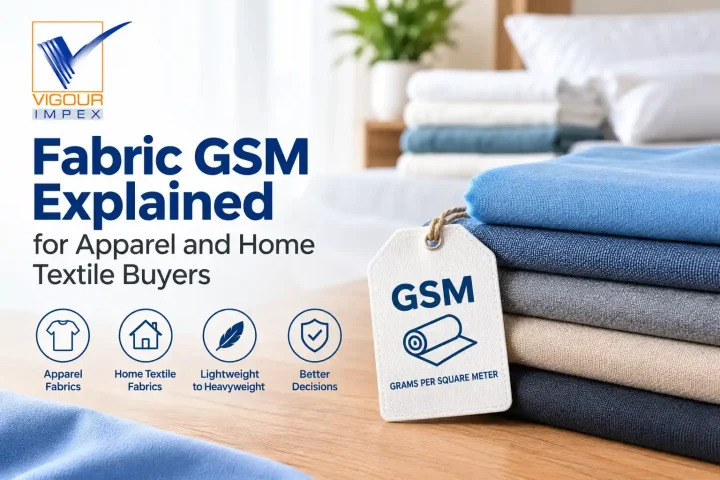
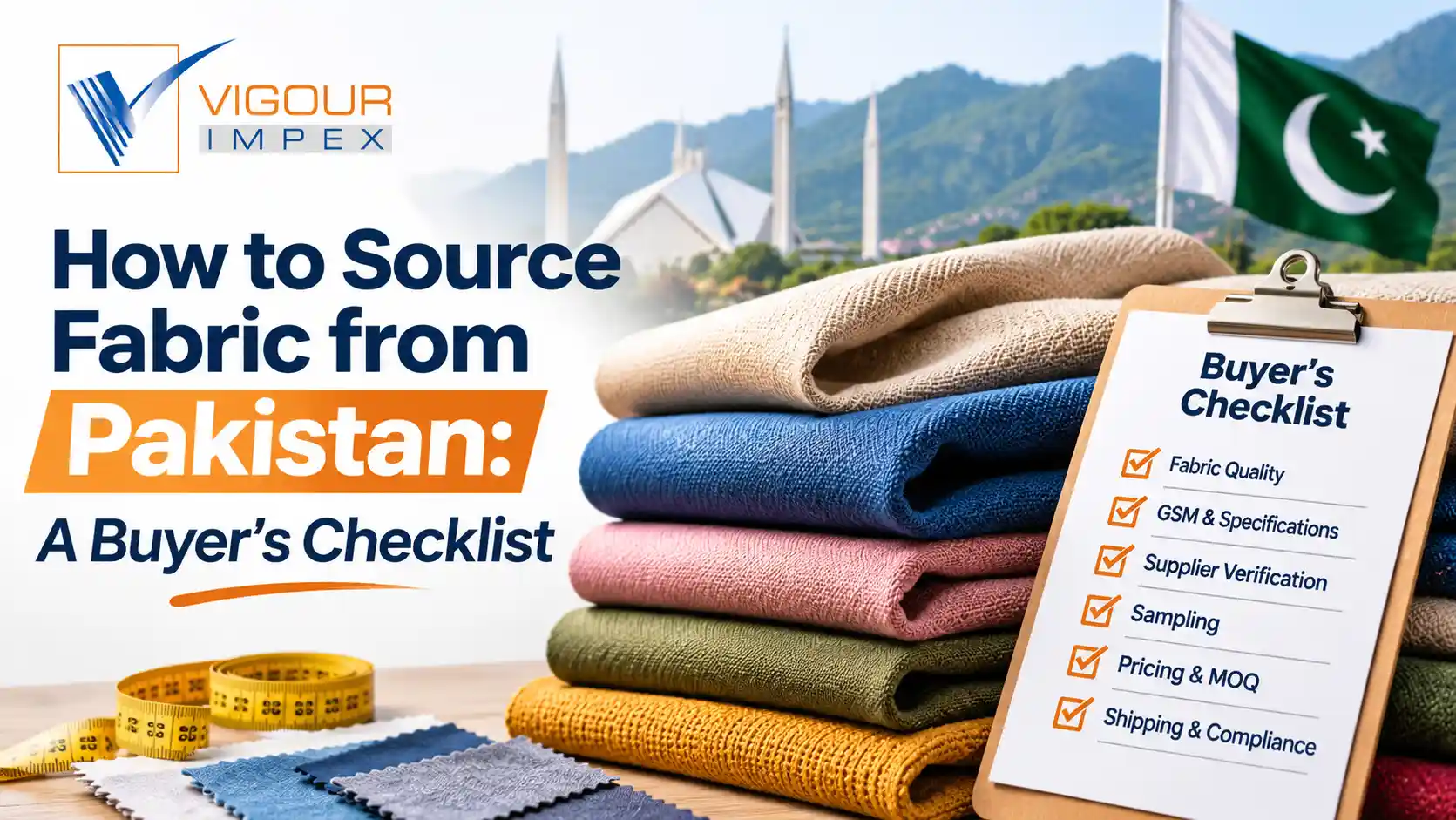
- 1. Write clear fabric specs. List the fiber content (for example, 100% cotton or 65/35 poly-cotton), weave or knit type, width, color, and finish. Include the fabric weight in GSM. Not sure which weight you need? Read our guide on fabric GSM for apparel and home textile buyers.
- 2. Know your quantity and MOQ. Most mills have a minimum order quantity (MOQ). For fabric, this is often a few hundred to about 1,000 meters per design or color. Custom colors and prints usually need higher MOQs.
- 3. Shortlist reliable suppliers. Look at experience, past export markets, and production capacity. Ask for a company profile and client references.
- 4. Check certifications. Ask which certificates the mill holds. Common ones include OEKO-TEX Standard 100, GOTS (for organic cotton), GRS (for recycled fiber), WRAP, Sedex, and ISO 14001. Your market or customers may require some of these.
- 5. Request swatches and lab dips. Swatches let you check feel, weight, and color. Lab dips are small dyed samples used to match your exact shade. Approve these in writing before bulk dyeing starts.
- 6. Compare quotes the right way. Make sure every quote uses the same specs. Check if the price is FOB (you pay shipping from the Pakistani port) or CIF/DDP (the supplier covers more of the cost).
- 7. Agree on terms in writing. Confirm price, payment terms, delivery date, tolerance (how many meters over or under is allowed), and packing method.
- 8. Plan quality checks. Arrange inline inspections during production and a final inspection before shipping. Common tests check shrinkage, color fastness, tear strength, and fabric faults.
- 9. Prepare for shipping. Choose sea freight for big orders or air freight for urgent ones. Make sure the commercial invoice, packing list, bill of lading, and certificate of origin are correct.
- 10. Review and build the relationship. After delivery, share feedback with your supplier. A good long-term partner gives better prices and faster service over time.
Common Mistakes to Avoid
Many first-time buyers make the same mistakes. Watch out for these:
- Choosing on price alone. The cheapest quote may use lower-quality yarn or skip testing.
- Skipping samples. Never place a bulk order without approving a sample first.
- Vague specs. “Soft cotton fabric” is not a spec. Give exact numbers for GSM, width, and fiber content.
- Ignoring shrinkage. Fabric that shrinks after washing can ruin finished garments. Ask for shrinkage test results.
- Forgetting lead times. Custom dyeing and weaving take time. Plan for production, testing, and shipping, not just the order date.
- No final inspection. Problems found after shipping are much harder and more costly to fix.
Why Work with a Sourcing Partner in Pakistan?
You can contact mills directly, but it takes time and local knowledge. A sourcing partner does much of the hard work for you. They can:
- Find and check suppliers that match your specs and budget
- Help develop new designs and fabric patterns
- Track your order from inquiry to delivery
- Run inline and pre-shipment quality inspections
- Handle export paperwork and shipping updates
- Help with after-sales issues
Vigour Impex has been a textile sourcing company in Lahore since 1992. It offers all of these sourcing services for buyers around the world. It also shares updates on cotton prices and market trends on its Market Watch blog.
If you buy for a specific region, you can learn more about sourcing for the USA, UK, or Germany. For eco-friendly fabrics, see their sustainability approach.
Final Thoughts
Sourcing fabric from Pakistan can give you great quality at a fair price. The key is to stay organized. Write clear specs, check certifications, approve samples, and plan quality checks before shipping. Use the checklist above for every order, and you will avoid most common problems.
Ready to start? Explore the Vigour Impex product range, from fabric to garments and home textiles, or get in touch to discuss your next fabric order.
Frequently Asked Questions (FAQs)
Is Pakistan a good country to source fabric from?
Yes. Pakistan grows its own cotton and has a full textile supply chain. It is especially strong in cotton, denim, and home textile fabrics, often at competitive prices.
What is the usual MOQ for fabric from Pakistan?
MOQs vary by mill and fabric type. Many suppliers ask for about 300 to 1,000 meters per design or color. Custom dyeing or printing may need more.
How long does it take to get fabric from Pakistan?
Lead time depends on the fabric and order size. Stock fabrics ship faster. Custom fabrics need extra time for lab dips, sampling, production, and testing. Sea freight then adds several weeks of transit.
Can I get fabric samples before ordering?
Yes. Most suppliers offer swatches and samples. Always check weight, color, and feel before you approve a bulk order.
What certifications should I ask for?
This depends on your market. Common ones are OEKO-TEX Standard 100, GOTS for organic cotton, GRS for recycled materials, and social audits like WRAP or Sedex.
Do I need a sourcing agent to buy fabric from Pakistan?
Not always, but it helps a lot, especially for first-time buyers. An agent finds trusted mills, checks quality, and manages shipping, which lowers your risk.
How do I start sourcing fabric with Vigour Impex?
Share your fabric specs, quantity, and target price through the contact page. The team will guide you on samples, pricing, and next steps.