


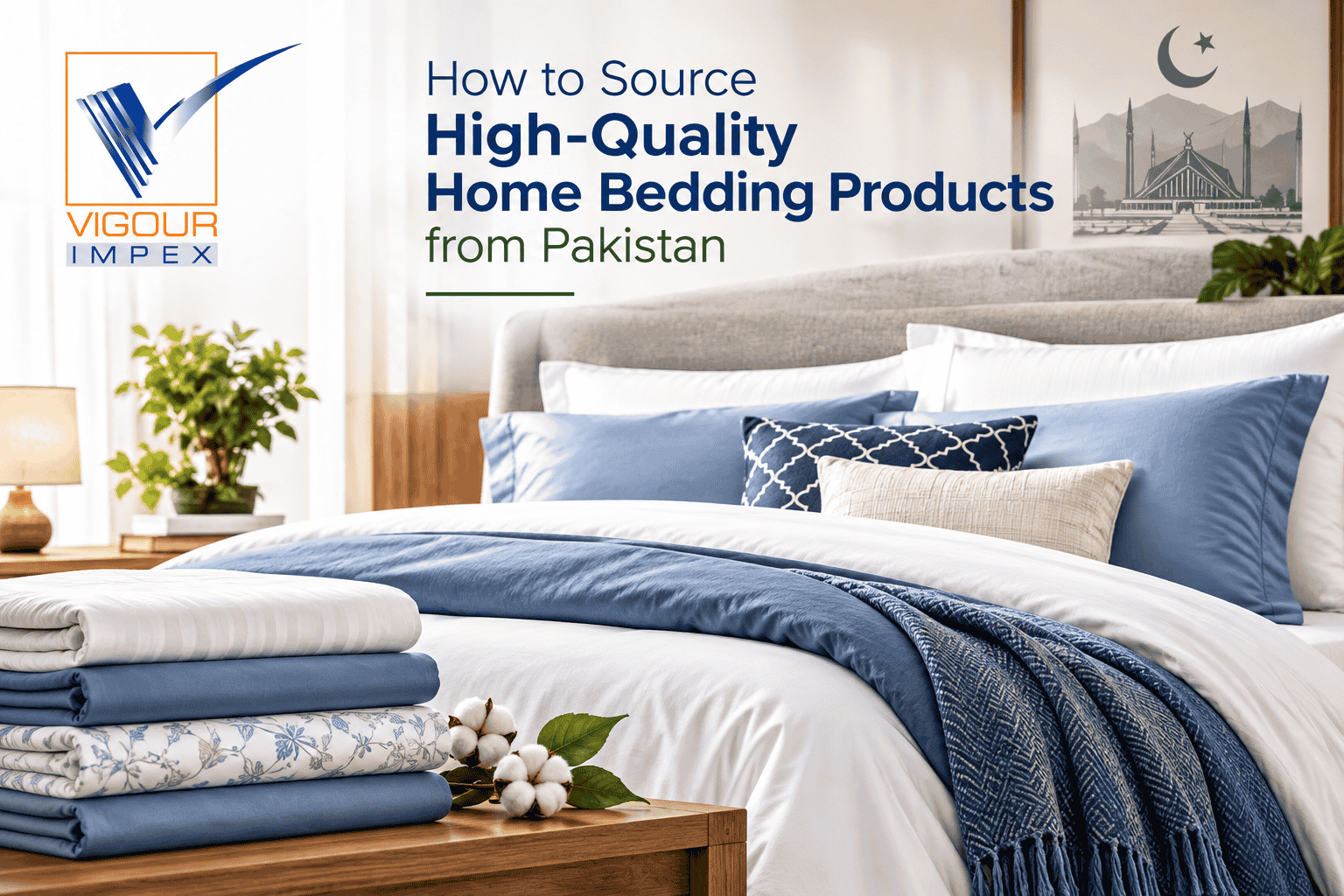
Are you a store owner, importer, or brand looking for home bedding products that feel soft, last long, and cost less? Then Pakistan should be on your list. The country is one of the world’s top makers of cotton goods, and its home textile manufacturers ship bed sheets, duvet covers, comforters, and pillowcases to buyers all over the world.
But good products do not appear by luck. You need a clear plan. This guide walks you through each step of sourcing bedding from Pakistan, in plain words, so you can buy with confidence.
Why Pakistan Is a Smart Place to Buy Bedding
Pakistan grows a lot of cotton. That means mills can spin yarn, weave fabric, and sew finished bedding in one country. This saves time and keeps costs fair.
Here are the main reasons buyers choose Pakistan:
- Strong cotton supply. Local cotton means steady fabric quality.
- Skilled workers. Many factories have made textiles for decades.
- Fair prices. You get good value without giving up quality.
- Wide range. You can find percale, sateen, jersey, flannel, and more.
- Export experience. Many factories already ship to the USA, UK, Europe, Australia, and the Middle East.
Because of these strengths, Pakistan textile sourcing has become a top choice for retailers and online sellers alike.
Step 1: Know Exactly What You Want
Before you contact any supplier, write a short product brief. A clear brief saves time and avoids mistakes. Include:
- Product type: bed sheets, fitted sheets, duvet covers, comforters, quilts, pillowcases, or a full bedding set
- Fabric type: cotton, cotton-polyester blend, microfiber, or organic cotton
- Thread count: for example 200, 300, or 400
- Weave: percale (crisp and cool) or sateen (smooth and silky)
- Sizes: twin, full, queen, king, or custom sizes for your market
- Colors and prints: solid, striped, or printed designs
- Packaging: poly bag, PVC box, or gift box
- Order size and target price
If you sell in the USA, size rules are different from those in the UK or Europe. Check your market first so your bedding fits the beds your customers own.
Step 2: Understand Fabric Quality
Fabric is the heart of good bedding. Learn a few simple terms and you will judge samples much better.
Thread count. This is the number of threads in one square inch of fabric. A higher number can feel softer, but it is not everything. A 300 thread count sheet made of good yarn can beat a 600 thread count sheet made of weak yarn.
Yarn quality. Long, fine cotton fibers make smooth and strong yarn. Short fibers make rough fabric that pills fast. Ask your supplier about the yarn they use. You can learn more about how yarn and fabric work together in this yarn count and fabric density guide.
GSM (grams per square meter). This tells you how heavy the fabric is. Heavier fabric, like flannel, feels warmer. Lighter fabric feels cool and airy.
Finish. Good factories wash and treat fabric so it stays soft and does not shrink too much. Ask about shrinkage and color fastness results.
If you want to look at fabric options first, you can explore the fabric range and the yarn range that feed into bedding production.
Step 3: Find Reliable Suppliers
This is the step where many new buyers struggle. There are hundreds of factories in Pakistan, and not all of them are the same. You have three main ways to find suppliers.
1. Trade shows and fairs. You can meet factories face to face and touch the fabric. But travel costs add up.
2. Online marketplaces. These are easy to search, but it is hard to know who is real and who is only a trader.
3. A sourcing company. A textile sourcing company in Pakistan already knows which factories are strong, honest, and on time. This route saves time and lowers risk, especially for first-time buyers.
For example, Vigour Impex is a sourcing partner that began in Lahore in 1992. The company works with more than 125 approved vendors and helps international buyers pick the right factory for each product. You can read more about its sourcing services to see how the process works.
What to check in any supplier
No matter how you find a factory, ask these questions:
- How many years have you made bedding?
- Which countries do you export to?
- Can you share certificates and audit reports?
- Do you make your own fabric, or buy it from others?
- What is your monthly production capacity?
- Can you show me buyer references?
A good supplier answers clearly and quickly. If answers are vague, be careful.
Step 4: Check Certificates and Compliance
Certificates prove a factory follows rules for safety, quality, and fair work. Depending on your market, you may need some of these:
- OEKO-TEX Standard 100 (fabric free from harmful chemicals)
- GOTS (for organic cotton)
- BCI (Better Cotton Initiative)
- BSCI or SEDEX (social and work-place audits)
- ISO quality standards
Big retailers often will not accept goods without these papers, so ask early. Also, care about the planet: many buyers now want eco-friendly goods. See how Pakistani suppliers support this on the sustainability page.
Step 5: Ask for Samples and Test Them
Never place a big order without seeing a sample. Samples show you the real quality, not just the photos.
When your samples arrive, check these things:
- Feel. Is the fabric soft, or scratchy?
- Stitching. Are the seams straight and tight? Are there loose threads?
- Color. Does it match your request? Wash it once and see if the color runs.
- Shrinkage. Wash and dry a piece and measure it again.
- Size. Measure the sheet or cover with a tape.
- Pilling. Rub the fabric with your hand. Does it form small balls?
- Packaging. Does it look neat and protect the product?
If you want to test the product further, send samples to a lab. Lab results give you proof to share with your own customers.
Once you approve a sample, ask the factory to keep a “golden sample.” This is the sample that bulk production must match.
Step 6: Negotiate Price, MOQ, and Terms
Now talk about money and quantity. Keep these points in mind.
Price. The lowest price is not always the best deal. A very cheap quote can mean weak yarn, thin fabric, or hidden costs. Ask for a full cost breakdown so you can compare offers fairly.
MOQ (minimum order quantity). Most factories set a minimum. It may be higher for custom prints or special sizes. If you are a small buyer, ask if the factory can offer a lower MOQ for standard designs.
Payment terms. Common terms are a deposit up front and the balance before shipping, or payment by letter of credit. Pick terms that protect both sides.
Lead time. Ask how many days the factory needs from sample approval to shipping. Add extra days for busy seasons, since many factories fill up before holidays.
Incoterms. Learn terms like FOB and CIF. They decide who pays for shipping, insurance, and risk at each stage.
Step 7: Plan Quality Control During Production
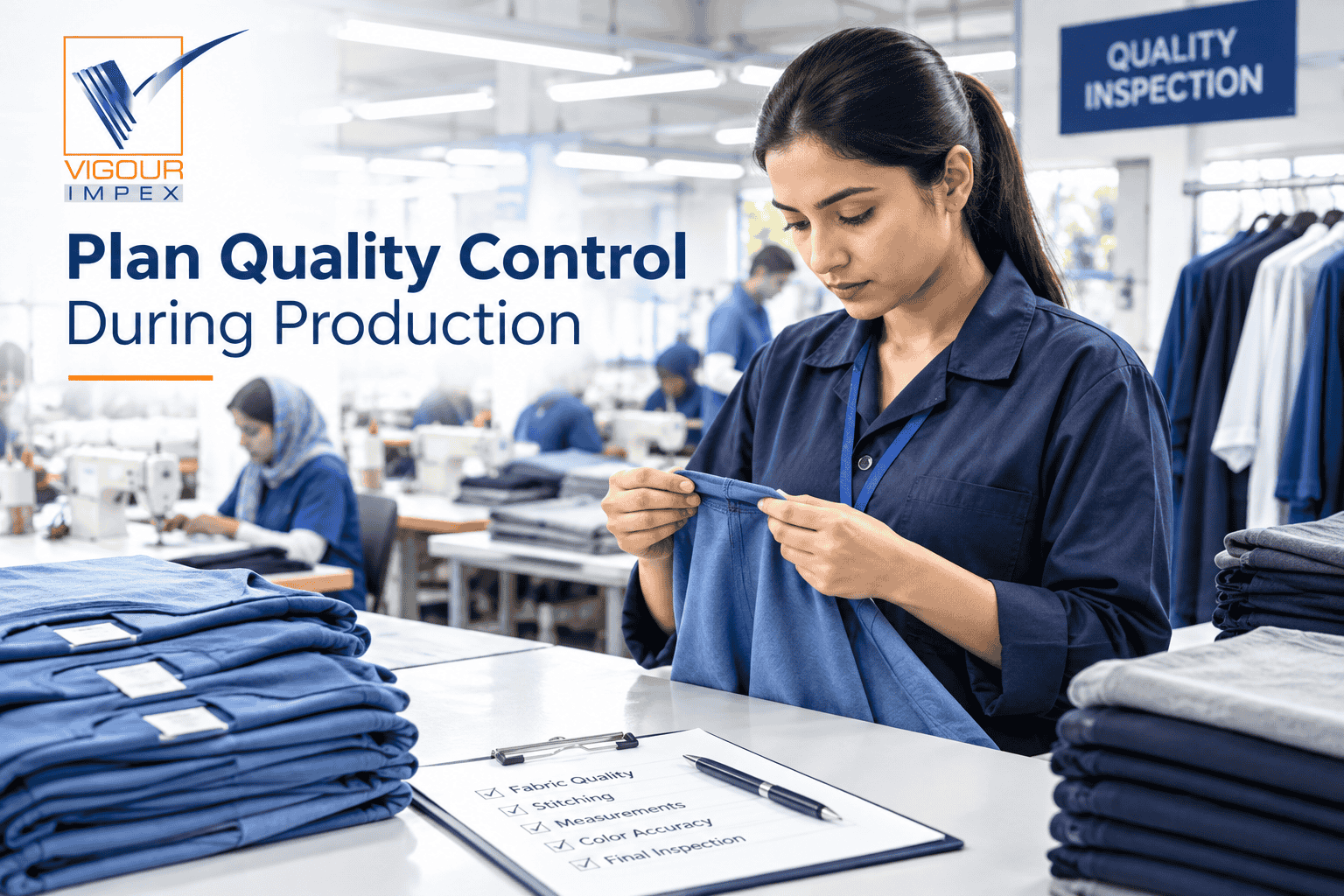
Many problems can be fixed early if you watch production. Do not wait until the goods are packed.
There are three key checks:
- Pre-production check. Confirm that the fabric and trims match the approved sample.
- In-line inspection. A checker visits while sewing is going on to catch mistakes early.
- Final inspection. Also called pre-shipment inspection in Pakistan, this happens when at least 80 percent of goods are packed. The inspector checks size, color, stitching, packing, and labels against your rules.
You can hire a third-party inspection company. You can also let your sourcing partner handle it. Vigour Impex, for instance, runs in-line and final checks as part of its service. These checks make sure the bedding you receive is the bedding you approved.
Step 8: Get Shipping and Paperwork Right
Even great bedding can cause trouble if the paperwork is wrong. Make sure you have:
- Commercial invoice
- Packing list
- Bill of lading or airway bill
- Certificate of origin
- Test reports or certificates, if needed
- Any labels your market requires (fiber content, care instructions, country of origin)
Most bedding leaves Pakistan by sea from Karachi port. Ocean freight is cheaper for big orders. For small or urgent orders, air freight is faster but costs more.
Check import duties and rules in your own country before you order. Rules for labeling and safety can be strict in the USA, UK, and EU. You can read about market details on pages for the USA, United Kingdom, and Australia.
Common Mistakes to Avoid
Learn from others’ errors:
- Choosing only on price. Cheap goods can cost you more in returns.
- Skipping samples. Photos can hide flaws.
- Not writing down specs. Always confirm details in writing.
- Ignoring lead time. Late goods can miss your selling season.
- Skipping inspection. Problems found after shipping are very costly.
- Not checking certificates. Some retailers will refuse your goods.
Final Thoughts
Sourcing high-quality home bedding products from Pakistan is not hard when you follow a clear plan. Know what you want, learn the basics of fabric, pick a reliable supplier, test samples, and check quality before shipping. Each step lowers your risk and protects your brand.
If you would rather have an expert guide you, a trusted sourcing partner can handle vendor selection, quality checks, and shipping for you. Ready to start? Contact Vigour Impex to share your bedding needs and get help finding the right factory.
Frequently Asked Questions (FAQs)
Why is Pakistan good for buying home bedding?
Pakistan grows its own cotton and has many experienced factories. This gives buyers good quality, a wide range of products, and fair prices.
What bedding products can I source from Pakistan?
You can source bed sheets, fitted sheets, duvet covers, comforters, quilts, pillowcases, blankets, and full bedding sets in many fabrics and sizes.
What is a good thread count for bed sheets?
For most buyers, 200 to 400 thread count works well. Yarn quality matters as much as the number, so always test a sample.
What is the minimum order quantity for bedding?
It depends on the factory and the product. Standard designs often have lower MOQs, while custom prints and sizes may need larger orders. Ask each supplier for their exact MOQ.
How long does it take to get bedding from Pakistan?
Production often takes several weeks after sample approval. Shipping by sea adds more time, depending on your country. Plan ahead for busy seasons.
Do I need a sourcing company, or can I buy directly from factories?
You can do both. A sourcing company helps you find trusted factories, manage quality checks, and handle shipping. This is very helpful for new buyers or those who cannot visit Pakistan.
Which certificates should I ask for?
Common ones are OEKO-TEX, GOTS for organic cotton, BCI, BSCI or SEDEX, and ISO. Your market and retailer may require specific ones.