


Introduction: A Market Finding Its Footing
Something interesting is happening in the cotton markets right now. Despite prices hovering in what many call a “boring” range around 63-64 cents per pound, the fiber that clothes the world is showing surprising resilience. More importantly, the signals coming from textile mills tell a story that raw numbers might miss, demand is quietly stirring back to life.
For textile manufacturers, fashion brands, and anyone involved in the apparel supply chain, understanding this moment matters. Cotton prices have stabilized after years of volatility. Export inquiries from mills worldwide are increasing. Raw material imports to major textile-producing countries are climbing. These aren’t dramatic headlines, but they represent something potentially more valuable: sustainable recovery.
This article explores why cotton’s current stability, despite what appears to be soft demand, might actually be laying the groundwork for a genuine textile market turnaround.
The Current Cotton Price Picture: Stability in Uncertainty

As of December 2025, cotton futures trade around 63-64 cents per pound, a level that’s held remarkably steady for months. To understand why this matters, you need context.
A Decade of Volatility
Cotton has historically been one of the most volatile agricultural commodities. Prices have swung from lows around 50 cents to highs exceeding $1.40 per pound over the past 15 years, driven by weather disasters, policy changes, trade wars, and pandemic disruptions.
This volatility creates nightmares for textile manufacturers. Imagine quoting prices for a large order six months in advance when your primary raw material cost might swing 30% in either direction. You either price conservatively (losing competitive edge) or aggressively (risking losses), with neither option ideal.
Why Stability Matters More Than You Think
The current range-bound trading, essentially cotton prices staying within a 60-67 cent band for extended periods, provides something textile businesses desperately need: predictability.
When cotton prices stabilize, manufacturers can:
- Quote consistent prices to buyers months in advance
- Commit to long-term contracts without hedging every position
- Plan production schedules based on actual demand rather than material availability concerns
- Forecast costs accurately for budgeting and financial planning
A Turkish towel manufacturer recently explained it this way: “I’d rather have cotton at 65 cents steady for a year than swing between 55 and 75 cents. With stability, I can actually run a business. With volatility, I’m just gambling.”
What’s Holding Prices Steady?
Several factors create this equilibrium:
Supply Side: Global cotton production for 2025/26 is projected at 117.7 million bales, down slightly from the previous year but still substantial. The U.S., Brazil, India, and China continue producing adequate volumes.
Demand Side: Global mill use is forecast at approximately 118.8 million bales, just slightly above production. This near-balance prevents both significant price rallies and crashes.
Stocks: Global ending stocks around 73-76 million bales provide a cushion. Not so high that they crush prices, not so low that shortages loom.
Competition from Synthetics: Polyester and other synthetic fibers continue capturing market share, capping cotton’s upside price potential. Currently, cotton holds just 22% of the global fiber market, down from 40% decades ago.
This combination creates what market analysts call “range-bound trade”, not exciting, but arguably exactly what the textile industry needs right now.
The Demand Picture: Soft but Not Broken
Headlines frequently describe cotton demand as “weak” or “sluggish.” While technically accurate, this assessment misses important nuances.
Consumer Behavior: Cautious but Not Collapsed
Global economic conditions remain uncertain heading into 2026. Inflation, while moderating, still pinches household budgets. Consumer confidence in major markets like the U.S. and Europe sits below historical averages.
Yet people still buy clothes. They’re just more selective about it.
Fast fashion continues dominating volume, brands like Shein and Temu show resilient demand even as traditional retailers struggle. Value-conscious shopping drives traffic to discount retailers and outlets. Online platforms capture growing share as brick-and-mortar clothing stores face challenges.
The shift isn’t from “buying” to “not buying”, it’s from buying casually to buying deliberately. Consumers want value, which creates opportunities for textile manufacturers who can deliver quality at competitive prices.
Geographic Demand Patterns
Demand isn’t uniform globally. Understanding regional differences helps explain the mixed signals:
China (the world’s largest cotton consumer at 32% of the global total): Domestic consumption remains relatively weak as property sector troubles weigh on consumer sentiment. However, Chinese mills import cotton for processing into textiles exported elsewhere, which continues.
India: A Growing middle class and a robust domestic market support steady cotton consumption. India’s textile exports also show resilience, particularly to emerging markets.
Bangladesh: After inventory corrections in 2023-24, mills are replenishing stocks. Cotton imports to Bangladesh increased significantly in 2025, signaling a production ramp-up for global buyers.
Vietnam: Similar story, cotton and yarn imports rising as garment export orders pick up.
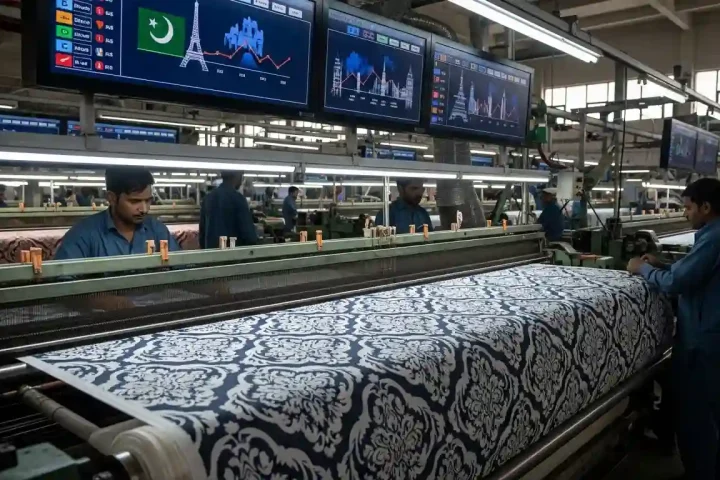
Pakistan: Home textile demand particularly strong; mills actively sourcing cotton for bedding, towels, and institutional linens.
Turkey: Premium textile market showing selective strength; manufacturers focusing on higher-value products.
The Inventory Cycle
One reason demand appeared particularly soft in 2023-24 was inventory overhang. Fashion brands and retailers over-ordered during 2021-22 (pandemic recovery optimism), then got stuck with excess stock when consumer spending slowed.
This led to a brutal correction, mills running below capacity, cotton demand plummeting, and prices falling.
But inventory cycles don’t last forever. By mid-2024, much excess stock had cleared. Retailers needed to replenish. Orders to mills picked up. Mills needed raw cotton. The cycle begins turning.
Current data suggests we’re in the early stages of this replenishment phase, not a boom, but genuine recovery from unsustainable lows.
Rising Export Inquiries: The Green Shoots
Here’s where the story gets interesting. Despite persistent headlines about “weak demand,” cotton traders and mill representatives report something different: rising export inquiries and actual transactions picking up.
What the Numbers Show
U.S. cotton export sales for the 2025/26 marketing year have been running close to last year’s levels, not spectacular, but solid after the weak 2023/24 season.
Spot cotton trading volumes in U.S. markets totaled 73,848 bales for the week ending December 11, 2025, up from 50,783 the previous week and 42,641 bales in the corresponding week a year ago. That’s real buying, not speculation.
Foreign mill inquiries are consistently described as “moderate” to “active” in USDA market reports. Interest comes particularly from India, Pakistan, Turkey, and Vietnam, major textile-producing nations that buy cotton when they have actual orders to fulfill.
Market Indicators From Manufacturing Centers
Data from major textile-producing regions reveals concrete evidence of shifting demand dynamics:
Pakistan: Textile industry associations report increased inquiry volumes for Fall-Winter 2026 and Spring-Summer 2027 production slots. This represents a notable change from the wait-and-see purchasing behavior that dominated 2023-2024, when buyers avoided forward commitments amid economic uncertainty.
India: Export data shows order patterns shifting toward smaller, more frequent purchases rather than the large bulk orders that characterized pre-pandemic trade. This reflects buyers managing inventory more conservatively while maintaining consistent production relationships with reliable suppliers.
Vietnam: Raw material import statistics tell a compelling story. Cotton and yarn imports rose significantly in 2025 compared to the previous year’s depressed levels. Mills don’t import raw materials for speculation; these purchases indicate confirmed production orders in hand.
Bangladesh: After the severe inventory correction of 2023-2024 that saw cotton imports plummet, 2025 data shows replenishment activity accelerating. This restocking phase signals mills anticipating sustained production demand rather than one-time orders.
These patterns across multiple major textile manufacturing countries, supported by official trade statistics and industry association reports, provide strong evidence that mills expect to convert raw materials into finished goods for actual buyers, not speculative inventory building.
The Quality of Demand
What’s particularly encouraging is the quality of inquiries, not just quantity.
Buyers aren’t just shopping for the cheapest cotton. They’re asking about:
- Sustainability certifications (GOTS, Better Cotton Initiative)
- Traceability (origin verification, supply chain transparency)
- Consistent quality (specific grades, reliable suppliers)
- Long-term partnerships (multi-season commitments, collaborative planning)
This type of inquiry suggests serious buyers placing actual orders, not speculative shopping or tire-kicking.
Regional Markets: Where Strength Appears
Cotton and textile demand don’t recover uniformly. Certain regions and product categories show particular strength:
U.S. Market Showing Resilience
Despite broader economic concerns, U.S. textile and apparel imports rose 6.59% to $31.67 billion in the first five months of 2025. This follows an even stronger surge in late 2024 and early 2025, driven partly by brands front-loading orders ahead of potential tariff changes.
While import growth has moderated recently, it remains positive, indicating underlying demand supports continued sourcing.
South and Southeast Asia: The Growth Engine
Countries like Vietnam, Bangladesh, and India are seeing the strongest recovery signals:
Vietnam’s textile exports in May 2025 reached $3.71 billion, up 2.8% from April. For the first five months of 2025, cumulative exports hit $17.58 billion, a 9% increase over the previous year.
Critically, Vietnam’s raw material imports also grew 4.7%, with particularly strong increases in fibers and fabrics. Manufacturers don’t import raw materials unless they have orders to fulfill.
Bangladesh similarly shows rising cotton imports after the inventory correction of 2023-24. Mills are replenishing to meet both domestic demand and export commitments.
India’s textile sector benefits from both strong domestic consumption (growing middle class) and export demand from diversifying global brands.
Home Textiles Leading the Way
An underappreciated but significant trend: home textiles (bedding, towels, curtains, table linens) show particularly resilient demand.
Unlike fashion, which faces intense competition from second-hand markets and discretionary spending pressures, home textiles enjoy:
- Hotel and hospitality recovery is driving institutional demand
- Home renovation spending remains relatively strong
- “Nesting” behaviors from remote/hybrid work are sustaining interest in home improvement
- Longer replacement cycles mean less saturation than apparel
Countries like Pakistan, India, Turkey, and China that specialize in home textiles are benefiting from this segment’s relative strength.
Sustainable and Organic Cotton: Premium Pricing
While conventional cotton faces competitive pressures, organic and sustainably certified cotton commands premium pricing and shows strong demand growth.
Global brands facing pressure to prove sustainability claims need verified sustainable cotton. Supply remains limited relative to demand, supporting prices 10-20% above conventional cotton for certified organic.
This creates opportunities for producers and countries investing in organic cultivation and certification infrastructure.
Factors That Could Accelerate the Turnaround
Several developments could transform the current cautious recovery into something more robust:
1. Interest Rate Declines Easing Financial Pressure
As central banks in major economies lower interest rates from pandemic-era peaks, borrowing costs for textile manufacturers decrease. Lower financing costs improve profitability and encourage production expansion and inventory building.
2. Trade Policy Clarity
Uncertainty around tariffs, trade agreements, and geopolitical tensions has created “wait-and-see” hesitation among buyers. As policies stabilize (one way or another), brands can make longer-term sourcing commitments, benefiting cotton demand.
3. China Economic Stimulus
If Chinese government stimulus measures successfully revive domestic consumption, this will single-handedly move global cotton demand, given China’s 32% share. Early 2026 will be critical to watch.
4. Synthetic Fiber Price Movements
Cotton competes directly with polyester, which is derived from petroleum. If crude oil prices rise substantially, synthetic fiber costs increase, making cotton more competitive on price, potentially recapturing market share.
5. Weather Events
While nobody wishes for weather disasters, the reality is that significant production disruptions (droughts, floods, pest outbreaks) in major growing regions quickly tighten supply and support prices, which can stimulate acreage expansion.
6. Digital Platforms Facilitating Faster Connections
B2B marketplaces and digital sourcing platforms increasingly connect cotton producers directly with textile mills globally. This efficiency reduces friction in the supply chain, potentially increasing overall transaction volumes.
Challenges That Could Slow Recovery
Balanced analysis requires acknowledging what could derail or delay the textile market turnaround:
Recession Risks
If major economies enter recession in 2026, discretionary spending on apparel could fall sharply, collapsing textile demand regardless of cotton price stability.
Geopolitical Escalation
Trade wars, regional conflicts, or shipping disruptions could fragment markets, increase costs, and create uncertainty that freezes buying decisions.
Synthetic Fiber Innovation
Continued improvements in synthetic fiber quality, sustainability credentials (recycled polyester), and cost competitiveness could permanently erode cotton’s market share.
Structural Overcapacity
Global textile production capacity may exceed sustainable demand, particularly if Chinese domestic consumption doesn’t recover robustly. Overcapacity leads to price competition that crushes margins.
Climate Volatility
Unpredictable weather patterns threaten consistent cotton production, potentially reintroducing the volatility that stable prices have temporarily eliminated.
What This Means for Textile Businesses
How should textile manufacturers, brands, and supply chain professionals respond to current market conditions?
For Cotton Producers and Traders
- Focus on quality and certification: Conventional cotton faces margin pressure; differentiated products command premiums
- Build traceability systems: Buyers increasingly demand supply chain transparency
- Develop long-term relationships: Transactional spot trading gives way to partnership models
- Watch production costs carefully: At current prices, only efficient producers sustain profitability
For Textile Manufacturers
- Lock in raw material costs strategically: Stable prices enable forward purchasing without excessive hedging costs
- Position for sustainability: Invest in certifications and processes that meet buyer requirements
- Optimize for flexibility: Buyers want smaller, faster orders, and adapt production to serve this
- Diversify customer base: Don’t over-rely on single markets or product categories
For Fashion Brands and Retailers
- Commit to sourcing plans earlier: Mills need visibility to plan; brands benefit from priority treatment
- Build supplier relationships: In tight markets, partners get priority over transactional buyers
- Balance inventory carefully: Avoid both overstocking (repeat of 2023) and understocking (miss sales)
- Communicate demand signals clearly: Help suppliers plan production by sharing forecasts transparently
For Investors and Analysts
- Watch import data closely: Raw material imports to textile countries lead demand by 2-4 months
- Monitor inventory levels: Both retail inventory and textile mill inventory influence order patterns
- Track consumer confidence: Leading indicator for discretionary spending on apparel
- Assess competitive positioning: Not all cotton producers or textile manufacturers are equally positioned
Conclusion: The Quiet Turnaround
The cotton and textile markets aren’t experiencing a dramatic boom. Headlines won’t scream about soaring prices or unprecedented demand. What’s happening is subtler but perhaps more sustainable: stabilization and gradual recovery.
Cotton prices have found a range that works, high enough for efficient producers to stay in business, low enough for textile manufacturers to compete profitably. This stability, combined with rising export inquiries, increasing raw material imports to textile-producing countries, and cautiously optimistic signals from mill operators, suggests real, if modest, demand recovery.
The keyword is “gradual.” This isn’t 2021’s post-pandemic surge that led to overstocking and subsequent correction. It’s a measured replenishment of depleted inventories, cautious commitment by brands to future seasons, and careful positioning by mills to meet anticipated demand without overextending.
For an industry that’s endured years of volatility, false starts, and pandemic disruptions, boring stability might be exactly what’s needed. The textile market isn’t racing toward boom times, but it is walking steadily toward recovery, and sometimes, walking beats running.
The cotton market’s strength isn’t about headline-grabbing price spikes. It’s about providing the foundation, stable costs, predictable supply, and improving but not euphoric demand, for the textile industry to rebuild on solid ground.
That foundation is forming now. The question is whether it translates into sustained growth or remains a temporary respite before the next challenge. Current signals suggest the former is more likely, which makes this a story worth watching as 2026 unfolds.
Partner With a Textile Manufacturer Who Turns Market Intelligence Into Your Competitive Advantage
You just read 2,000 words analyzing cotton market dynamics. Now here’s the question that matters: How do you translate these insights into business results?
At Vigour Impex, we don’t just track cotton markets; we leverage them to create value for our partners. While others react to price movements, we help brands position strategically for what’s coming next.
Why Forward-Thinking Brands Choose Vigour Impex During Market Transitions:
Strategic Cotton Sourcing
We’re locking in stable cotton prices NOW for FW26 and SS27 collections, giving you predictable costs while competitors gamble on future markets. Our procurement team monitors global cotton exchanges daily, timing purchases to maximize your advantage.
Complete Vertical Integration
From cotton bale to finished textile, we control every step. No middlemen marking up costs. No quality surprises. No finger-pointing when problems arise. One partner, one point of accountability, complete transparency.
Sustainability That Opens Doors
GOTS-certified organic cotton. Better Cotton Initiative membership. OEKO-TEX Standard 100 compliance. We don’t just claim sustainability, we prove it with documentation that satisfies even the most demanding European and American buyers.
Flexibility That Scales With Demand Signals
Testing a new product line? Start with 500 units. Scaling a proven winner? We handle 50,000+ unit runs. As demand recovery accelerates, your capacity grows with it, no need to onboard new suppliers mid-season.
Market Intelligence You Can Use
We share cotton price forecasts, demand trend analyses, and competitive intelligence with our partners. Think of us as an extension of your sourcing team, one that happens to own the manufacturing facilities.
Experience That Survives Market Cycles
We’ve navigated cotton at $1.40/lb and at $0.50/lb. We’ve operated through trade wars, pandemics, and policy shifts. This isn’t our first recovery. We know how to position brands to capture upside while managing downside risk.
The Recovery Is Happening. Are You Positioned to Benefit From It?
Rising export inquiries aren’t rumors; they’re real orders being placed right now. Mills that understand market dynamics are securing commitments from smart brands that recognize opportunity.
Here’s what happens next:
For brands who act now:
- Secure production capacity at current stable prices
- Lock in relationships before premium suppliers fill their calendars
- Position to capture demand as consumer spending recovers
- Build partnership with a manufacturer that shares market insights
For brands who wait:
- Compete for limited capacity as recovery accelerates
- Pay higher prices after cotton and textile demand tighten
- Rush orders with unfamiliar suppliers (risking quality issues)
- Miss the optimal positioning window