


Introduction: The Lifeline That Keeps Mills Running
In Pakistan’s textile ecosystem right now, a curious contradiction exists. Walk through manufacturing districts in Faisalabad, Karachi, or Lahore, and you’ll hear mill owners talk about tight liquidity, subdued domestic demand, and cautious buyer sentiment. Yet these same facilities keep spinning, weaving, and producing, not at full capacity, but steadily.
What’s keeping the wheels turning? Export yarn demand.
While Pakistan’s domestic textile market faces significant headwinds, liquidity pressures squeezing working capital, inflation dampening local consumption, and fabric markets moving sluggishly, the export demand for yarn, particularly from China and other Asian manufacturing hubs, has emerged as a crucial stabilizing force.
This isn’t just about sales figures. Export yarn demand creates a foundation that supports the entire textile value chain in Pakistan. It keeps cotton farmers selling their crops. It keeps spinning mills operational. It provides cash flow that sustains employment for millions. And perhaps most importantly, it signals international confidence in Pakistan’s textile capabilities even during challenging times.
This article explores why Pakistan textile exports, specifically in the yarn category, have become essential for market stability, how global demand influences the sector, and what this means for the industry’s near-term outlook as we move into 2026.
Understanding Pakistan’s Textile Export Structure
To grasp why export yarn demand matters so profoundly, you need to understand Pakistan’s position in global textile supply chains.
Pakistan’s Textile Export Profile
Pakistan’s textile industry contributes approximately 60% of total national exports, valued at around $17.88 billion annually. Within this massive sector, exports break down into several categories:
- Yarn (both cotton and blended varieties)
- Fabric (woven and knitted)
- Home textiles (bedding, towels, curtains)
- Garments (readymade apparel and knitwear)
- Made-ups (institutional linens, industrial textiles)
Each category faces different market dynamics, but cotton yarn exports from Pakistan occupy a unique position. Unlike finished garments that require design, marketing, and fashion trends to sell, or home textiles that depend on retail cycles, yarn represents an intermediate product with steady industrial demand.
Who Buys Pakistan’s Yarn?
The yarn export markets for Pakistan include:
China (the largest and most critical buyer): Chinese textile manufacturers import Pakistani yarn to feed their massive garment and fabric production capacity. Despite China being the world’s largest cotton producer, their enormous textile manufacturing base requires supplemental yarn imports, and Pakistan, with competitive pricing and established trade relationships, captures significant share.
Bangladesh: As one of the world’s largest garment exporters, Bangladesh imports substantial quantities of yarn and fabric because their domestic spinning and weaving capacity can’t meet their garment industry’s needs.
Europe and USA: Direct yarn exports to Western markets serve specialized textile manufacturers and brands seeking specific yarn qualities, particularly organic and sustainably certified varieties.
Other Asian markets: Vietnam, Indonesia, and smaller manufacturing countries source yarn from Pakistan for their textile industries.
This diversified buyer base means Pakistan yarn buyers span multiple markets, reducing dependence on any single country, though China’s dominance means its demand significantly influences overall market health.
Why Export Yarn Demand Matters for Market Stability
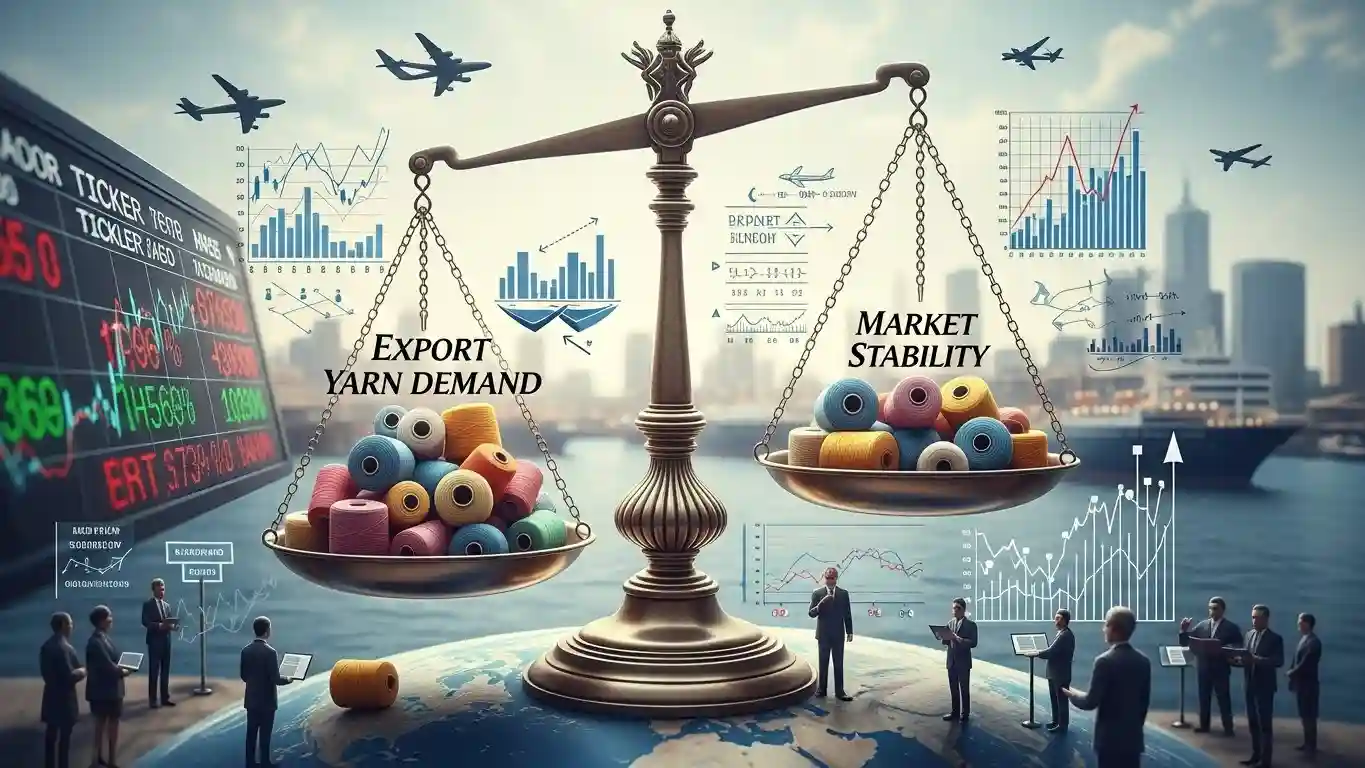
Now let’s get to the core question: Why does export demand for yarn specifically create stability for Pakistan’s broader textile market?
1. Cash Flow and Working Capital Relief
The Pakistani textile sector currently faces severe liquidity pressures. Banks are cautious about lending. Interest rates, while declining from peaks, remain elevated. Government refunds on export rebates often arrive late, tying up millions in working capital.
In this environment, export yarn orders provide something invaluable: relatively quick cash conversion.
Here’s why: Yarn production cycles are shorter than finished garment manufacturing. A spinning mill can go from raw cotton to finished yarn in weeks, not months. Export payments, especially from established buyers in China and other markets, provide regular cash inflows that keep operations sustainable.
When domestic fabric buyers delay payments (common in stressed markets) or when garment orders take months to fulfill, yarn exports keep money flowing through the system. This cash flow enables mills to:
- Pay cotton suppliers promptly (keeping farmers happy and willing to sell)
- Meet payroll obligations (sustaining employment)
- Procure raw materials for production.
- Service debt obligations without defaults
Without this export yarn cushion, many mills operating on thin margins would face severe financial stress or closure.
2. Capacity Utilization and Operational Efficiency
Pakistan’s textile industry currently operates at approximately 70% capacity across the garment sector. Underutilized capacity creates serious problems:
- Fixed costs (machinery, facilities, permanent staff) remain constant whether running at 40% or 90% capacity
- Per-unit costs rise when production volume drops
- Skilled workers may leave for other opportunities, degrading workforce quality
- Equipment sitting idle deteriorates faster than equipment in regular use
Export yarn demand helps mills maintain higher capacity utilization even when other segments lag. A vertically integrated mill might be running garment facilities at 70%, but if their spinning division operates at 85-90% thanks to export yarn orders, the overall operation remains financially viable.
This matters because textile manufacturing has significant economies of scale. A mill running at 80% capacity might be profitable while the same facility at 50% capacity loses money despite producing the exact same quality products.
3. Employment Preservation
Pakistan’s textile sector employs roughly 40% of the industrial workforce, approximately 15 million people directly and indirectly. This includes:
- Cotton farmers and agricultural workers
- Ginning facility staff
- Spinning mill workers
- Weaving and knitting operators
- Dyeing and finishing technicians
- Quality control personnel
- Management and administrative staff
- Logistics and transportation workers
When mills maintain operations thanks to export yarn orders, they preserve these jobs even during periods when domestic demand weakens. The social and economic importance of this cannot be overstated; textile employment supports millions of families across Pakistan.
4. Raw Cotton Demand Support
Pakistan is the world’s 4th largest cotton producer. When textile mills face weak demand, cotton farmers suffer as buyers disappear and prices collapse. This creates a devastating ripple effect through agricultural communities.
Export yarn demand ensures continued cotton purchasing even when fabric and garment markets slow. Chinese textile manufacturers importing Pakistani yarn need that yarn to be produced, which requires Pakistani mills to buy cotton from farmers.
This stabilizes the agricultural side of the value chain, maintaining farmer income and encouraging continued cotton cultivation. Without it, farmers might shift to other crops, creating long-term supply challenges for the textile industry.
5. Foreign Exchange Earnings
Pakistan faces persistent current account challenges and needs foreign exchange earnings. Textile exports are the country’s largest source of export revenue, with yarn exports representing a substantial share.
Every dollar earned from cotton yarn exports to China, Europe, or other markets helps Pakistan’s foreign exchange reserves. In an economy where import bills for energy, machinery, and other essentials strain reserves, textile export earnings, particularly yarn exports with their steady volume, play a crucial stabilizing macroeconomic role.
The China Factor: Why This Market Matters Most
Let’s focus specifically on Pakistan yarn buyers in China because this relationship deserves special attention.
China’s Textile Industry Scale
China operates the world’s largest textile manufacturing complex. Their domestic cotton production, while substantial, cannot fully meet the needs of their massive weaving, knitting, and garment industries. This creates structural import demand for cotton and yarn.
For Pakistani spinning mills, China represents:
- The largest single export market for yarn by volume
- Consistent, year-round demand (not just seasonal)
- Established trade relationships built over decades
- Payment reliability (major Chinese textile companies generally pay on time)
- Growing quality appreciation (Chinese buyers increasingly value Pakistani yarn quality)
What Drives Chinese Demand for Pakistani Yarn?
Several factors make textile exports from Pakistan to China particularly robust in the yarn category:
Competitive pricing: Pakistani yarn offers good value relative to domestic Chinese production costs, especially for certain cotton counts and blends.
Quality consistency: Pakistani spinning mills have invested in modern machinery capable of producing yarn that meets international quality standards Chinese manufacturers require.
Trade agreements: China-Pakistan Economic Corridor (CPEC) and bilateral trade agreements facilitate smoother transactions and potentially preferential terms.
Supply chain diversification: Chinese textile manufacturers, like buyers everywhere, prefer supplier diversification. Pakistan provides an alternative to complete domestic dependence or over-reliance on other source countries.
Specific yarn types: Pakistani mills excel at certain yarn counts, organic cotton yarn, and specialty blends that Chinese manufacturers use for specific textile products destined for global markets.
When Chinese Demand Fluctuates
The flip side of depending heavily on China is vulnerability to their market conditions. When Chinese textile manufacturing slows (as during property sector troubles affecting domestic consumption), demand for imported yarn can soften.
However, critically, Chinese textile production isn’t just for domestic consumption; much of it produces garments and textiles for export to the West. So even when Chinese domestic demand weakens, their export production can maintain yarn import demand.
Recent data showing healthier momentum in export yarn demand from China is particularly encouraging because it suggests Chinese textile manufacturers continue producing for international markets, maintaining their need for Pakistani yarn inputs.
Current Market Dynamics: The Full Picture
While export yarn demand provides stability, let’s honestly assess the full current state of Pakistan’s textile market trends in 2025:
The Challenges
Liquidity Pressure: Working capital constraints affect the entire value chain. Mills struggle to finance raw material purchases and maintain inventory. This isn’t unique to textiles; it reflects broader economic tightness, but textiles, as a high-volume, relatively low-margin business, feels it acutely.
Subdued Domestic Demand: Pakistan’s domestic textile and apparel market faces inflation-dampened consumer spending. When household budgets tighten, textile purchases beyond basic necessities decline.
Slow Fabric Markets: Both local and export fabric segments show sluggish activity. Most inquiries remain exploratory rather than resulting in confirmed orders. Deliveries extend into mid-January 2026, indicating buyers aren’t rushing to secure capacity.
Garment Sector Underutilization: Operating around 70% capacity, the garment sector hasn’t recovered to pre-challenge levels. This affects downstream demand for fabric, though interestingly, yarn demand holds up better because yarn serves multiple industries beyond just Pakistani garment manufacturing.
Inflation and Cost Pressures: Rising operational costs, energy, labor, and raw materials, squeeze margins even when orders exist. Mills face the difficult balance of maintaining competitive export pricing while covering increased costs.
Short-term Order Horizons: Buyers globally are placing shorter-duration orders rather than committing to long-term contracts. This creates planning difficulties for manufacturers who need order visibility to manage production schedules and raw material procurement efficiently.
The Bright Spots
Export Yarn Momentum: As discussed extensively, export demand for yarn, particularly from China, shows healthier momentum relative to other segments. This isn’t explosive growth, but it’s consistent demand that provides operational continuity.
Home Textile Improvement: The home textile segment shows gradual improvement with:
- Active sampling (brands requesting product samples to evaluate suppliers)
- Steady inquiry flow (not dramatic, but consistent interest)
- Cautiously positive expectations linked to Heimtextil 2026 (the world’s largest home textile trade fair in Frankfurt, Germany)
Heimtextil, scheduled for January 2026, serves as a major sourcing event where international buyers meet suppliers. Pakistani home textile manufacturers exhibiting there report good pre-show inquiry levels, suggesting potential order conversions during and after the event.
FW26/SS27 Developments: Despite challenges, fashion seasons continue. Fall-Winter 2026 and Spring-Summer 2027 developments are underway, with brands and buyers placing preliminary orders and engaging in product development. This forward-looking activity, even at modest volumes, indicates the market hasn’t frozen; it’s just moving cautiously.
Firm Pricing: Interestingly, despite slow markets, pricing remains firm. This suggests suppliers aren’t desperately slashing prices, which would indicate genuine distress. Firm pricing in a slow market often means suppliers are selectively taking orders they can profitably fulfill while declining unprofitable business, a sign of discipline rather than panic.
Cotton Futures Stability: New York cotton futures closed slightly positive during recent trading periods, reflecting mixed global commodity trends but generally stable conditions. For yarn exporters, cotton price stability helps maintain predictable costs, enabling them to commit to forward orders with less hedging anxiety.
Regional and Global Context: Where Pakistan Fits
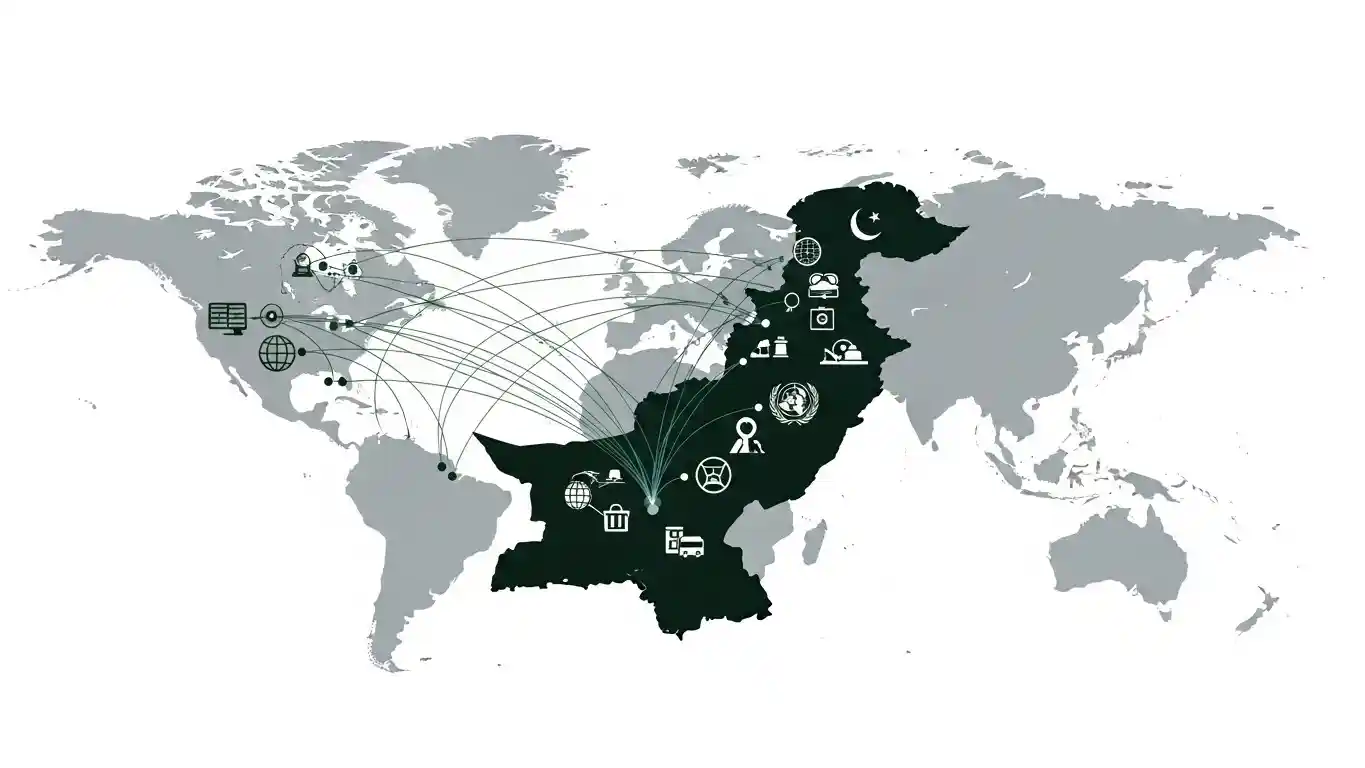
Understanding Pakistan’s textile export challenges and opportunities requires seeing where the country fits in global textile supply chains.
Regional Competition
Bangladesh: Dominates readymade garment exports but depends heavily on yarn and fabric imports. This creates opportunity for Pakistani cotton yarn exports to Bangladesh, though Bangladesh is also developing its own upstream capacity.
India: Pakistan’s largest regional competitor with significant domestic market advantages, government support schemes, and diversified textile capabilities. However, India focuses more on finished garments and home textiles, with yarn being a smaller export focus, creating less direct competition in this specific category.
Vietnam: Rapidly growing textile exporter with strong government support and preferential trade agreements (TPP, EU-Vietnam FTA). However, Vietnam largely imports cotton and yarn, making them more competitor in finished goods than yarn markets.
China: As discussed, simultaneously Pakistan’s largest yarn customer AND a competitor in global textile markets. This dual relationship is complex; Chinese demand supports Pakistani yarn exports while Chinese textile exports compete with Pakistani finished goods globally.
Western Market Access
European Union and United States represent crucial end markets. EU GSP+ status gives Pakistan preferential tariff access, important for finished textile exports. While yarn exports directly to these markets are smaller than to China, the ultimate destination of many textiles produced using Pakistani yarn (whether in China, Bangladesh, or elsewhere) is often Western consumers.
Recent discussions around textile export orders 2025 Pakistan indicate Western buyers are cautiously increasing sourcing activities, particularly for sustainable and certified products where Pakistani capabilities have improved.
The Role of Product Categories
Different textile categories show varying demand patterns, and understanding this helps explain why yarn maintains relative strength:
Yarn: The Industrial Input
Yarn is an intermediate product; it’s purchased by textile manufacturers to produce something else (fabric, then garments or home textiles). This creates steadier industrial demand compared to fashion-driven finished goods.
When a Chinese fabric mill has confirmed garment orders, they need yarn inputs on predictable schedules. When a Bangladeshi sweater manufacturer has export commitments, they must source yarn reliably. This industrial purchasing behavior creates more consistent export yarn demand than volatile consumer markets.
Fabric: The Squeezed Middle
Fabric (both woven and knitted) currently shows the slowest segment performance. Why?
- Fabric buyers (garment manufacturers) are cautious, delaying purchases until they have confirmed orders
- Fabric has shorter shelf life than yarn (fashion and color trends make specific fabrics obsolete)
- Fabric requires more working capital (higher value inventory than yarn)
- International fabric buyers have many sourcing options, creating intense competition
The slow fabric markets in Pakistan reflect these dynamics; exploratory inquiries don’t convert to orders because buyers aren’t committing until absolutely necessary.
Garments: Capacity but Caution
The garment sector operating at 70% capacity reflects both challenges and resilience. Yes, it’s below optimal, but 70% isn’t catastrophic; it’s a holding pattern. Garment manufacturers are:
- Fulfilling existing commitments
- Developing FW26/SS27 samples for potential orders
- Maintaining capabilities so they can scale up when demand improves
- Being selective about orders, focusing on profitable relationships
This measured approach, while frustrating for those seeking rapid growth, actually supports market stability by preventing the feast-famine cycles that destroy businesses.
Home Textiles: The Emerging Bright Spot
Home textile export recovery deserves special attention because this segment shows the most encouraging signs:
Why home textiles perform relatively better:
- Hospitality recovery: Hotels globally continue renovating and restocking linens as tourism recovers post-pandemic
- Institutional demand: Healthcare, senior living, and commercial facilities maintain regular replacement cycles less affected by fashion trends
- E-commerce growth: Online home goods retailers expanding, creating new distribution channels
- “Nesting” behaviors: Remote and hybrid work sustains interest in home improvement, including quality textiles
- Longer replacement cycles: Unlike fashion apparel, home textiles replace on multi-year cycles, meaning less market saturation
Pakistan’s home textile strengths align well with current demand:
- World-class towel manufacturing (Turkish-quality at competitive pricing)
- Premium bedding capabilities (high thread counts, quality finishing)
- Sustainable and organic certifications (GOTS, OEKO-TEX) meeting buyer requirements
- Established relationships with major Western retailers and hotel chains
The cautiously positive expectations linked to Heimtextil 2026 reflect this segment’s potential. Pakistani exhibitors investing in Frankfurt show presence signal confidence that the expense will generate return through orders, a positive indicator for industry sentiment.
What This Means for Pakistan’s Textile Industry Outlook
Synthesizing all these factors, what’s the realistic Pakistan textile industry analysis for the coming months?
Short-Term Outlook (Q1-Q2 2026)
Continued Reliance on Export Yarn: The export demand for yarn, particularly from China and regional manufacturing hubs, will remain crucial for maintaining operational continuity. Mills prioritizing yarn exports over a purely domestic fabric/garment focus will likely navigate challenges better.
Heimtextil Impact: Post-January 2026 Heimtextil, expect clarification on home textile export prospects. Strong order conversions from the show could provide a significant boost; weak results might dampen optimism for this segment through mid-2026.
FW26 Order Finalization: Spring 2026 will see Fall-Winter 2026 orders finalized. The volume and value of these commitments will determine garment sector capacity utilization for Q3-Q4 2026.
Liquidity Gradual Easing: As interest rates decline and government processes potentially improve, liquidity pressures should gradually ease, though this is more hope than certainty given Pakistan’s macroeconomic challenges.
Selective Growth: Rather than across-the-board expansion, expect selective growth in specific niches, sustainable textiles, technical textiles, specialized yarn varieties, and segments where Pakistani manufacturers have demonstrated competitive advantages.
Medium-Term Considerations (H2 2026 – 2027)
China Relationship Evolution: How China’s textile industry evolves, whether it maintains production levels for export despite domestic challenges, will significantly influence Pakistani cotton yarn export volumes. Diversifying beyond China, while maintaining this crucial relationship, remains strategically important.
Value Addition Imperative: Purely commodity yarn exports face margin pressures. Pakistani mills investing in specialty yarns (organic, recycled, technical varieties), blended products, and value-added processing will command better pricing and more stable demand.
Regional Trade Dynamics: Bangladesh, Vietnam, and other manufacturing countries’ upstream capacity development will affect their yarn import needs from Pakistan. Monitoring these competitive dynamics helps Pakistani exporters position appropriately.
Sustainability Requirements: Western buyers increasingly demand certified sustainable products. Pakistani manufacturers obtaining and maintaining GOTS, BCI, OEKO-TEX, and similar certifications will access premium markets less sensitive to price competition.
Technology and Efficiency: Mills investing in automation, renewable energy, and efficiency improvements will navigate cost pressures better than those relying on outdated equipment and processes. This isn’t glamorous, but it’s essential for long-term competitiveness.
Strategic Implications for Stakeholders
Different players in Pakistan’s textile ecosystem should consider how export yarn demand and current market dynamics affect their strategies:
For Spinning Mills and Yarn Manufacturers
Prioritize export relationships: Maintain and strengthen connections with Chinese, Bangladeshi, and other international yarn buyers. These relationships provide stability when domestic markets weaken.
Invest in quality and consistency: Export markets demand reliability. Mills that deliver consistent quality, specifications, and delivery schedules earn buyer loyalty that survives market fluctuations.
Explore specialty yarns: Move beyond commodity cotton yarn into organic, recycled, technical, and blended varieties that command premiums and face less competition.
Manage working capital aggressively: In tight liquidity environments, cash flow management becomes a survival skill. Consider supply chain financing, export factoring, and other tools to bridge payment gaps.
For Vertically Integrated Textile Companies
Balance portfolio: Don’t over-rely on any single segment. The current market shows yarn export strength offsetting fabric weakness, and diversification smooths volatility.
Leverage vertical integration: Control over multiple production stages (spinning, weaving, processing) creates flexibility to shift capacity toward stronger segments and reduces dependence on unreliable suppliers/buyers.
Position for Heimtextil and major trade events: These concentrated buyer interactions can generate months of orders. Strategic participation with strong sample development and sales preparation pays dividends.
For Garment Manufacturers
Focus on confirmed orders: In cautious markets, pursuing speculative production is dangerous. Work closely with buyers to develop FW26/SS27 collections with clear commitment signals.
Emphasize flexibility and speed: Buyers want smaller orders with faster turnarounds. Manufacturers able to deliver this, rather than only handling bulk orders, will win business.
Build sustainability credentials: As buyers increasingly require sustainability proof, garment manufacturers with certified supply chains (including yarn sourcing) gain advantages.
For Government and Industry Associations
Facilitate export procedures: Streamlining customs, improving duty drawback processing speed, and reducing bureaucratic friction helps exporters compete against more efficient competitors.
Support trade fair participation: Government co-sponsorship of pavilions at Heimtextil, Texworld, and similar events reduces individual company costs while strengthening Pakistan’s collective presence.
Address liquidity constraints: While complex, exploring export financing facilities, working capital support, and faster refund processing would significantly help the sector.
Promote Pakistan’s textile capabilities: Collective marketing highlighting Pakistan’s strengths (quality yarn, sustainable options, competitive pricing, reliability) helps all exporters.
Conclusion: Stability Through Exports
Pakistan’s textile industry navigates a challenging period. Domestic demand remains weak. Liquidity pressures create daily operational difficulties. Fabric markets move slowly. Garment facilities operate below optimal capacity.
Yet the sector continues functioning, employing millions, generating billions in exports, and supporting Pakistan’s economy. How?
Export yarn demand provides the stabilizing foundation. Particularly from China, but also from Bangladesh, European markets, and other manufacturing hubs, consistent orders for Pakistani cotton yarn keep spinning mills operational, cash flowing, cotton farmers paid, and workers employed.
This isn’t dramatic growth or headline-grabbing expansion. It’s the quieter but perhaps more important story of resilience and adaptation. Pakistani textile manufacturers are learning to survive and gradually thrive by focusing on segments where genuine demand exists, particularly yarn exports, rather than betting everything on hoped-for domestic recovery or speculative production.
The gradual improvement in home textiles, cautiously positive signals around Heimtextil 2026, and ongoing FW26/SS27 developments add to the story. These aren’t guarantees of boom times, but they’re legitimate reasons for measured optimism.
For Pakistan’s textile market stability, export orientation, particularly in yarn and home textiles, where Pakistan demonstrates clear competitive capabilities, represents the most reliable path forward. The mills maintaining strong export relationships, investing in quality and certifications, and managing operations efficiently will navigate current challenges and position themselves for whatever recovery ultimately emerges.
The textile industry that survives this period won’t look exactly like the one that entered it. It will be more export-focused, more specialized, more quality-conscious, and more sustainable. And perhaps most importantly, it will be more realistic about what drives stability in uncertain times: consistent, profitable relationships with international buyers who value what Pakistan does well.
Export yarn demand exemplifies this reality, not glamorous, not explosive, but absolutely essential for keeping Pakistan’s textile ecosystem functioning while the broader market finds its footing.
Ready to Partner With Export-Focused Pakistani Textile Manufacturers?
In markets where export demand drives stability, choosing the right manufacturing partner matters more than ever. At Vigour Impex, we don’t just track market trends, we actively position ourselves and our partners to benefit from them.
Why Global Buyers Trust Vigour Impex for Yarn and Textile Exports:
Export-First Mentality
We built our business serving international markets. While domestic Pakistani demand fluctuates, our export relationships with buyers in China, Europe, USA, and Asia provide steady production volumes and reliable revenue streams, which translates to stability and reliability for our partners.
Vertically Integrated Yarn to Finished Textiles
From cotton procurement and yarn spinning through fabric production and garment/home textile manufacturing, we control the entire value chain. This integration means:
- Quality consistency across all production stages
- No middleman markups or communication gaps
- Faster turnaround times when you need production flexibility
- Complete transparency from fiber to finished product
Certifications That Open Premium Markets
GOTS-certified organic cotton processing. OEKO-TEX Standard 100 compliance. Better Cotton Initiative membership. These aren’t just logos; they’re verified credentials that meet stringent buyer requirements and command premium pricing in quality-conscious markets.
Strategic Yarn Export Capabilities
Whether you need:
- Cotton yarn (various counts and qualities)
- Blended yarns (cotton-polyester, cotton-modal combinations)
- Organic and sustainable certified yarns
- Specialty yarns for technical applications
We produce and export according to your exact specifications, delivered on schedule with consistent quality that Chinese, Bangladeshi, and Western buyers depend on.
Home Textile Excellence
As the home textile segment shows improvement and Heimtextil 2026 approaches, we’re ready with:
- Premium bedding (sheets, duvet covers, pillowcases in multiple thread counts)
- Hotel-quality towels and bathrobes
- Table linens and hospitality textiles
- Custom institutional textile programs
Our active sampling capabilities and steady inquiry flow position us to convert Heimtextil connections into actual orders, potentially benefiting brands that partner with us early.
Market Intelligence Sharing
We monitor export yarn demand trends, track China textile manufacturing activity, analyze global commodity movements, and share relevant insights with our partners. Think of us as an extension of your sourcing team, one that happens to own the manufacturing facilities.
Flexibility for FW26/SS27 and Beyond
Whether you’re:
- Placing bulk yarn orders for your manufacturing operations
- Developing Fall-Winter 2026 or Spring-Summer 2027 collections
- Testing new sustainable product lines
- Scaling proven product categories
We scale production to match your needs, from initial sampling through volume production, without forcing you into rigid MOQ structures designed for completely different business models.
The Export Advantage: Why This Matters Now
As this article explored, Pakistan’s textile market stability increasingly depends on export performance rather than domestic consumption. Mills prioritizes export relationships and maintains international quality standards to navigate current challenges successfully.
When you partner with Vigour Impex, you’re working with a manufacturer that:
- Generates the majority of revenue from exports (not dependent on weak domestic demand)
- Maintains consistent production (export orders keep capacity utilized)
- Has established financial stability (export payments provide reliable cash flow)
- Invests in certifications and quality (export markets demand this)
- Understands international buyer expectations (decades of export experience)
This export focus directly benefits you because it means we’re operationally healthy, financially stable, and quality-focused, exactly what you need in manufacturing partners during uncertain market conditions.
Let’s Discuss Your Textile Sourcing Strategy
Whether you’re:
- 🇨🇳 A Chinese textile manufacturer seeking reliable yarn import suppliers from Pakistan
- 🇪🇺 A European brand developing sustainable home textile lines
- 🇺🇸 An American retailer planning 2026-2027 bedding collections
- 🇧🇩 A Bangladeshi garment manufacturer needing a consistent yarn supply
- Any international buyer evaluating Pakistani textile capabilities
We’re ready to explore how we can support your needs.
Start the Conversation:
Email: info@vigourimpex.com
Website: vigourimpex.com/contact
Phone: +92 [Your Phone Number]
WhatsApp: +92 [Your WhatsApp Number]
What Happens When You Reach Out:
✓ Rapid response (typically within 24 hours, often same-day)
✓ Detailed discussion of your product specifications, volume requirements, and timeline
✓ Transparent pricing with clear breakdown of costs, no hidden surprises
✓ Sample availability for qualified projects (we can ship samples to evaluate quality before committing to orders)
✓ Facility documentation (photos, videos, certifications, customer references upon request)
✓ Market insights relevant to your specific product categories and target markets
No pressure. No obligation. Just professional discussion about whether we’re a good fit for your textile sourcing needs.
Special Focus: Yarn Export Buyers
If you’re specifically seeking Pakistan cotton yarn exports for your manufacturing operations:
Our yarn export capabilities include:
- Cotton yarn counts: 10s to 80s (carded and combed)
- Blended yarns: Cotton-polyester, cotton-viscose, specialty blends
- Organic cotton yarn: GOTS-certified for sustainable production
- Packaging: According to buyer specifications (cones, hanks, cartons)
- Container optimization: FOB Karachi with efficient logistics coordination
- Quality assurance: Comprehensive testing before shipment (strength, count, evenness)
Request our Yarn Export Catalog:
Email info@vigourimpex.com with “Yarn Export Inquiry” in the subject line. We’ll send detailed specifications, pricing structure, and shipping information.
Why Buyers Choose Pakistan And Why They Choose Vigour Impex
Pakistan offers:
- Competitive labor costs without sacrificing quality
- Vertically integrated textile ecosystem (cotton to finished goods)
- Established export infrastructure and experience
- Growing sustainability certification presence
- Strategic location with access to Asian and Western markets
Vigour Impex delivers Pakistan’s advantages without the common challenges:
- Reliable communication (English-fluent team, responsive to inquiries)
- Quality consistency (documented QC processes, international standards)
- On-time delivery (realistic schedules, strong logistics partnerships)
- Transparency (we don’t hide problems; we solve them collaboratively)
- Long-term partnership approach (we invest in relationships, not just transactions)
The textile market is evolving. Export demand drives stability. Quality and reliability separate sustainable businesses from struggling ones.
Frequently Asked Questions
Q1: Why is export yarn demand important for Pakistan’s textile sector?
Export yarn demand provides crucial stability by generating consistent cash flow, maintaining capacity utilization, preserving employment, supporting cotton farmer income, and earning foreign exchange, especially when domestic markets face weakness. It’s particularly important because yarn serves as an industrial input with steadier demand than fashion-driven finished goods.
Q2: How does Pakistan’s export yarn demand affect market stability?
Export yarn orders help mills maintain operations during periods when domestic fabric and garment demand weakens. This steady production preserves jobs, keeps cotton purchasing active, maintains supplier relationships, and provides the cash flow needed to navigate liquidity pressures affecting the broader textile industry.
Q3: What drives Pakistan’s textile export growth?
Key drivers include competitive pricing relative to other sources, quality consistency meeting international standards, vertical integration providing supply chain control, growing sustainability certifications (GOTS, OEKO-TEX, BCI), established trade relationships with major buyers, and strategic geographic position accessing both Asian and Western markets.
Q4: How does global demand influence Pakistan yarn exports?
Global textile manufacturing activity, particularly in China and Bangladesh, directly affects Pakistan’s yarn export volumes. When these countries produce garments and fabrics for international markets, they require yarn inputs, creating structural demand for Pakistani cotton yarn regardless of their domestic consumption patterns.
Q5: Why Pakistan textile industry face export challenges?
Major challenges include liquidity pressures limiting working capital, high energy costs reducing competitiveness, delayed government refunds tying up cash, intense regional competition from Bangladesh and Vietnam, fluctuating exchange rates creating pricing uncertainty, and short-term buyer order horizons making production planning difficult.