


Introduction: Finding Light in Challenging Times
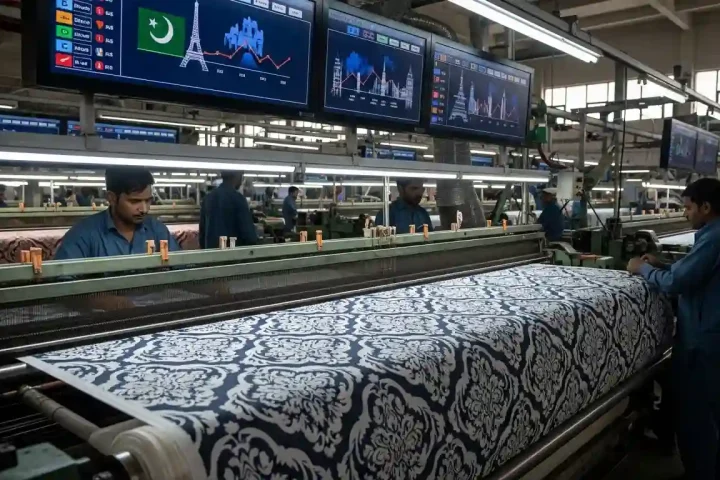
Walk through the textile mills of Faisalabad, Karachi, or Lahore today, and you’ll hear two very different stories. One talks about closed units, expensive energy, and tough global competition. The other speaks of record-breaking export months, returning international buyers, and quiet optimism about the seasons ahead.
Which story is true? Actually, both are.
Pakistan’s textile industry, which employs roughly 40% of the country’s workforce and contributes $17.88 billion in annual exports, is navigating one of its most complex periods. Global demand remains sluggish. Energy costs stay stubbornly high. Regional competitors like Bangladesh and Vietnam continue to capture market share.
Yet something interesting is happening. September 2025 saw textile exports hit a three-year high of $1.6 billion. Cotton prices have stabilized after years of volatility. Most tellingly, international buyers planning their Fall-Winter 2026 and Spring-Summer 2027 collections are returning to Pakistan with renewed interest.
This article explores why Pakistan’s textile industry, despite facing real headwinds, is showing surprising resilience and what this means for manufacturers, buyers, and the thousands of workers whose livelihoods depend on this crucial sector.
Understanding the Current State: Where Pakistan’s Textile Industry Stands
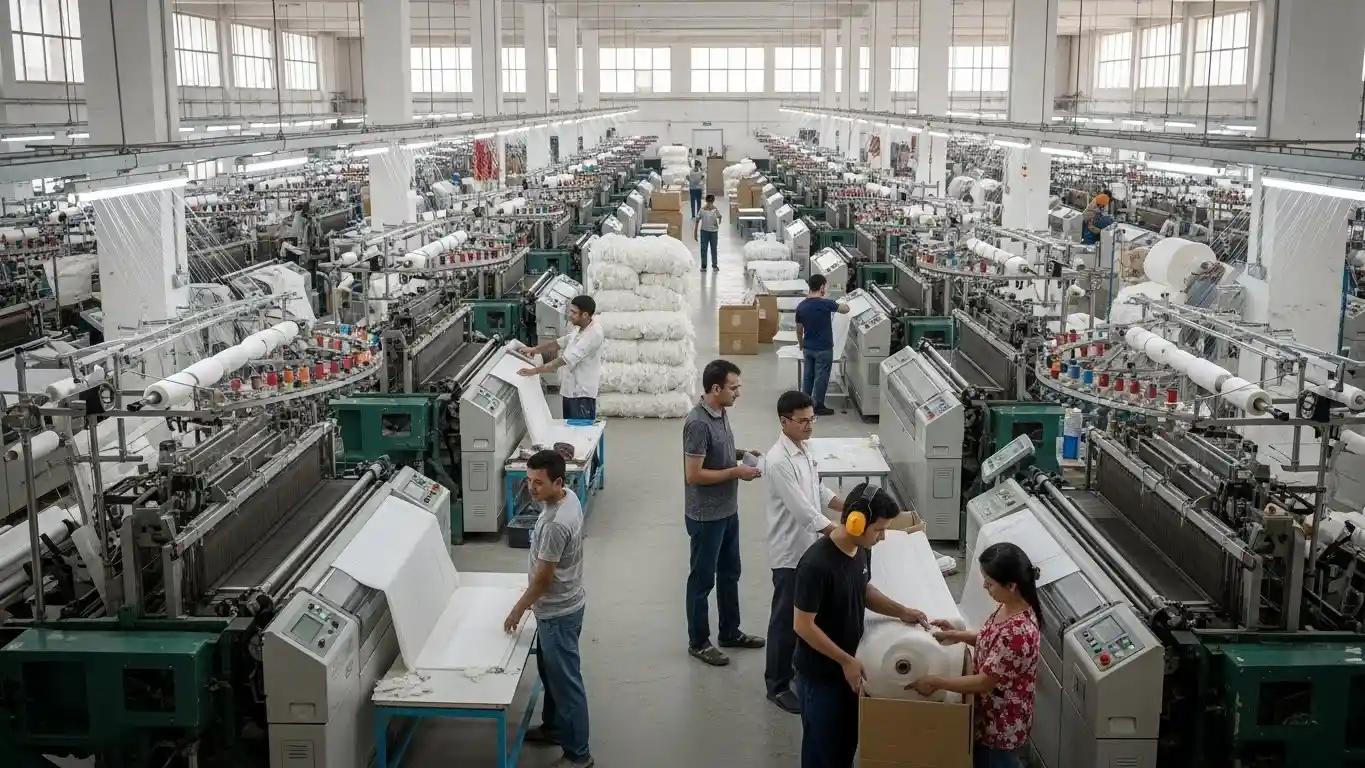
Let’s start with the reality check. Pakistan’s textile sector isn’t thriving in the way it was a decade ago, but it’s far from the collapse some predicted.
The Numbers Tell a Mixed Story
Textile exports for fiscal year 2025 came in at $17.88 billion, marking a 7.22% increase over the previous year. That sounds positive, and it i,s but context matters. A decade ago, Pakistan held 2.2% of the global textile market. Today, that’s shrunk to 1.7%.
Meanwhile, Bangladesh grew from 1.9% to 3.3%, and India expanded from 3.4% to 4.7% of the global market during the same period.
The sector still accounts for roughly 55-60% of Pakistan’s total exports, making it absolutely critical to the national economy. About 25 million people work in textiles directly or indirectly, from cotton farmers in Punjab and Sindh to garment workers in urban factories to transport and logistics staff moving finished goods to Karachi port.
Production capacity remains impressive:
- 13.4 million installed spindles (3rd largest in Asia)
- 1,221 cotton ginning units
- 442 spinning units
- Hundreds of weaving, dyeing, and garment manufacturing facilities
The infrastructure is there. The workforce is skilled. The question is: can Pakistan leverage these strengths despite the challenges?
The Main Challenges Holding Back Growth
Before discussing reasons for hope, let’s honestly acknowledge what’s working against Pakistan’s textile industry:
1. Energy Costs That Hurt Competitiveness
Pakistani textile mills pay electricity rates of 13-15 cents per kilowatt-hour, nearly double what manufacturers in Bangladesh or Vietnam pay. For energy-intensive processes like dyeing, finishing, and spinning, this creates a massive cost disadvantage.
Some larger mills have invested in rooftop solar systems and battery storage, covering up to 40% of their peak energy needs. But smaller and mid-sized manufacturers, which make up most of the industry, struggle to afford these capital-intensive solutions.
2. Cotton Production Challenges
Pakistan is the world’s 4th largest cotton producer, which should be a competitive advantage. But cotton production dropped 33% between 2024 and 2025 due to poor weather, pest issues, and farmers shifting to more profitable crops.
This forced manufacturers to import cotton often at higher prices and in foreign currency, adding to production costs. The 2025/26 cotton production forecast of 4.8 million bales represents another 4% decline from the previous year.
3. Policy Uncertainty and Tax Issues
The government’s introduction of an 18% sales tax on imported cotton and yarn in the 2025/26 budget created confusion. While the tax is refundable for exports, delays in processing refunds tie up critical cash flow for manufacturers already operating on thin margins.
Textile exporters report that PKR 30 billion in unpaid tax rebate claims have historically been stuck in bureaucratic processes, though recent reforms have improved the situation somewhat.
4. Regional Competition Intensifies
Bangladesh has 202 LEED-certified green factories compared to Pakistan’s 36. Vietnam has successfully positioned itself as a premium garment manufacturer with sophisticated supply chains. India benefits from massive government Production Linked Incentive (PLI) schemes that Pakistan can’t match.
5. Slow Global Demand
The global textile market hasn’t fully recovered from pandemic disruptions. European and American consumers, facing their own economic pressures, are buying less. Fashion retailers are cautious with inventory, leading to smaller, more frequent orders rather than the bulk purchasing that Pakistani mills excel at.
The Bright Spots: Why There’s Genuine Reason for Optimism
Now here’s where the story gets more interesting. Despite these very real challenges, several positive developments are creating genuine optimism in Pakistan’s textile sector.
1. Value-Added Segment Growth: Moving Up the Chain
The most encouraging trend is Pakistan’s shift toward value-added textile products rather than basic yarn and fabric.
September 2025 data tells a compelling story:
- Knitwear exports hit an all-time high of $485 million in a single month
- Readymade garments showed strong double-digit growth
- Bedding and home textiles expanded their global footprint
This matters enormously. Selling finished garments generates significantly higher revenue and profit margins than exporting raw yarn. A kilogram of cotton yarn might fetch $3-4. Turn that into a finished shirt, and you’re looking at $15-20 in export value.
The 11-month period from July 2024 to May 2025 saw textile shipments reach $16.37 billion, with value-added categories like knitwear, garments, and bedding leading growth. This represents a strategic evolution from commodity products to finished goods where Pakistan can compete on quality and design, not just price.
2. Stable Cotton Prices After Years of Volatility
One of the biggest headaches for Pakistani textile manufacturers has been unpredictable cotton prices. When raw material costs swing wildly, it’s nearly impossible to quote consistent prices to international buyers or plan production efficiently.
Recent months have brought welcomed stability. As of late 2025, cotton prices across Pakistani markets have held steady:
- Sindh cotton: Rs 15,200-16,000 per maund
- Punjab cotton: Rs 14,800-16,000 per maund
- Balochistan cotton: Rs 15,300-16,200 per maund
- Spot cotton rate: Rs 15,300 per maund
This stability, though accompanied by low trading volumes, gives manufacturers predictability. They can commit to orders six months in advance, knowing their primary raw material cost won’t suddenly spike 20% midway through production.
The government’s approval of hybrid cotton seed imports after a decades-long ban also brings hope. Industry experts believe improved seed varieties could boost yields, addressing production shortfalls.
3. FW26 and SS27 Buyers Are Returning
Perhaps the most tangible sign of confidence comes from the behaviour of international buyers. Fashion brands and retailers planning their Fall-Winter 2026 and Spring-Summer 2027 collections are placing orders with Pakistani manufacturers.
Why does this matter? Fashion buying cycles work far in advance. When European or American brands commit to Pakistani suppliers for seasons 12-18 months away, they’re making a statement about reliability and trust.
Several factors are driving this renewed interest:
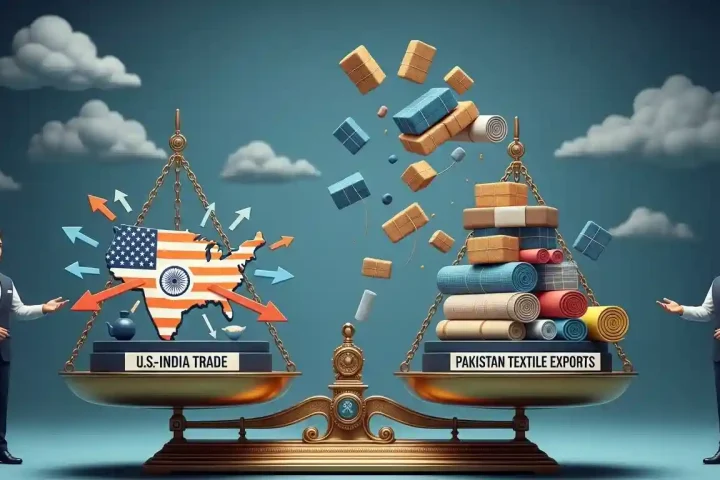
U.S. Tariff Situation: Recent discussions around increased tariffs on Chinese goods (and potentially Bangladesh) have buyers looking for alternatives. Pakistan, despite its challenges, offers an established manufacturing base with fewer geopolitical complications than China.
Sustainability Credentials: Pakistani manufacturers’ investments in GOTS certification, OEKO-TEX standards, and Better Cotton Initiative membership appeal to brands facing pressure to prove their sustainability claims.
Experience with Pakistan: Unlike emerging textile markets, Pakistan has decades of experience working with major international brands. Buyers know what to expect in terms of quality, communication, and capability to handle large orders.
4. Profitability Projections Show Dramatic Improvement
Here’s something that surprised even industry analysts: Pakistani listed textile companies are expected to see profits rise nearly 3.1 times year-on-year in the first quarter of FY2026.
Investment firm Taurus Securities projects profit margins expanding by 11 percentage points, driven by:
- 56% jump in local cotton production (from the exceptionally low 2024 base)
- Lower borrowing costs as interest rates decline from peaks above 20%
- Stable exchange rates reduce currency risk
- Cost control measures and renewable energy adoption are improving efficiency
Major textile companies like Gul Ahmed, Nishat Mills, and Interloop are all projected to see substantial profit growth. Interloop specifically is expected to post a tenfold increase in quarterly profits, driven by strong apparel and denim sales.
These aren’t wild speculations; they’re based on actual order books and production schedules already in place.
5. Renewable Energy Adoption Accelerates
While high energy costs remain a problem, progressive Pakistani textile mills are taking matters into their own hands.
Leading manufacturers have installed:
- Rooftop solar arrays generating 5-10 megawatts per facility
- Lithium-ion battery storage systems are smoothing out the power supply
- Biomass boilers using agricultural waste instead of natural gas
- Energy-efficient LED lighting and variable-frequency drives on motors
Some mills report covering 40% of their peak electricity consumption through renewable sources. This not only reduces costs but also appeals to environmentally conscious international buyers who track their supply chain carbon footprints.
The long-term trend is clear: textile manufacturers who invest in renewable energy today will have a substantial competitive advantage tomorrow.
6. Government Policy Reforms (Slow but Real)
Pakistan’s government doesn’t move fast, but some positive policy changes are materializing:
Duty Drawback Improvements: The Federal Board of Revenue’s electronic submission system for tax rebates has reduced processing delays. While not perfect, the situation is significantly better than 2-3 years ago, when PKR 30 billion sat tied up in unpaid claims.
Export Facilitation Scheme: Despite complications, the scheme, which allows duty-free import of cotton for export production, provides relief to manufacturers sourcing from international markets.
Industry Consultation: Government officials are actually listening to textile associations like APTMA (All Pakistan Textile Mills Association) and PTC (Pakistan Textile Council), leading to more industry-friendly policies.
These aren’t dramatic reforms that solve all problems overnight, but they represent movement in the right direction, something the industry desperately needed.
7. Strategic Trade Fair Participation
Pakistani textile manufacturers are increasing their presence at crucial international trade exhibitions:
- Heimtextil (Frankfurt) – World’s largest home textile fair
- Texworld (Paris, New York) – Fashion fabric sourcing event
- Techtextil (Frankfurt) – Technical textiles exhibition
- Texprocess (Frankfurt) – Textile processing technology
These platforms connect Pakistani suppliers directly with thousands of international buyers, designers, and brands. Face-to-face interactions at these events often lead to long-term business relationships that email exchanges or video calls can’t replicate.
Industry representatives report strong interest from buyers visiting Pakistani pavilions, particularly for sustainable products, organic cotton textiles, and specialized technical fabrics.
Regional Strengths: What Pakistan Does Particularly Well
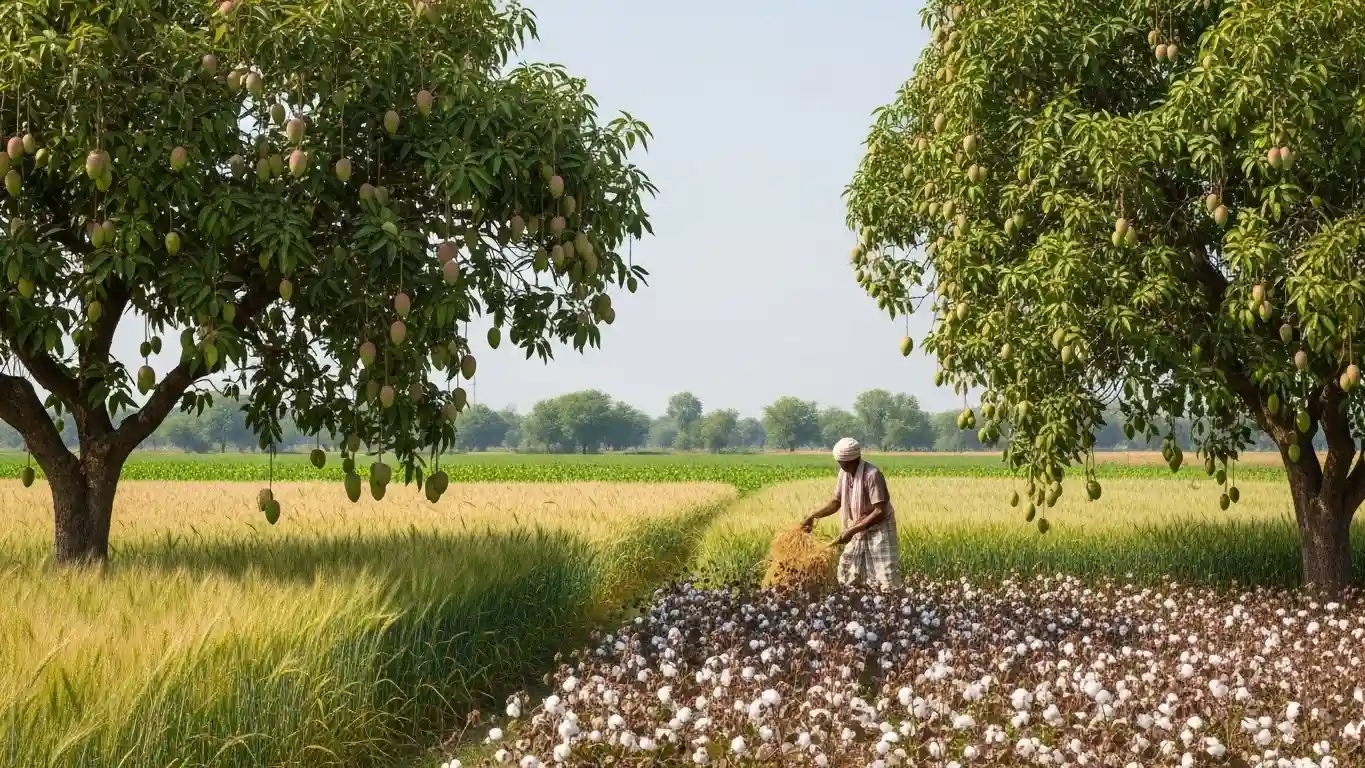
Every textile-producing country has its niche. Understanding where Pakistan excels helps explain why certain buyers keep returning despite challenges:
Home Textiles Dominance
Pakistan is genuinely world-class in bedding, towels, and table linens. The home textile market, valued at $1.15 billion domestically and significantly larger in exports, is projected to grow at a 7.45% CAGR through 2030.
Bed linen leads with 47.87% of revenue, and for good reason. Pakistani mills produce hotel-quality sheets, duvet covers, and pillowcases that meet stringent international standards. Major hotel chains worldwide source from Pakistan.
The secret? Decades of specialization. Mills in Faisalabad and Multan have perfected high-thread-count weaving, colorfast dyeing, and durable finishing processes specifically for institutional and retail home textiles.
Denim Innovation
Pakistani denim manufacturers like Artistic Milliners and Sapphire Fibres have pioneered sustainable denim production using:
- Laser finishing replacing chemical stone-washing
- Ozone treatment for color fading without water
- Digital printing on denim
- Recycled cotton blends
These innovations attracted attention from premium denim brands globally. Pakistan’s denim exports have held steady even as overall market conditions have remained challenging.
Organic and Sustainable Cotton
Pakistan’s organic cotton sector, while still small compared to total production, is growing rapidly. Farmers in Punjab and Sindh are transitioning to organic methods, supported by:
- Better Cotton Initiative (BCI) programs
- GOTS certification infrastructure
- Premium pricing (15-20% above conventional cotton)
- Export demand from European sustainability-focused brands
This positions Pakistan advantageously as global textile buyers increasingly require proof of sustainable sourcing.
Vertical Integration
Many Pakistani mills control the entire value chain from cotton ginning through spinning, weaving, dyeing, and garment manufacturing. This vertical integration offers advantages:
- Quality control across all production stages
- Faster turnaround times (no waiting for third-party processors)
- Cost efficiency (eliminating middleman markups)
- Supply chain transparency (crucial for DPP compliance and buyer due diligence)
When a buyer places an order with a vertically integrated Pakistani mill, they’re dealing with one entity responsible for everything, simplifying logistics and accountability.
The Workforce: Pakistan’s Hidden Advantage
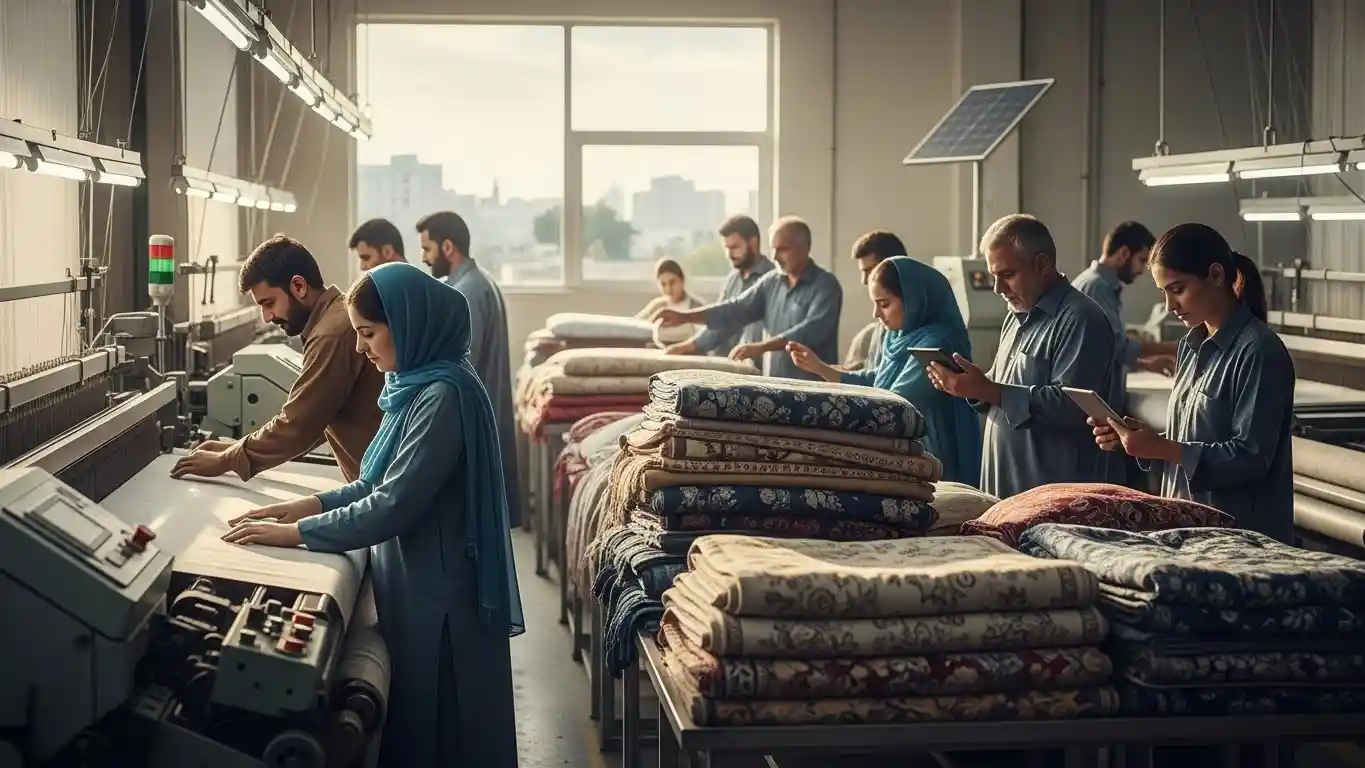
Numbers and facilities matter, but people make the difference. Pakistan’s textile workforce represents an underappreciated competitive strength.
Skilled Labor Force
Pakistan has generations of textile workers who grew up in households where textile work was the family business. This means:
- Inherited expertise: Skills passed from parents to children
- Local problem-solving: Workers who can fix machines, adjust processes, and maintain quality without constant supervision
- Adaptability: Experience handling both traditional and modern production methods
Cost Competitiveness (Still Present)
Yes, labor costs in Pakistan have risen. But they remain significantly lower than China or Turkey and roughly competitive with Bangladesh and India.
More importantly, Pakistani textile labor offers good value for money, skilled workers who deliver quality output, not just cheap labor producing low-grade goods.
Improving Worker Welfare
International pressure and certification requirements are driving genuine improvements in:
- Factory safety standards
- Fair wage practices
- Worker training programs
- Better facilities (lighting, ventilation, rest areas)
While challenges remain, the direction of change is positive creating a more sustainable labor model that appeals to socially conscious brands.
What International Buyers Are Saying
Perhaps the best indicator of Pakistan’s textile prospects comes from the buyers themselves. Recent industry feedback includes:
“Pakistan remains our go-to source for high-quality towels. The consistency and reliability we get from our Pakistani partners is hard to match elsewhere.” European home textile retailer
“We’re increasing our Pakistan sourcing for SS27. The combination of GOTS certification, competitive pricing, and production capacity makes sense for our sustainability goals.” U.S. apparel brand
“Energy costs worry us, but Pakistani mills have been transparent about it and worked with us on pricing structures that account for their challenges. That honesty builds trust.” British fashion company
“The value-added capabilities in Pakistan, particularly in knitwear and cut-and-sew operations, have improved dramatically. We’re placing more complex orders there now.” Australian clothing brand
These aren’t random testimonials but reflect actual sourcing decisions being made forthe 2026-2027 seasons.
The Road Ahead: What Needs to Happen
Optimism should be realistic. Pakistan’s textile industry has genuine momentum, but sustaining and building on it requires continued action:
Energy Solutions Must Scale
Renewable energy adoption by leading mills needs to spread to the broader industry. This requires:
- Financing mechanisms making solar installations affordable for small-medium manufacturers
- Grid infrastructure improvements, allowing mills to sell excess solar power back to the grid
- Government incentives (tax breaks, accelerated depreciation) for green energy investments
Product Diversification and Innovation
Pakistan can’t compete on price alone with Bangladesh or Vietnam. Continued movement toward:
- Technical textiles (automotive, medical, protective fabrics)
- Performance fabrics (moisture-wicking, antimicrobial, UV-resistant)
- Design-led fashion textiles rather than basic commodity products
- Niche specialization in specific product categories
Consistent Policy Environment
The government must provide predictable, stable policies around:
- Export incentives (maintaining duty drawback schemes)
- Tax structures (simplifying and making refunds prompt)
- Trade agreements (pursuing FTAs with major buyer markets)
- Regulatory clarity (clear rules applied consistently)
Skills Development and Technology Adoption
As textiles become more sophisticated, Pakistan needs:
- Technical training programs for workers on advanced machinery
- Design education is creating Pakistan-based designers who can develop products here
- Digital literacy is helping smaller manufacturers adopt modern systems
- Management training improves efficiency and productivity
Market Diversification
Currently, Pakistan remains heavily dependent on traditional Western markets (U.S., EU, UK). Future growth requires:
- Expanding in East Asia (Japan, South Korea)
- Growing Middle Eastern markets (GCC countries)
- Exploring emerging markets (Africa, Latin America)
- Developing the domestic market (Pakistan’s own growing middle class)
Case Studies: Pakistani Textile Companies Getting It Right
Looking at specific examples helps understand what success looks like in current market conditions:
Interloop Limited: The Hosiery Leader
Pakistan’s largest hosiery manufacturer projected a tenfold increase in quarterly profit for Q1 FY2026, driven by:
- Early investment in solar energy (40% of power needs covered)
- Focus on value-added products (finished garments vs. basic fabric)
- Sustainability certifications meet buyer requirements
- Vertical integration from yarn to finished socks and undergarments
Interloop’s success demonstrates that investing in sustainability and moving up the value chain pays off.
Gul Ahmed: Heritage Brand Adapting
A household name in Pakistan, Gul Ahmed is transitioning its home textile export range toward:
- Organic cotton bedding lines
- GOTS-certified products
- Contemporary designs appealing to younger international buyers
- E-commerce presence reaches buyers directly
Their 6% projected profit growth shows that even established companies can adapt to changing market realities.
Nishat Mills: Integrated Giant
One of Pakistan’s largest integrated textile companies, Nishat has:
- Obtained GOTS certification across product lines
- Invested heavily in water recycling systems (reducing consumption by 40%)
- Installed renewable energy infrastructure
- Developed value-added capabilities in finished garments
Their 41% projected profit increase demonstrates the rewards of comprehensive sustainability and efficiency investments.
The Bottom Line: Cautious Optimism is Justified
Pakistan’s textile industry faces real challenges. Denying or minimizing them serves no one.
But the industry is showing genuine resilience and adaptation. The combination of:
- Stable cotton prices provide cost predictability
- Value-added segment growth is improving profitability
- Returning international buyers for FW26-SS27 seasons
- Renewable energy adoption addressing cost concerns
- Improving policy environment (though slowly)
- Strong workforce and infrastructure as foundations
…creates a foundation for cautious optimism.
This isn’t the heady growth of textile’s boom years. It’s a more mature, sustainable path forward, Pakistani manufacturers competing on quality, specialization, and reliability rather than just being the cheapest option.
For textile businesses, workers, and the broader Pakistani economy dependent on this sector, that’s genuinely encouraging news amid challenging times.
Frequently Asked Questions
Q1: Is Pakistan’s textile industry recovering or declining?
The industry is in a gradual recovery phase. While Pakistan’s global market share has declined over the past decade, recent data shows positive trends in textile exports grew 7.22% and in FY2025, September 2025 hit a three-year export high. value-added segments like knitwear and garments are expanding. It’s not a dramatic boom, but steady improvement.
Q2: Why are cotton prices stable when production dropped? Cotton price stability despite lower production reflects several factors: reduced domestic demand (due to slower textile production), significant cotton imports supplementing local supply, and relatively subdued global cotton prices. The stability is beneficial for manufacturers even if production volumes are down.
Q3: What do FW26 and SS27 mean for textile buyers?
FW26 refers to the Fall-Winter 2026 season and SS27 to Spring-Summer 2027. Fashion brands plan collections 12-18 months in advance, so buyers currently placing orders with Pakistani manufacturers for these seasons signal confidence in Pakistan as a reliable supplier for the medium term.
Q4: How do Pakistan’s energy costs compare to competitors?
Pakistani textile mills pay 13-15 cents per kilowatt-hour, nearly double the rates in Bangladesh, Vietnam, or India. This creates a significant cost disadvantage for energy-intensive processes. However, leading mills installing solar power are reducing this gap, covering up to 40% of energy needs through renewables.
Q5: Why is value-added textile segment growth important?
Value-added products (finished garments, knitwear, home textiles) generate much higher revenue and profit margins than basic yarn or fabric. They’re also less sensitive to raw material price fluctuations. Pakistan’s growth in these segments means better profitability and more sustainable business models.
Q6: Can Pakistan compete with Bangladesh and Vietnam?
Direct price competition is difficult, but Pakistan can compete through specialization, quality, sustainability credentials, and vertical integration. Bangladesh excels in basic garments; Vietnam in sophisticated technical textiles; Pakistan’s sweet spot is home textiles, sustainable cotton products, and certain garment categories where quality matters more than lowest cost.
Q7: What government policies are helping the textile sector?
Key helpful policies include duty drawback schemes allowing tax-free cotton imports for exports, electronic refund processing reducing delays, removal of the ban on hybrid cotton seed imports, and increasing consultation with industry associations on policy formation. More is needed, but direction is positive.
Q8: How important is sustainability certification for Pakistani textiles?
Increasingly critical. GOTS, OEKO-TEX, and BCI certifications are becoming minimum requirements for many international buyers, especially European brands. These certifications not only meet buyer requirements but also command 8-10% price premiums while reducing compliance costs for customs and regulatory checks.
Q9: What’s the biggest challenge facing Pakistan’s textile industry?
Energy costs remain the most significant structural challenge, directly impacting competitiveness. While renewable energy adoption is helping, scaling these solutions across the entire industry, particularly small and medium manufacturers, remains difficult without improved financing mechanisms and government support.
Q10: Why are Pakistani textile companies suddenly more profitable?
Improved profitability (projected 3.1x increase for listed companies in Q1 FY2026) comes from multiple factors: lower interest rates reducing borrowing costs, improved cotton production (from exceptionally low 2024 base), stable exchange rates, renewable energy adoption reducing power costs, and a shift toward higher-margin value-added products.
Q11: Should international buyers increase Pakistan sourcing?
For buyers seeking reliable home textile suppliers, organic cotton products, or mid-to-high-quality garments, Pakistan offers good value. Key considerations: choose mills with renewable energy infrastructure, GOTS/OEKO-TEX certification, and vertical integration. Pakistan works well as part of a diversified sourcing strategy rather than single-country dependence.
Q12: What textile products is Pakistan best at manufacturing?
Pakistan excels particularly in bedding (sheets, duvet covers), towels and bathrobes, table linens, sustainable denim, knitwear, and organic cotton products. These categories benefit from decades of specialization and an established quality reputation in international markets.
Q13: How does political stability affect Pakistan’s textile industry?
Political stability influences investor confidence, policy consistency, and international buyer comfort. While Pakistan faces political challenges, the textile industry has historically proven resilient, continuing operations through various political situations. Buyers assess individual mill reliability more than national politics.
Q14: What role does technology play in Pakistan’s textile competitiveness?
Technology adoption varies widely. Leading mills have embraced automation, digital design, advanced dyeing processes, and renewable energy systems, making them highly competitive. Smaller manufacturers using older machinery struggle more. Industry-wide technology upgrading is essential for sustained competitiveness.
Q15: Is now a good time to invest in Pakistan’s textile sector? For those with medium-to-long-term horizons, several factors make it interesting: stable cotton prices, improving profitability metrics, a growing value-added segment, lower interest rates, and returning international buyer confidence. However, energy challenges and policy uncertainty require careful due diligence. Investment in mills with renewable energy, certifications, and vertical integration offers better risk-adjusted returns.
Conclusion: The Realistic Path Forward
Pakistan’s textile industry isn’t experiencing a miracle turnaround. The challenges are real, persistent, and won’t disappear quickly.
But what we’re seeing is something perhaps more valuable than a short-term boom: genuine adaptation and resilience.
The industry is learning to compete differently on quality, sustainability, specialization, and reliability rather than just price. It’s investing in renewable energy, obtaining international certifications, and moving up the value chain toward finished products.
International buyers planning their FW26 and SS27 seasons are voting with their orders, returning to Pakistani suppliers they trust. Cotton prices have stabilized, providing the predictability manufacturers need. Profitability projections show dramatic improvement.
For the millions of Pakistanis whose livelihoods depend on textiles, from cotton farmers to factory workers to exporters, these aren’t just statistics. They’re real hope for continued employment, gradually improving conditions, and sustainable futures.
The textile industry that emerges from this challenging period will look different from the one that dominated Pakistan’s economy for decades. It will be smaller in relative terms, more sophisticated in capabilities, and more focused on where it can truly compete.
And that’s not a failure, that’s evolution. In an increasingly competitive global marketplace, Pakistan’s textile industry is finding its sustainable niche.
The hope isn’t misplaced. It’s grounded in real developments, actual orders, and tangible investments. That’s the kind of hope worth believing in.Looking for reliable textile manufacturing partners in Pakistan? At Vigour Impex, we’re part of Pakistan’s textile resilience story. With GOTS certification, renewable energy infrastructure, vertical integration from spinning to finished products, and decades of experience serving international buyers, we understand both the challenges and opportunities in today’s market. Whether you need sustainable bedding, organic cotton fabrics, or value-added garments for your FW26 or SS27 collections, we’re equipped to deliver quality products on time. Contact us to discuss how we can support your sourcing needs.