

Fabric is the heart of every garment. A great design can still fail if the fabric is wrong. The clothes may shrink after one wash, fade in the sun, or feel rough on the skin. When that happens, customers return products and brands lose trust.
That is why choosing the right fabric for clothing production is one of the most important steps in making clothes. Whether you run a small fashion label or a large retail business, your fabric affects cost, comfort, quality, and how long your clothes last.
Here are 7 simple tips to help you pick the best fabric for your garments.
1. Know Your Product and Your Customer First
Before you look at any fabric, ask two questions: What am I making? and Who will wear it?
A winter jacket needs a warm, thick fabric like wool or fleece. A summer shirt needs something light and airy, like cotton or linen. Kids’ clothes need soft, safe, and easy-to-wash fabric. Workwear needs strong fabric that can handle rough use.
Think about your customer’s life, too. Do they want clothes they can toss in the washing machine? Do they want a luxury feel? Do they live in a hot or cold place? When you know your buyer, choosing fabric gets much easier.
2. Understand the Main Fabric Types
You do not need to be a textile expert, but you should know the basics. Most fabrics fall into three groups:
- Natural fabrics: Cotton, linen, wool, and silk. They feel soft and let skin breathe, but some wrinkle or shrink easily.
- Synthetic fabrics: Polyester, nylon, and acrylic. They are strong, dry fast, and keep their shape. They can feel less breathable.
- Blended fabrics: A mix of two or more fibers, like cotton-polyester. Blends combine the best traits of each fiber and often cost less.
Cotton is popular because it is soft, breathable, and easy to dye. Polyester is popular for sportswear because it wicks sweat and dries quickly. Blends are a smart middle choice for many everyday clothes. You can explore a wide range of options on the fabric page at Vigour Impex.
3. Check the Fabric Quality Carefully
Good fabric quality protects your brand. Poor quality leads to complaints, returns, and wasted money. Always check these things before you place a big order:
- Fabric weight (GSM): GSM means grams per square meter. A higher number means thicker, heavier fabric. A T-shirt may use about 150 to 180 GSM, while a hoodie needs much more.
- Thread count and weave: A tight, even weave usually means a stronger fabric.
- Colorfastness: Will the color bleed or fade after washing?
- Shrinkage: Does the fabric get smaller after a wash? A little is normal, but too much is a problem.
- Pilling: Does the surface form tiny fuzz balls after rubbing?
Ask for lab test reports if you can. Test results give you facts, not guesses.
4. Always Request Samples Before Bulk Orders
Never skip this step. A fabric can look perfect in a photo and feel very different in your hands.
Ask for swatches (small pieces) or full sample yards. Then test them. Wash them. Stretch them. Sew a test garment. Check how the fabric drapes, which means how it hangs and moves on the body.
Sampling costs a little time and money, but it can save you from a very costly mistake. Many buyers work with a sourcing partner who handles sampling and approval before bulk production begins. This is a key part of the process at Vigour Impex, as you can see on the services page.
5. Match the Fabric to Your Budget
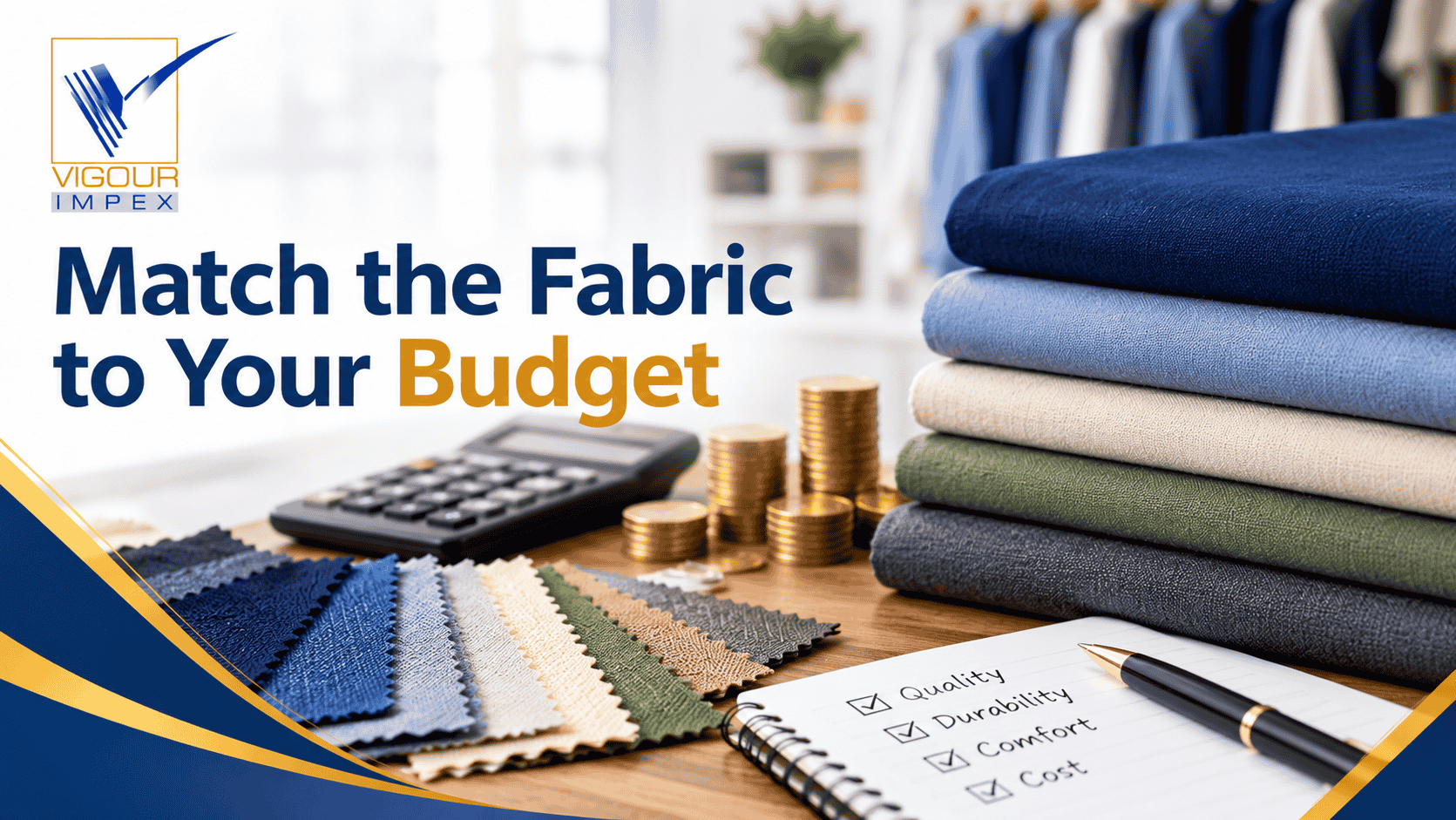
Price matters, but the cheapest fabric is not always the best deal. A low-cost fabric that wears out fast can cost you more in the long run through returns and unhappy customers.
Instead, look for the best value. Think about the cost per garment, not just the cost per meter. Some fabrics are wider, so you waste less when cutting. Some are easier to sew, so you save on labor time.
Here are a few ways to keep costs under control:
- Use blended fabrics instead of pure luxury fibers.
- Order the right amount so you do not have extra waste.
- Compare prices from several fabric suppliers.
- Build long-term relationships with trusted mills for better pricing.
Remember, fabric is only one part of your cost. Dyeing, finishing, sewing, and shipping all add up too.
6. Think About Sustainability and Safety
More buyers today care about how clothes are made. They want fabrics that are kind to people and the planet. This is not just a trend. In many markets, rules about chemicals and safety are strict.
Look for fabrics that meet trusted standards, such as OEKO-TEX or GOTS for organic materials. Ask if the dyes are free from harmful chemicals. Consider options like organic cotton, recycled polyester, or fabrics made with less water.
Choosing responsible fabric can also help your brand stand out. Shoppers love a clear story about where their clothes come from. Learn how responsible sourcing works on the sustainability page.
7. Work With a Reliable Sourcing Partner
Even if you know all the tips above, finding good fabric suppliers can be hard. You need to compare mills, check quality, follow production, and make sure orders arrive on time.
A trusted textile sourcing company can do much of this work for you. A good partner will:
- Find certified, well-checked vendors
- Share honest pricing
- Manage samples and approvals
- Inspect the goods before shipping
- Handle documents and delivery
Pakistan is a strong choice for many buyers because it has a large textile industry, especially in cotton. Vigour Impex has worked as a textile sourcing company in Pakistan since 1992. The team helps global brands with vendor selection, quality control, and shipping. You can read more about Vigour Impex and see how the process works.
Bonus: Don’t Forget the Yarn
Great fabric starts with great yarn. The quality of the yarn changes how soft, strong, and smooth the final fabric feels. If you want more control over your product, it helps to learn about yarn sourcing as well. Once your fabric is ready, you can also look at ready-made options on the garments page.
Final Thoughts
Choosing the right fabric is not about luck. It is about asking the right questions and taking the time to check the details. Know your product and customer, understand fabric types, test quality, request samples, watch your budget, think about sustainability, and work with a partner you can trust.
When you follow these 7 tips, you will make better clothes, keep your customers happy, and grow your brand with confidence.
Ready to source fabric or garments from Pakistan? Contact the Vigour Impex team today to talk about your needs.
Frequently Asked Questions (FAQs)
What is the best fabric for clothing production?
There is no single best fabric. It depends on what you are making. Cotton is great for everyday wear, polyester works well for sportswear, and wool is good for warm winter clothes.
How do I check fabric quality before ordering?
Check the GSM, weave, colorfastness, shrinkage, and pilling. Ask for lab reports and always test samples before you place a bulk order.
What does GSM mean in fabric?
GSM stands for grams per square meter. It tells you how heavy and thick a fabric is. A higher GSM means a heavier fabric.
Why are samples important in garment production?
Samples show you how a fabric really looks, feels, and behaves after washing and sewing. They help you avoid expensive mistakes in bulk production.
Is blended fabric better than pure cotton?
Not always, but blends can be a smart choice. A cotton-polyester blend, for example, wrinkles less and lasts longer, and it often costs less than pure cotton.
Why should I source fabric from Pakistan?
Pakistan has a strong cotton and textile industry, skilled workers, and competitive prices. Working with an experienced sourcing partner makes the process even smoother.