

Starting a clothing brand takes more than choosing a name and designing a logo. You need garments that fit well, feel comfortable, and match the quality your customers expect. You also need a clear plan for sampling, production, and delivery.
Private label clothing manufacturing allows you to sell garments under your own brand while a production partner makes them. Depending on the agreement, you may choose existing styles or request changes to fabrics, colors, sizing, and branding.
For businesses exploring garment sourcing, understanding this process can make supplier discussions easier. This guide explains the main steps, costs, and checks clothing brands should consider before placing an order.
1. What Is Private Label Clothing Manufacturing?
Private label clothing manufacturing means working with a supplier to produce garments sold under your brand name. Your business handles the brand identity and sales, while the supplier handles the agreed production work.
The level of customization varies. Some suppliers offer ready-developed styles with your labels. Others allow changes to measurements, materials, trims, and garment details.
For example, you might select a basic sweatshirt and request a different fabric weight, custom color, embroidered logo, and branded packaging. Always confirm what the supplier includes. The term “private label” alone does not explain how much design control you have or who owns the patterns.
2. Private Label vs. White Label vs. Custom Manufacturing
These terms sometimes overlap, so ask each supplier how they use them.
| Production model | Typical approach | Main consideration |
| White label | Existing garments sold with different brands’ labels | Limited product changes |
| Private label | Supplier-developed garments adapted for your brand | Customization varies |
| Custom manufacturing | Garments developed from your specifications | More development work |
White label clothing can offer a simpler starting point when you need standard products. Private label apparel may provide more room to build a distinct collection.
3. Why Clothing Brands Choose Private Label Production
Private label production gives brands access to garment sourcing and manufacturing without setting up their own factory. This can help small teams focus on product planning, customer service, and sales. When suitable base styles already exist, brands can adjust an established design instead of developing every garment from the beginning.
Another benefit is brand consistency. Labels, approved colors, packaging, and consistent measurements help create a clear identity across your collection. However, these benefits depend on good planning. Private label clothing manufacturing still requires sample approval, quality checks, and clear communication. Documenting your requirements gives the supplier a clear standard to follow.
4. Prepare Your Product Requirements
Before contacting private label clothing manufacturers, decide what you want to make and who will wear it.
Prepare a product brief covering:
- Garment type and intended use.
- Target customer and selling market.
- Fabric composition and weight.
- Size range and fit.
- Colors and order quantities.
- Printing, embroidery, and labels.
- Target delivery date.
A tech pack brings the production details into one document. It usually includes drawings, measurements, construction notes, and a list of materials.
5. Choose Fabrics That Match the Product
Fabric affects comfort, appearance, fit, and garment care. Choose it around the product’s purpose rather than appearance alone.For example, a summer T-shirt and a winter sweatshirt need different fabric weights. Workwear may need stronger construction, while activewear may need stretch and recovery.
Ask about GSM, which means grams per square meter. It describes fabric weight, but it does not prove quality by itself.
Review fabric samples for feel, color, and consistency. Discuss suitable washing and performance tests before approval.Also confirm whether the material is readily available or requires special production. Custom fabrics and colors can affect minimum quantities, pricing, and lead times.
6. Understand Minimum Order Quantities and Costs
A minimum order quantity, or MOQ, is the smallest order a supplier accepts. It may apply per style, color, fabric, or total order.
For example, a quoted MOQ might need to be divided across specific sizes while meeting a separate minimum for each color. Ask for this breakdown in writing. Your budget should include more than the garment price. Consider sampling, labels, decoration, packaging, inspections, freight, and any applicable import costs.
Request a detailed quotation with the currency, payment terms, delivery terms, and included services. Compare quotes using the same specifications. A lower price may reflect a different fabric, simpler stitching, or fewer services rather than better value.
7. Approve Samples Before Bulk Production
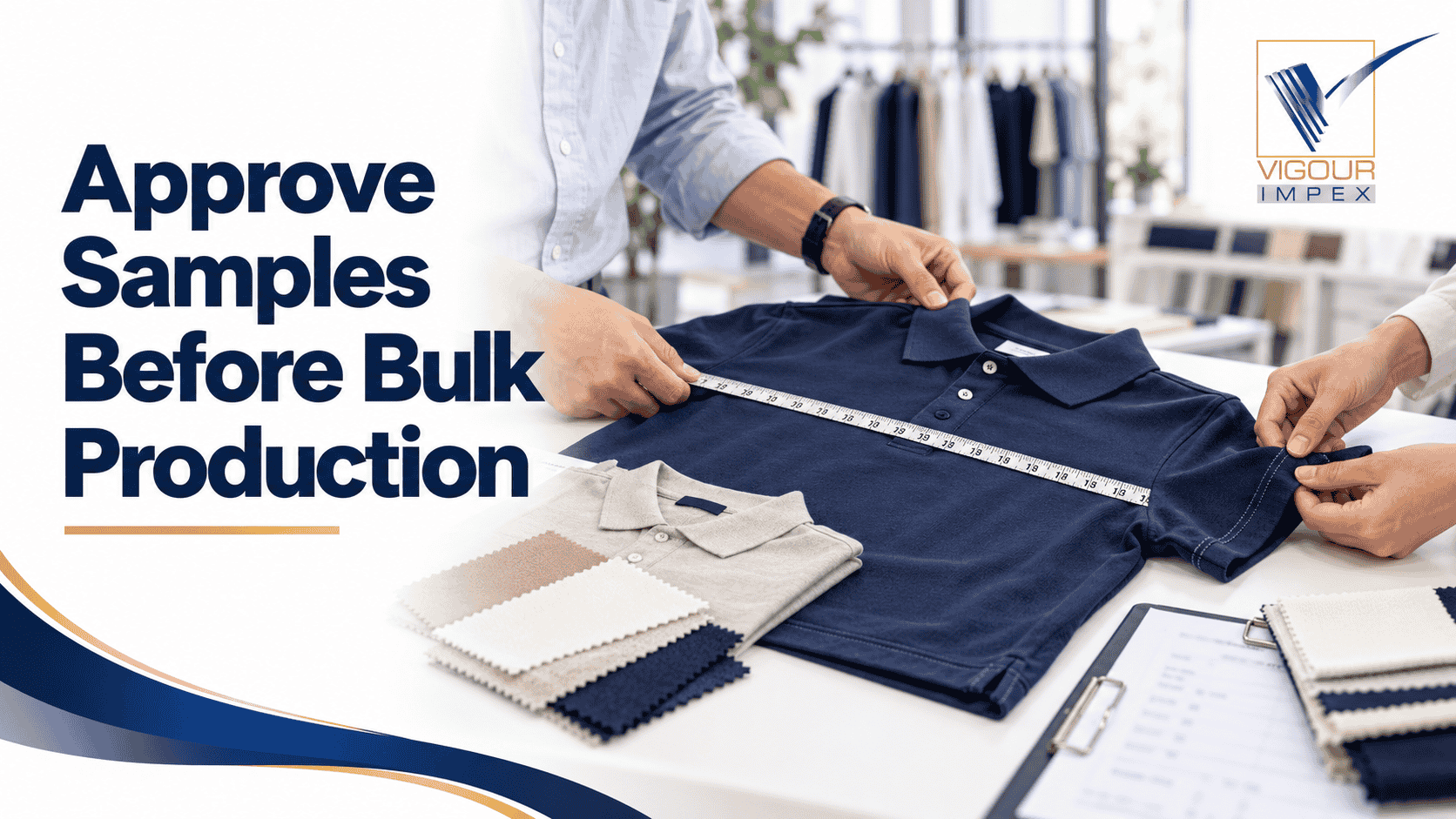
Samples help you check whether the supplier understands your garment requirements before bulk production begins. Early samples may focus on shape and construction, while later samples confirm fit, sizing, colors, and branding. Review measurements, seams, pocket positions, and label placement carefully. Check how the fabric performs after the agreed wash test to identify issues such as shrinkage or color changes.
Record any changes with clear photographs and written comments so the supplier knows what to adjust. Resolve important issues before giving approval, and confirm that the final sample matches the agreed specifications. Keep your own approved reference sample to compare with the finished order. This gives both sides a clear standard for checking production quality.
8. Check Suppliers and Production Quality
Choosing a manufacturing partner involves more than reviewing product photographs. Ask about their experience with your garment category, available machinery, production capacity, and quality procedures. Clarify whether you are working with a factory, sourcing company, or trading business so you understand who handles each stage. A sourcing partner can help coordinate vendor selection, sampling, production follow-up, inspections, and shipping through its sourcing services.
Before production begins, agree on measurement tolerances, acceptable defects, inspection stages, and how quality problems will be resolved. Keep an approved sample as a reference for checking the finished garments. If your order requires specific certifications, verify that they are valid and cover the relevant factory, materials, or products. Clear standards and written responsibilities help reduce misunderstandings throughout production..
9. Plan Branding, Packaging, and Delivery
Private label garments need clear branding instructions. Confirm label size, material, placement, artwork, and attachment method.Packaging also needs specifications. State whether garments should be folded individually, packed by size, or grouped for retail delivery. Share barcode and carton requirements where relevant.
Set a realistic schedule covering materials, samples, production, inspection, and transport. Ask when the lead time begins and which approvals could delay it.
Before shipment, confirm quantities, packing details, and required documents with the responsible parties. Requirements vary by destination and product, so assign responsibility for checking them early.
Final Thoughts
Private label clothing manufacturing can help brands build a collection without managing their own factory. Success depends on clear requirements, suitable materials, careful sampling, and a realistic budget. Begin with products you can test and manage confidently.
To discuss your project, share your garment types, quantities, fabric needs, and delivery goals with the Vigour Impex team. Clear information makes it easier to assess sourcing options and plan the next steps.
Frequently Asked Questions
Can Small Brands Use Private Label Clothing Manufacturing?
Yes, if they find a supplier whose MOQ and services match their needs. Starting with fewer styles and standard materials can make an initial order easier to manage.
Can I Add My Logo and Custom Labels?
Many suppliers offer these options, but availability varies. Confirm printing or embroidery methods, artwork requirements, sample costs, and minimum quantities before ordering.
How Long Does Private Label Production Take?
Timing depends on fabric availability, customization, sample revisions, order size, and factory workload. Request a project schedule instead of relying on a general delivery estimate.
Do I Need a Tech Pack?
A tech pack helps reduce misunderstandings. Some suppliers can assist with development, but you should confirm the cost, responsibilities, and ownership of the resulting files.
How Can I Reduce Quality Problems?
Use clear specifications, approve samples, agree on tolerances, and arrange suitable inspections. Keep written records of changes so the supplier works from the latest approved instructions.