If you want to sell your own line of clothing, you will hear two terms again and again: OEM and ODM. Both are ways to get clothes made by a factory. But they work in very different ways. Picking the wrong one can cost you time, money, and control over your brand.
This guide explains OEM vs ODM in apparel in simple words. You will learn what each model means, how they compare, and how to pick the right one for your business. Whether you run a startup brand, a retail store, or a uniform company, this guide will help you make a smarter garment sourcing choice.
What Is OEM in Apparel?
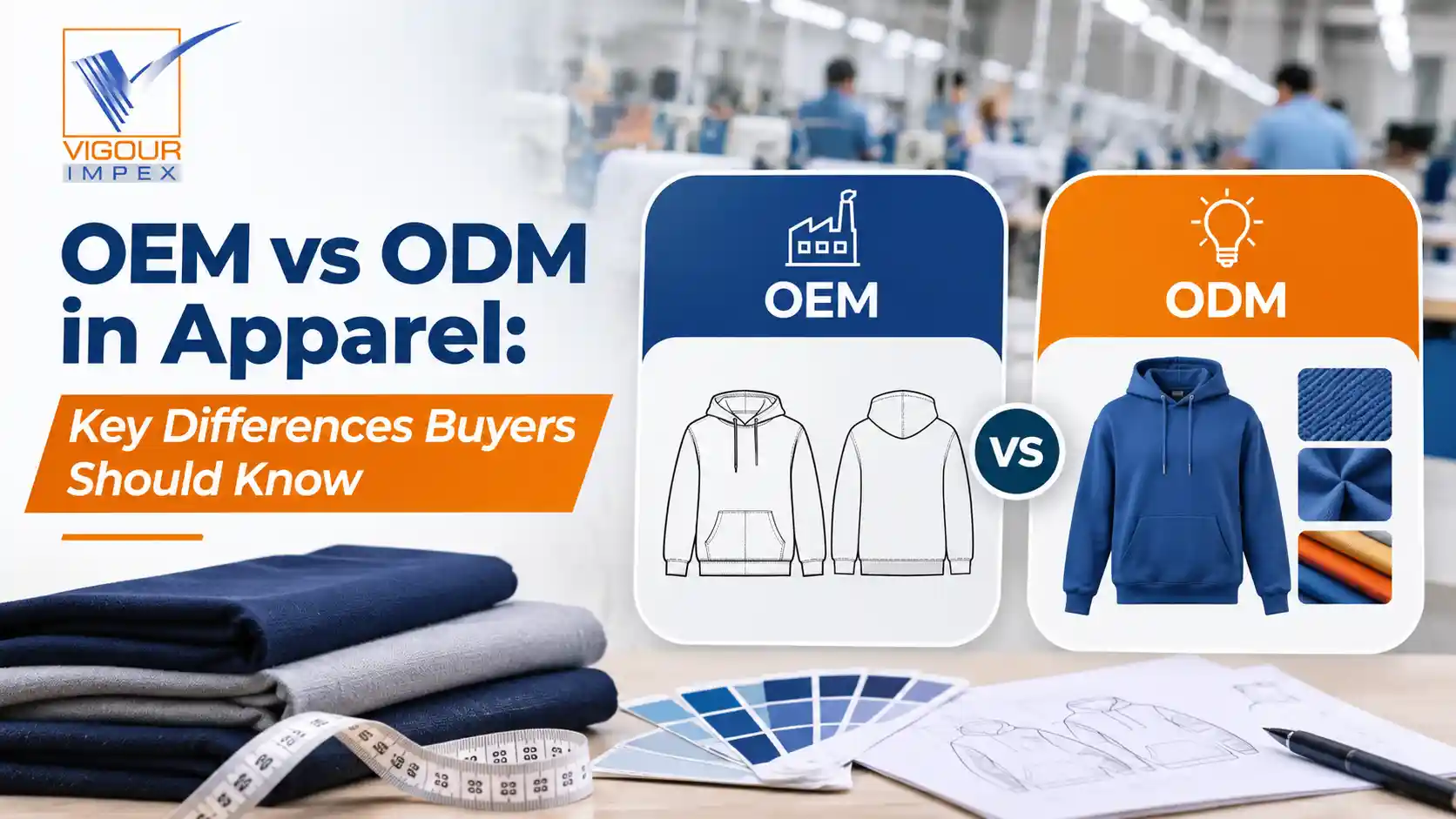
OEM stands for Original Equipment Manufacturer. In the clothing world, it means the factory makes garments based on your design. You bring the idea, and the factory brings the machines and skilled workers.
With an OEM clothing manufacturer, you usually provide:
- A tech pack with sketches, measurements, and size charts
- Fabric choices, such as cotton jersey, fleece, or denim
- Trims and details, like buttons, zippers, labels, and prints
- Colors and packaging instructions
The factory then follows your plan step by step. It makes samples, gets your approval, and starts bulk production. The final product carries your brand name and is 100% your own design.
Example: A sportswear brand designs a new hoodie with a special pocket. It sends the tech pack to an OEM factory. The factory makes the hoodie exactly as drawn, and the brand sells it under its own label.
OEM is common for knitted garments like T-shirts and polos, and for woven garments like shirts and trousers.
What Is ODM in Apparel?
ODM stands for Original Design Manufacturer. Here, the factory has already designed the product. It shows you a catalog of ready-made styles. You pick the ones you like, make small changes, and put your own label on them.
This is often called private label clothing or white label clothing. You might change:
- The color or print
- The logo and neck label
- The packaging and hang tags
- Small details, like button type or stitching color
But the main pattern, fit, and construction belong to the factory. Other brands may sell the same base design with their own logos.
Example: A new online store wants to sell basic sweatpants fast. It picks a proven style from an ODM clothing manufacturer’s catalog. The store chooses three colors and adds its logo. Within weeks, the goods are ready to ship.
ODM works well for simple, high-demand items like basic tees, joggers, and workwear and uniforms.
OEM vs ODM: Key Differences at a Glance
The biggest difference is simple: who owns the design. In OEM, you do. In ODM, the factory does. This one fact changes cost, speed, and control.
| Factor | OEM (Your Design) | ODM (Factory Design) |
| Design ownership | You own it | Factory owns it |
| Creative control | Full control | Limited changes |
| Upfront cost | Higher (samples, patterns) | Lower |
| Time to market | Longer, often 2 to 4 months | Shorter, often 4 to 8 weeks |
| MOQ (minimum order) | Often higher | Often lower |
| Product uniqueness | One of a kind | Others may sell similar items |
| Skills you need | Design and tech pack skills | Mostly branding and sales |
| Best for | Growing and established brands | Startups and fast launches |
Keep in mind that timelines and MOQs change from factory to factory. Fabric type, order size, and season all play a part. Always ask for exact numbers before you commit.
Pros and Cons of OEM and ODM
OEM Pros
- Unique products: No one else can sell your exact design.
- Strong brand identity: Your clothes match your brand vision.
- Full quality control: You choose the fabric, GSM, and trims.
- Long-term value: You own the design and can reorder anytime.
OEM Cons
- Higher costs: You pay for patterns, samples, and changes.
- More time: Sampling and approvals can take months.
- Needs know-how: You need a clear tech pack and fabric knowledge.
ODM Pros
- Fast launch: Designs are tested and ready to go.
- Lower risk: You spend less money before you start selling.
- Easier for beginners: You do not need a design team.
ODM Cons
- Less unique: Competitors may sell almost the same item.
- Limited control: Big changes to fit or style are often not allowed.
- Design rights: You may not own the pattern, so switching factories can be hard.
Fabric weight is one of the most important quality choices in both models. Our guide on fabric GSM for apparel buyers explains how to choose the right weight.
How to Choose Between OEM and ODM
There is no single right answer. The best choice depends on your goals, budget, and stage of business. Ask yourself these questions:
- Do I have my own designs? If yes, OEM is a natural fit. If not, ODM is an easy place to start.
- How fast do I need stock? If you must launch this season, ODM is usually quicker.
- How big is my budget? ODM needs less cash upfront. OEM costs more but builds long-term value.
- How important is being different? If your brand depends on unique styles, choose OEM.
- Can I meet the MOQ? Check each factory’s minimum order before you decide.
Try a Mixed Approach
Many smart brands use both models. They start with ODM basics to test the market and earn cash. Then they move to OEM for hero products that make the brand stand out. For example, you could sell ODM plain tees and OEM signature jackets.
Work With a Trusted Sourcing Partner
Finding the right factory is often the hardest step. A sourcing partner can match you with checked factories, guide sampling, and run quality checks. Vigour Impex has worked in Pakistan’s textile industry since 1992. The company helps buyers with vendor sourcing, product design, production follow-up, quality control, and export support.
This support is useful for both models. OEM buyers get help turning a tech pack into a finished product. ODM buyers get help finding ready styles that match their market. You can explore the full range of garments and fabrics, or see which markets the company serves.
Final Thoughts
OEM and ODM are both good ways to build a clothing brand. OEM gives you full control and one-of-a-kind products, but it costs more and takes longer. ODM is faster and cheaper, but your designs will be less unique.
Start by looking at your budget, timeline, and brand goals. Many buyers begin with ODM and grow into OEM over time. Whichever path you choose, a reliable partner makes the journey smoother.
Ready to start your next apparel order? Explore our products, learn about our sustainability efforts, or get in touch with the Vigour Impex team today.
Frequently Asked Questions (FAQs)
What is the main difference between OEM and ODM in apparel?
The main difference is design ownership. In OEM, the buyer gives the design and the factory makes it. In ODM, the factory supplies its own design, and the buyer adds branding.
Is ODM the same as private label clothing?
They are very close. Private label clothing usually means putting your brand on products made by another company. Most private label clothing comes from ODM factories.
Which is cheaper, OEM or ODM?
ODM is usually cheaper at the start. You skip design, pattern, and heavy sampling costs. OEM costs more upfront, but it gives you a unique product you fully own.
What is a tech pack, and do I need one?
A tech pack is a document with your garment’s sketches, measurements, fabrics, and trims. You need one for OEM production. For ODM, you usually do not need a full tech pack.
What MOQ should I expect from apparel factories?
MOQs vary by factory, fabric, and product. Simple ODM items often have lower MOQs. Custom OEM items may need larger orders, because the factory must buy special fabric and set up new patterns.
Can I switch from ODM to OEM later?
Yes. Many brands start with ODM to test demand. Once sales grow, they invest in OEM designs to build a stronger, more unique brand.
How do I find a reliable OEM or ODM clothing manufacturer?
Check the factory’s experience, certifications, and past clients. Ask for samples before placing a bulk order. Working with a sourcing company can also save time. You can contact Vigour Impex to discuss your project.