



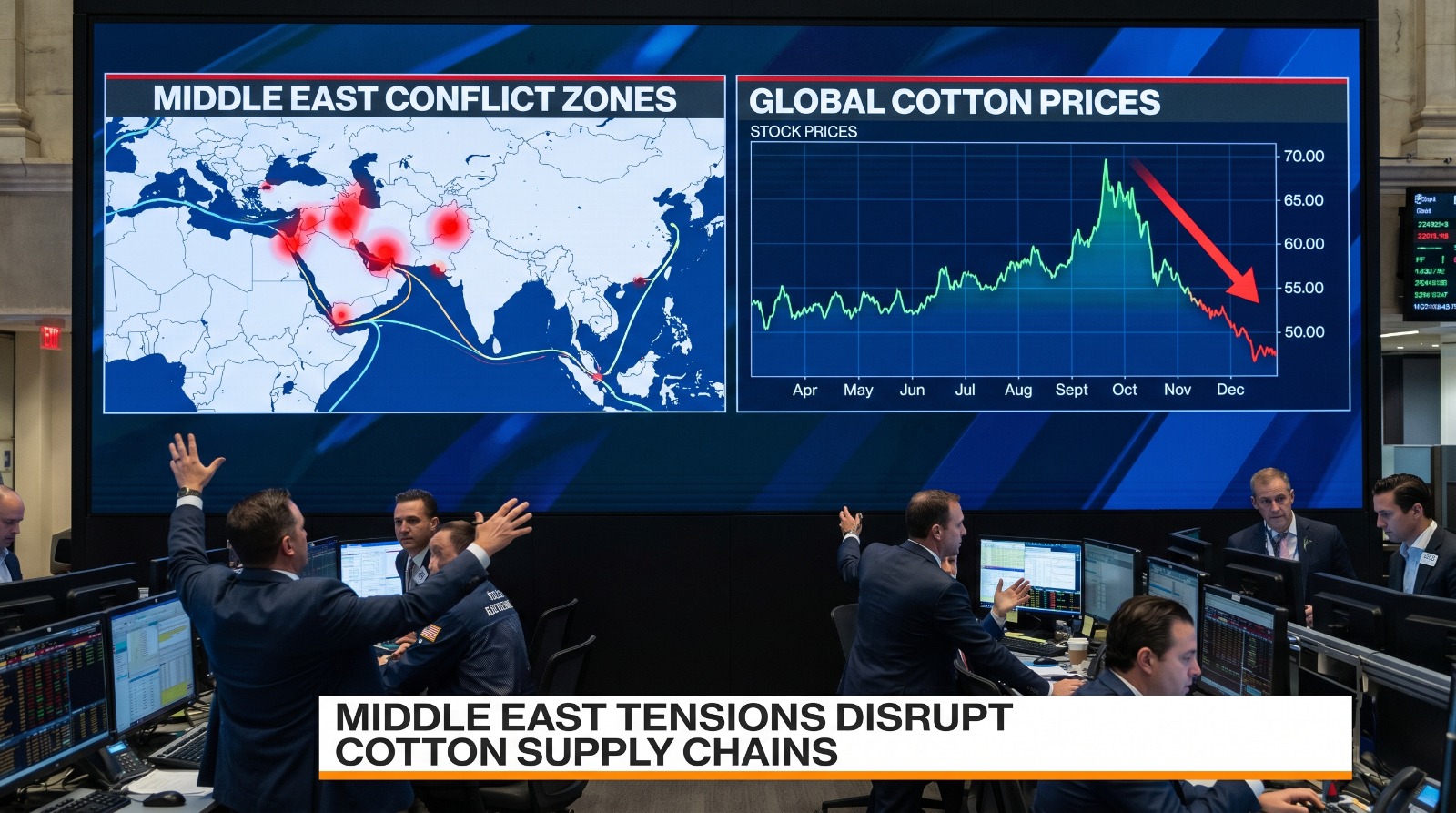
Cotton prices are moving because of events happening thousands of miles from any cotton field. Middle East conflict does not directly affect how much cotton is grown or harvested, but it triggers a chain of economic reactions that pushes global cotton markets into volatility within hours of major headlines.
The connection runs through three channels: oil prices, shipping routes and speculative capital flows in commodity futures markets. Each channel operates independently, but when all three fire simultaneously, the impact on cotton prices is significant and fast-moving.
This article explains exactly how geopolitical instability in the Middle East transmits into cotton market movements, what it means for textile exporters and importers, and what practical steps buyers and suppliers should take to manage the risk.
Sourcing cotton or textile products amid market volatility? Vigour Impex helps buyers and exporters navigate pricing uncertainty with reliable, quality-verified sourcing from Pakistan. Explore our textile range at vigourimpex.com/products.
Why Are Cotton Prices Reacting to the Middle East Conflict?
Cotton is a globally traded commodity, priced in US dollars and settled on international futures exchanges. That means it does not respond only to supply and demand for cotton fiber. It responds to anything that affects the global trade environment, energy costs, or investor risk appetite.
The Middle East is central to all three. The region controls a significant portion of global oil supply, sits astride the world’s most important maritime trade corridors, and generates the kind of geopolitical headlines that push institutional investors toward or away from commodity positions.
When conflict escalates in the region, oil markets move first. Freight markets move second. Future speculation follows. Cotton sits at the intersection of all three dynamics, which is why cotton price volatility tends to spike when Middle East tensions rise, even when physical cotton supply is unchanged.
Cotton prices react to the Middle East conflict through oil-driven polyester cost shifts, shipping route disruption, and speculative buying in ICE cotton futures. The physical cotton supply rarely changes, but market pricing does.
The Oil and Cotton Connection: Why Energy Prices Matter
Polyester is made from petroleum. It is cotton’s primary synthetic competitor in global fiber markets. When Brent crude oil prices rise sharply, polyester production becomes more expensive, and textile mills that blend or substitute synthetic fibers start reconsidering their fiber mix.
This substitution dynamic creates a direct link between crude oil prices and ICE cotton futures. When oil climbs, polyester costs rise, demand for natural fiber alternatives increases, and cotton becomes relatively more attractive to mills managing input costs. Traders in futures markets anticipate this shift and buy cotton contracts ahead of the physical demand increase.
The oil-cotton correlation is not perfectly consistent, but during periods of sharp crude oil price spikes, cotton futures have historically shown a lagged positive response as synthetic fiber prices moved higher. For textile exporters working on fixed-price contracts, this cost structure shift creates immediate margin pressure.
A 10 percent rise in crude oil prices typically filters into polyester costs within two to four weeks. Mills facing higher synthetic fiber prices often increase cotton consumption, which tightens physical cotton supply and supports futures prices.
How Shipping Disruptions Affect Cotton Trade
The Middle East sits adjacent to three of the most important maritime trade corridors in the world. Disruptions to any of them raise freight costs, delay shipments, and push buyers toward spot purchasing behaviour that amplifies cotton price volatility.
| Trigger | Channel | Effect on Cotton Markets |
| Oil price spike | Polyester cost rises | Cotton becomes relatively cheaper substitute |
| Red Sea disruption | Freight rates surge | Supply bottlenecks, spot price spikes |
| Geopolitical headlines | Futures speculation | ICE cotton futures rally on fund buying |
| Currency volatility | USD strengthens | Cotton prices in other currencies become expensive |
| Shipping insurance rises | Logistics cost increase | Exporters raise FOB prices to offset margins |
The Red Sea/Suez Canal route is the shortest path for Asian cotton exporters (Pakistan, India) to European buyers. Houthi attacks in 2023–2024 caused freight rates on Asia-to-Europe routes to more than double, while marine insurance premiums also surged. Exporters faced higher costs that were either passed on to buyers or absorbed as reduced margins.
Threats to the Strait of Hormuz, which handles ~20% of global oil trade, spike energy prices and ripple through commodity markets, including cotton. Rerouting vessels adds 2–3 weeks to delivery times, forcing buyers to order earlier and hold more inventory, further driving short-term demand and price volatility.
Worried about freight costs or cotton pricing affecting your margins? Our sourcing team at Vigour Impex works with buyers across the UK and EU to lock in competitive pricing before market spikes hit. Contact us at vigourimpex.com/contact before your next order window.
What Is the Impact on Textile Exporters and Importers?
The practical impact of cotton market volatility varies depending on where a textile business sits in the supply chain and which markets it serves.
For textile exporters in Pakistan, India, and Bangladesh:
• Raw material cost uncertainty makes it difficult to quote fixed prices on forward orders without building in significant buffers
• Margin pressure intensifies on contracts signed before a price spike, especially when buyers expect delivery at the originally agreed price
• Currency volatility that often accompanies geopolitical events adds a second layer of uncertainty on top of commodity price moves
• Energy-driven production costs rise in tandem with oil prices, compressing margins from both the input and logistics sides simultaneously
For importers sourcing cotton textiles for the UK and EU markets:
• Freight cost fluctuations make landed cost calculations unreliable during periods of shipping disruption
• Delivery lead times extend when vessels are rerouted around conflict zones, affecting inventory planning and seasonal buying windows
• Spot price spikes create pressure to either absorb costs or pass them to retail buyers, neither of which is straightforward in competitive markets
Textile exporters face a dual squeeze during Middle East conflicts: higher raw material costs driven by oil-polyester dynamics, and higher logistics costs from shipping disruption. Importers face delayed deliveries and unpredictable landed costs.
Is This a Temporary Spike or a Structural Shift in Cotton Markets?
History suggests that cotton price reactions to geopolitical events are most often sharp but short-lived. Once oil markets stabilize, shipping lanes reopen or adapt, and the initial speculative buying works through the system, cotton prices tend to revert toward levels driven by physical supply and demand fundamentals.
The key factor is duration. Brief conflicts typically cause temporary spikes followed by corrections. Prolonged disruptions that sustain higher freight and energy costs can lead to lasting structural changes in the textile supply chain.
In 2026, most geopolitical events are expected to cause temporary rather than permanent shifts. However, smart exporters and importers build contingency plans into pricing, contracts, and inventory rather than assuming every spike will quickly fade.
Cotton price spikes triggered by the Middle East conflict are typically temporary if physical supply is unaffected and shipping lanes reopen. Prolonged instability that permanently elevates energy or freight costs produces structural changes that require lasting adjustments to sourcing strategy.
What Should Cotton Buyers and Textile Exporters Do Now?

Volatility in cotton markets requires a response that balances short-term risk management with long-term strategic positioning. The following actions are practical and applicable regardless of whether current tensions escalate or de-escalate.
Strategic Moves for Cotton Buyers
1. Lock contracts during market pullbacks rather than waiting for further price declines that may not arrive
2. Monitor crude oil price trends daily as a leading indicator of polyester cost changes and downstream cotton demand shifts
3. Diversify supplier geographies to reduce exposure to any single export corridor affected by shipping disruption
4. Include freight adjustment clauses in purchase contracts that allow for cost sharing if shipping rates move beyond a defined threshold
5. Build inventory buffer ahead of known geopolitical risk windows, such as periods of confirmed conflict escalation
Strategic Moves for Textile Exporters
6. Include explicit freight and raw material adjustment clauses in all forward contracts rather than absorbing cost spikes unilaterally
7. Hedge cotton raw material exposure through forward purchase agreements with suppliers where possible
8. Communicate proactively with buyers when cost structures shift, rather than waiting until delivery to raise price adjustment requests
9. Evaluate alternative routing options and maintain relationships with multiple freight forwarders to reduce logistics dependency on a single corridor
Explore Vigour Impex’s sourcing services for cotton textiles and get pricing support for your next procurement window.
Final Thoughts
Cotton prices have always been sensitive to weather, harvests, and fiber demand. What has changed is the speed and complexity with which geopolitical events now translate into market movements. The Middle East conflict affects cotton through oil, shipping, and speculative capital simultaneously, and all three channels can fire at once.
For exporters, mills, and buyers, the key is not predicting the next headline. It is building a procurement and pricing strategy that assumes volatility is the baseline condition, not the exception. The businesses that navigate cotton market disruptions best are those that are prepared before the spike, not after it.
Protect Your Sourcing Margins Before the Next Price Spike
Vigour Impex supplies quality-verified cotton textiles and apparel to buyers in the UK, EU and USA. We monitor market conditions actively and help clients plan purchases around volatility windows. Visit vigourimpex.com/products or contact our team to discuss your next order.
Frequently Asked Questions
How does the Middle East conflict affect cotton prices?
Middle East conflicts drive cotton prices higher through three channels: rising oil prices make polyester more expensive (boosting cotton demand), Red Sea/Suez shipping disruptions increase freight costs, and geopolitical uncertainty triggers speculative buying in cotton futures.
Is the oil price and cotton price relationship real?
Yes. Higher oil prices raise polyester production costs, prompting textile mills to shift toward cotton. This substitution effect, combined with futures trading, creates a real but imperfect correlation strongest during sustained oil price spikes.
How do shipping disruptions in the Middle East affect textile exporters?
Disruptions in the Red Sea and Suez Canal increase freight rates, insurance premiums, and voyage times (by 1–3 weeks) for exporters in Pakistan, India, and Bangladesh. This raises costs and
delays deliveries to European buyers.
Should textile buyers lock cotton contracts during geopolitical uncertainty?
Yes, it is generally wise. Buyers should lock in a portion of their needs during price dips rather than wait for lower prices, which may never come. A partial hedging approach balances risk and opportunity.