


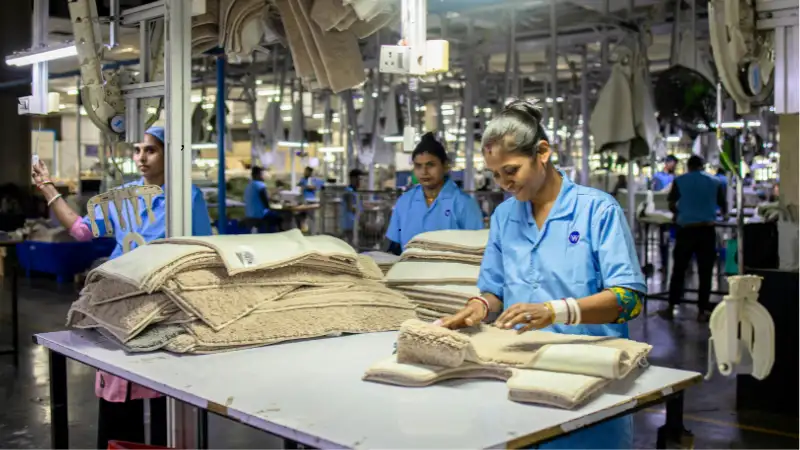
Pakistan is the world’s eighth largest textile exporter with over 17 billion USD in annual textile and garment shipments. Verified textile manufacturers in Pakistan cluster around Faisalabad (yarn and home textile), Karachi (knitwear and denim), Lahore (woven garments), and Sialkot (sportswear). Buyers should verify membership of APTMA or PRGMEA, request a current TUV or OEKO-TEX certificate, ask for three reference customers, and place a paid sample order before signing a bulk PO. Trial MOQs typically start at 500 to 1,500 pieces.
Why Pakistan is Still a Top Sourcing Hub in 2026
Pakistan combines three advantages that few competing countries match. First, the country grows roughly 5 to 6 million bales of cotton per year, which gives local mills a steady raw material supply. Second, the textile workforce of around 3.7 million is large, English literate at supervisory level, and trained in modern compliance. Third, the cluster geography places spinning, weaving, dyeing, finishing, and stitching units within a single province for most categories, which compresses lead times.
For international buyers the practical result is competitive pricing on cotton heavy categories like bedsheets, towels, denim, knitwear, and basics, with lead times that beat many regional alternatives.
The Four Major Textile Clusters in Pakistan
Faisalabad: Yarn, Bedding and Home Textiles
Faisalabad is the manufacturing capital of Pakistan and the home of cotton yarn, grey fabric, bedsheets, towels, kitchen linen, and curtains. Major exporters in this cluster supply IKEA, John Lewis, Bed Bath and Beyond, and large Middle East distributors. Yarn counts range from 6s to 80s with both carded and combed options.
Karachi: Knitwear, Denim and Vertical Manufacturing
Karachi handles a large share of national knitwear and denim production with several vertically integrated mills that cover spinning, dyeing, knitting, and stitching under one roof. Brands sourcing T-shirts, polos, fleece, jeans, and basics rely on Karachi for volume and consistency.
Lahore: Woven Garments and Fashion
Lahore covers woven shirts, dresses, trousers, embellished fashion, and traditional wear for both export and domestic markets. The cluster strength is craftsmanship and design adaptation, which suits brands that need lower MOQs and faster sampling cycles.
Sialkot: Sportswear, Workwear and Leather Garments
Sialkot is the global hub for footballs, sports apparel, martial arts gear, workwear, and high specification stitched goods. The city supplies to Adidas, Puma, Decathlon, and most major BJJ and MMA brands worldwide.
How to Verify a Pakistani Textile Manufacturer in Six Steps
Step 1: Check Trade Body Membership
Genuine exporters hold membership of at least one recognised body. Confirm membership on the official sites of the All Pakistan Textile Mills Association (APTMA), the Pakistan Readymade Garments Manufacturers and Exporters Association (PRGMEA), or the Pakistan Hosiery Manufacturers Association (PHMA).
Step 2: Verify Trade Licence and Tax Registration
Every legitimate exporter holds a National Tax Number (NTN) and a Sales Tax Registration Number (STRN). Ask for both, then cross check on the Federal Board of Revenue portal. This single check filters out a large share of fake middlemen.
Step 3: Request Current OEKO-TEX, GOTS, or BCI Certificates
European retailers expect chemical and material certifications. The relevant ones in 2026 are OEKO-TEX Standard 100 for chemical safety, GOTS for organic cotton, BCI for Better Cotton sourcing, and ISO 14001 for environmental management. Verify each certificate on the issuer’s online registry, not on a PDF the supplier sends you.
Step 4: Ask for Three Reference Customers in Your Region
A trustworthy exporter will share three buyer names from your own region with similar product use. Email those buyers directly and ask three questions. Did the supplier deliver on time? Was the quality consistent? How did they handle disputes? Honest references will respond inside three working days.
Step 5: Conduct a Virtual or Physical Factory Visit
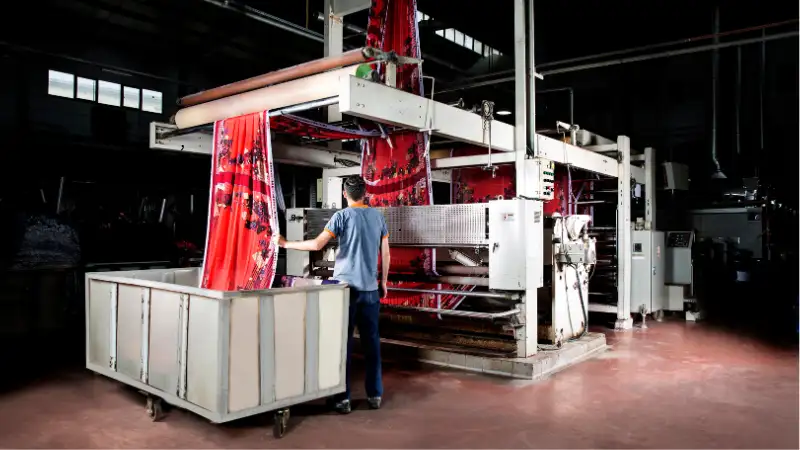
Schedule a video walk through of the spinning, weaving, dyeing, and finishing departments. Note the machinery brands, the floor cleanliness, and the way supervisors respond to questions. For orders above 50,000 USD a physical visit is worth the travel cost.
Step 6: Order a Paid Sample Lot
Never skip the paid sample. Order between 50 and 200 pieces depending on category and test for weight per square metre, shrinkage, colour fastness, seam strength, and packaging accuracy. Keep the sample as the counter reference for the bulk shipment.
Pakistan Textile Pricing Guide 2026 (FOB Karachi)
| Product | Specification | FOB Price (USD) | Typical MOQ |
| Cotton T-shirt (180 GSM) | 100% combed cotton | 2.10 to 3.40 per piece | 1,000 pieces |
| Cotton Polo (220 GSM) | Pique knit, embroidered | 3.40 to 5.20 per piece | 500 pieces |
| Denim Jeans (12.5 oz) | Right hand twill, sanforised | 5.90 to 9.50 per piece | 1,000 pieces |
| Bedsheet set (200 TC) | Cotton percale, 4 piece | 10.50 to 16.40 per set | 1,500 sets |
| Bath towel (500 GSM) | 100% combed cotton | 3.20 to 5.50 per piece | 2,000 pieces |
| Carded cotton yarn (20s) | Ring spun, 100% cotton | 2.90 to 3.30 per kg | 5,000 kg |
| Combed cotton yarn (30s) | Ring spun, 100% cotton | 3.40 to 3.95 per kg | 5,000 kg |
| Sports T-shirt (sublimated) | Polyester interlock, full sublimation | 5.50 to 8.40 per piece | 200 pieces |
Prices were verified with three Faisalabad based mills and two Sialkot based stitching units in April 2026. Currency volatility and cotton harvest cycles can move these by 5 to 12 percent within a year.
The Five Most Common Buyer Mistakes
- Trusting WhatsApp catalogues. Always confirm specs in a signed Pro Forma Invoice with line item details.
- Paying through personal accounts. Legitimate exporters invoice from registered company accounts in USD.
- Skipping the paid sample. Free samples are the best lot. Paid samples reflect production reality.
- Vague colour specs. Always reference Pantone codes and provide a physical swatch where colour matters.
- No pre shipment inspection. Booking a 300 USD inspection protects a 50,000 USD shipment from disputes.
Pakistan vs Bangladesh vs India for Textile Sourcing
| Origin | Strength | Avg T-shirt FOB (USD) | Best For |
| Pakistan | Cotton heavy basics, home textile, denim | 2.10 to 3.40 | Bedding, towels, denim, basics |
| Bangladesh | Knitwear scale, low cost | 1.80 to 2.90 | High volume knit basics |
| India | Broad mix, fashion variety | 2.30 to 3.80 | Fashion, embellished wear |
| Vietnam | Synthetic fibre, sportswear | 2.60 to 4.20 | Activewear, technical fabrics |
Pakistan wins on cotton fabric quality, home textile, and denim. Bangladesh wins on bulk knit basics at lower price points. India wins on fashion variety and embellishment. Vietnam wins on technical and synthetic fabrics.
Payment Terms That Protect Both Sides
- Standard terms: 30 percent advance against Pro Forma Invoice, 70 percent on copy of bill of lading.
- Letter of Credit: Recommended for orders above 25,000 USD. Use a tier one bank such as HBL, MCB, or Standard Chartered.
- Trade Assurance or escrow: Suitable for first orders below 25,000 USD.
- Never pay 100 percent in advance. No reputable exporter requires it.
Why Buyers Choose Vigour Impex
Vigour Impex operates as a sourcing and export partner across the Faisalabad, Karachi, Lahore, and Sialkot clusters. We pre vet mills against compliance and consistency benchmarks, manage sampling, and handle inspection, so international buyers get one accountable point of contact instead of five fragmented supplier relationships. Every shipment goes out with OEKO-TEX or BCI documentation as required and a pre shipment inspection report on demand.
Explore our full services overview, read our portfolio of past shipments, or learn more about how we source yarn from Pakistan. To request a sample lot use the contact form.
Final Thoughts
Pakistan remains one of the strongest textile sourcing destinations in 2026, but the country still has hundreds of small operators that do not meet international standards. The job of the buyer is to filter signal from noise. Use the six step verification process above, demand documentation, never skip the paid sample, and treat the first order as a relationship test. Buyers who follow this discipline build supply chains that last for years.
To start a sourcing conversation request a digital catalogue through the Vigour Impex contact page today.
Frequently Asked Questions
How do I find a verified textile manufacturer in Pakistan?
Verify trade body membership (APTMA, PRGMEA, or PHMA), check NTN and STRN registration, request current OEKO-TEX or BCI certificates, ask for three reference customers, conduct a virtual or physical factory visit, and order a paid sample lot before placing a bulk PO.
What is the minimum order quantity for textile manufacturers in Pakistan?
MOQs vary by category. Basic T-shirts start at 1,000 pieces, polos at 500 pieces, denim jeans at 1,000 pieces, bedsheet sets at 1,500 sets, towels at 2,000 pieces, and sublimated sportswear from 200 pieces.
How long does production and shipping take from Pakistan to Europe?
Production takes 30 to 60 days depending on category. Sea freight from Karachi to Hamburg or Rotterdam adds 28 to 35 days. Air freight reduces transit to 5 to 7 days. Full door to door delivery typically takes 60 to 90 days by sea.
Which Pakistani textile cluster is best for my product?
Faisalabad for yarn, bedding, towels, and home textile. Karachi for knitwear, denim, and vertical manufacturing. Lahore for woven garments and fashion. Sialkot for sportswear, workwear, and stitched leather goods.
What certifications should I demand from a Pakistani textile exporter?
OEKO-TEX Standard 100 for chemical safety, GOTS if you need organic cotton, BCI for Better Cotton, ISO 9001 for quality management, ISO 14001 for environmental management, and a current SGS or Intertek lab test report for your batch.
Is Pakistani textile quality better than Bangladeshi?
Pakistan generally leads on cotton quality, home textiles and denim. Bangladesh leads on bulk knit basics at lower prices. The right choice depends on the product category, target retail price, and required compliance level.