

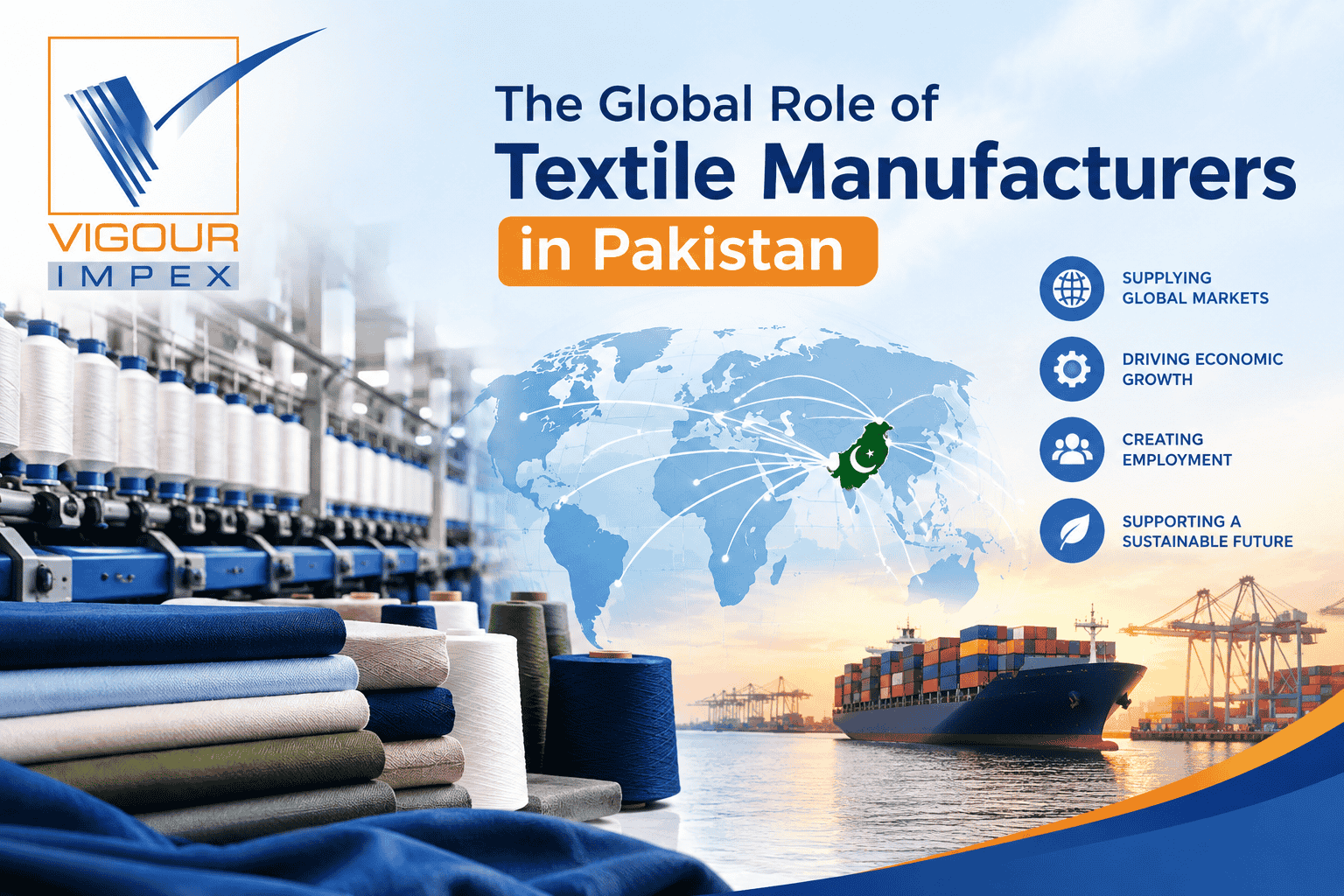
When a shopper in London buys a set of cotton bed sheets, when a hotel in Dubai restocks its towels, or when a retailer in New York fills its shelves with denim, there is a strong chance that the product began its journey in Pakistan. For decades, textile manufacturers in Pakistan have quietly powered some of the world’s best-known retail supply chains. Today, the country is not just a supplier of raw cotton but a full-spectrum textile hub producing everything from yarn to finished, retail-ready garments.
This article explores the global role of textile manufacturers, the key products and markets that make Pakistan competitive, the challenges it faces, and how international buyers can source efficiently through an experienced textile sourcing company in Pakistan.
Pakistan’s Textile Industry by the Numbers
Textiles are the backbone of Pakistan’s economy. According to the Pakistan Textile Council’s annual report, textile and apparel exports reached $18 billion during fiscal year 2025-26, a modest 0.3 per cent increase from $17.95 billion a year earlier, even as the country’s overall exports declined by 5.9 per cent to $30.14 billion. The same report shows the sector remained the country’s largest export earner and accounted for roughly 60 per cent of national exports during FY26.
What stands out most is the shift toward higher-value products. Exports of value-added products under Chapters 61-63 increased by 1.1 per cent to $14.98 billion, and their share of total textile and apparel exports rose to 83.2 per cent, up from 77 per cent in FY22. In other words, Pakistan is increasingly exporting finished goods rather than raw inputs, a sign of a maturing, globally integrated industry. Daily independent
Garments have been a particular bright spot. Readymade garment exports climbed to a record $4.18 billion in FY2025-26, a 5.5 percent year-on-year increase and a new all-time high for the value-added sector, and have more than doubled over the past decade from $1.97 billion in FY2015-16. propakistanipropakistani
Why Global Brands Rely on Textile Manufacturers in Pakistan
1. A Fully Integrated Cotton Value Chain
Pakistan is one of the world’s major cotton-growing nations, and that gives its manufacturers a rare advantage: vertical integration. Many mills control the process from ginning and spinning through weaving, dyeing, finishing, cutting and stitching. This means shorter lead times, better traceability and tighter control over quality.
For buyers, integration translates into consistency. A retailer ordering bedding in multiple seasons can expect the same hand-feel, shade and thread count because the entire process sits under a small number of trusted partners.
2. Competitive Pricing Without Compromising Quality
Labor costs, local raw materials and decades of manufacturing know-how allow Pakistani producers to deliver strong price-to-quality ratios. For mid-market and value retailers in Europe, the USA and Australia, this balance is exactly what they need to protect margins while meeting customer expectations.
3. Deep Expertise in Home Textiles
Home textile manufacturers in Pakistan are among the most respected in the world. Bed linen, towels, kitchen linens and institutional textiles are core strengths. PTC data shows home textile and made-up articles increased 0.6 per cent to $5.705 billion in FY26, confirming that global demand remains steady. dailyindependent
Buyers can explore specialized categories such as bedding and home furnishing, bathroom accessories, kitchen textile accessories, and institutional textiles for hotels and hospitals, all sourced through Pakistan’s established manufacturing base.
4. Strong and Growing Apparel Capability
Pakistan’s garment sector has evolved from basic knitwear into a sophisticated industry producing denim, woven shirts, workwear, uniforms and fashion basics. Non-knit apparel recorded the strongest growth among the major value-added segments, with exports rising 3.9 per cent to $4.295 billion, while knitwear remains a multi-billion-dollar category. Buyers seeking ready-made garments will find certified factories capable of meeting both fashion and technical requirements. Daily independent
Denim deserves a special mention. Pakistan is home to some of the world’s largest denim mills, supplying premium global jeans brands. For a detailed look, see this guide to denim fabric sourcing from Pakistan in 2026.
The Core Product Categories
Understanding what Pakistan produces helps buyers plan their sourcing strategy. The industry broadly covers four pillars:
Yarn: Pakistan is a major supplier of cotton and blended yarns to mills across Asia and Europe. FY26 figures show cotton yarn exports soared by 12.40 percent to $765 million, up from $680 million in the previous financial year. Buyers looking for reliable cotton yarn suppliers can review available yarn qualities. If you are new to technical specifications, this yarn count and fabric density guide is a useful starting point. for apparel and home use are widely available. Explore Pakistan-made fabric options for your product line.
Home Textiles: From percale sheets to terry towels and aprons, the home textiles segment is where Pakistan truly leads. For the latest buyer insights, read home textile sourcing trends for 2026.
Garments: Men’s, women’s and children’s apparel, uniforms and workwear, produced in compliant and audited facilities.
Pakistan’s Key Export Markets
Textile manufacturers in Pakistan serve a truly global customer base. The most significant destinations include:
- United States: The single largest market for Pakistani denim, home textiles and knitwear. Learn more about sourcing for the USA market.
- European Union and the UK: Pakistan’s GSP+ status gives many products preferential access to the EU, making it a favored partner for German, Italian and Spanish retailers. See dedicated sourcing pages for the United Kingdom, Germany and Italy.
- Middle East: Hotels, hospitals and retailers across the Gulf rely on Pakistani towels, bedding and uniforms. Explore Middle East sourcing.
- Australia, New Zealand and Canada: Growing markets for home textiles and value apparel, served through dedicated programs for Australia, New Zealand and Canada.
You can view the full list of regions served on the markets page.
Sustainability: The New Competitive Edge
Global buyers now expect more than price and quality. They want proof of ethical labor, responsible water use, reduced chemical impact and traceable raw materials. Pakistani manufacturers have responded with investments in solar power, water recycling and effluent treatment plants, alongside certifications such as OEKO-TEX, GOTS, BCI cotton, GRS and social compliance audits like WRAP, BSCI and SEDEX.
Sustainable textile sourcing is no longer optional for exporters targeting European retailers, especially as regulations on supply chain due diligence tighten. Buyers can learn more about responsible practices on the sustainability page.
Challenges Facing the Pakistan Textile Industry
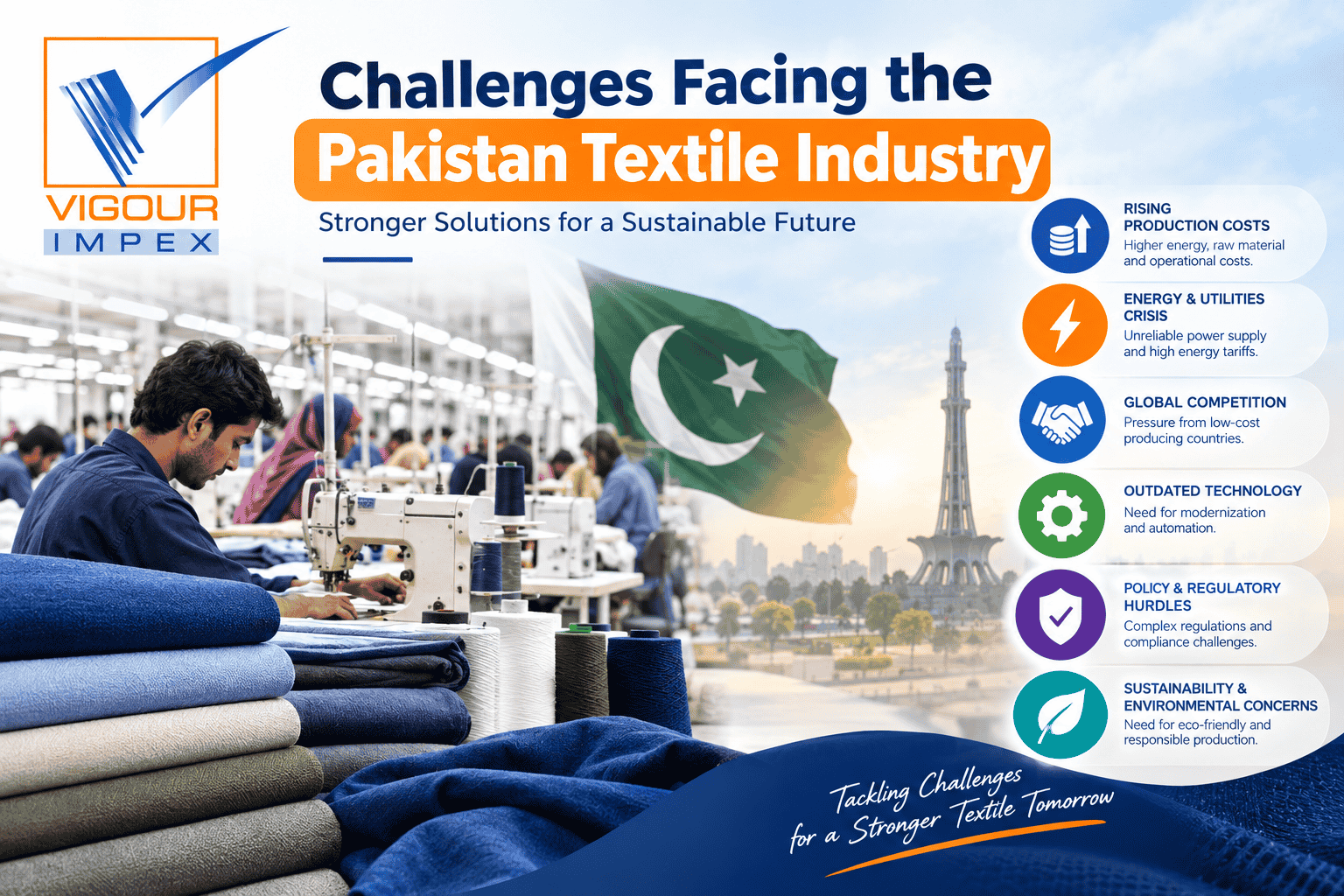
A balanced view must acknowledge the headwinds. The FY26 figures reveal a sector that is resilient but not immune to pressure. Across the full year, knitwear exports declined by 0.88 percent to $4.966 billion, towel exports fell by 1.93 percent to $1.06 billion, while cotton cloth exports dropped 7.55 percent to $1.67 billion. The PTC report also notes that raw materials and intermediate goods continued to decline.
The key challenges include:
- High energy costs: Electricity and gas tariffs remain higher than in competing countries such as Bangladesh, Vietnam and India.
- Cotton production volatility: Weather events and pest pressure affect domestic cotton output, increasing reliance on imports.
- Currency and policy uncertainty: Exchange rate fluctuations and changing tax regimes complicate long-term pricing.
- Regional competition: Neighboring countries are aggressively expanding capacity and securing trade agreements.
Despite these hurdles, the steady rise in value-added share shows that the industry is adapting by moving up the value chain rather than competing purely on volume.
How International Buyers Can Source Successfully from Pakistan
For a brand or retailer new to Pakistan, navigating hundreds of mills and factories can be overwhelming. This is where a professional textile buying house in Pakistan adds real value. A good sourcing partner acts as the buyer’s eyes and ears on the ground, handling:
- Vendor selection: Shortlisting certified, financially stable and compliant factories that match your product and price point.
- Product development: Translating design briefs into samples aligned with market trends.
- Market research: Providing insights on raw material prices, capacity and lead times.
- Production follow-up: Monitoring every stage to keep orders on schedule.
- Quality control: Conducting in-line and pre-shipment inspections against agreed standards.
- Shipping and documentation: Managing logistics and export paperwork for smooth delivery.
These end-to-end sourcing services reduce risk, cut communication gaps and help buyers scale without building their own offices abroad.
Founded in Lahore in 1992, Vigour Impex has spent more than three decades connecting international retailers with a vetted network of over 125 approved vendors across yarn, fabric, home textiles and garments. Buyers can browse the full product range or take a virtual E-Tour to see operations first-hand.
The Future of Textile Manufacturers in Pakistan
Looking ahead, the global role of Pakistan’s textile sector is likely to grow in importance as brands diversify their supply chains away from single-country dependence. Several trends will shape the next decade:
- More value addition: Continued growth in garments and technical textiles rather than raw yarn and greige cloth.
- Green manufacturing: Wider adoption of renewable energy, recycled fibers and water-saving technologies.
- Digital supply chains: Better traceability, ERP integration and real-time production tracking for buyers.
- Nearshoring alternatives: Pakistan positioning itself as a reliable “China plus one” option for Western retailers.
For buyers, staying informed is essential. Regular updates on prices, policy and demand are published on the Market Watch and Events and News sections.
Final Thought
Textile manufacturers in Pakistan play a central role in clothing and furnishing homes around the world. With an integrated cotton value chain, deep expertise in home textiles, a fast-growing apparel sector and a strengthening sustainability profile, Pakistan offers global buyers quality, value and reliability. Challenges around energy and competition are real, but the industry’s steady shift toward higher-value products shows its ability to adapt.
For retailers and brands ready to tap into this potential, the smartest path is partnering with an experienced sourcing company that understands both local manufacturing and international standards. To discuss your requirements for yarn, fabric, home textiles or garments, contact the Vigour Impex team today.
Frequently Asked Questions
Why are textile manufacturers in Pakistan important to the global market?
Pakistan is one of the world’s leading cotton-producing countries with a fully integrated value chain, from spinning and weaving to dyeing, finishing and stitching. This allows textile manufacturers in Pakistan to supply yarn, fabric, home textiles and garments to major retailers in the USA, UK, Europe, the Middle East and Australia at competitive prices.
How much does Pakistan earn from textile exports?
According to the Pakistan Textile Council, textile and apparel exports reached around $18 billion in FY2025-26, making up roughly 60% of the country’s total exports. This makes the Pakistan textile industry the country’s largest export earner.
What textile products does Pakistan export the most?
Pakistan’s key exports include knitwear, bedwear, readymade garments, towels, cotton fabric, cotton yarn and denim. Home textiles and garments form the largest share, and value-added products now account for more than 80% of total textile exports. Explore the full product range.
Why is Pakistan famous for home textiles?
Home textile manufacturers in Pakistan have decades of experience producing bed sheets, duvet covers, towels, kitchen linens and institutional textiles for hotels and hospitals. Access to local cotton, skilled labor and modern processing units makes Pakistan a trusted source for home textiles.
Which countries import the most textiles from Pakistan?
The United States is the largest buyer, followed by the European Union, the United Kingdom, the Middle East, Canada and Australia. Pakistan’s GSP+ status also gives many products preferential access to EU markets. See all markets served.
Are Pakistani textile manufacturers sustainable and compliant?
Many leading mills hold certifications such as OEKO-TEX, GOTS, BCI, GRS, WRAP, BSCI and SEDEX. Manufacturers are also investing in solar energy, water recycling and effluent treatment. Learn more about sustainable textile sourcing.
What challenges does the Pakistan textile industry face?
The main challenges are high energy costs, fluctuating cotton production, currency volatility and strong competition from Bangladesh, Vietnam and India. Despite this, the industry continues to grow its share of value-added exports.