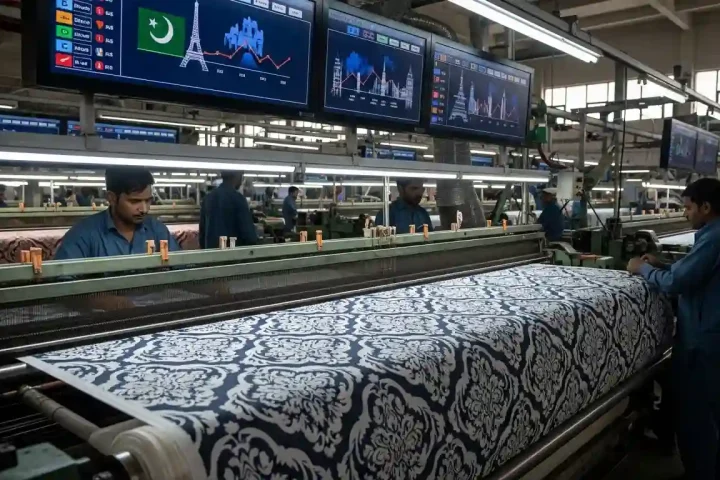




Exporting textiles into the UK market is not simply a logistics exercise, it is a compliance challenge that begins long before goods leave the factory floor. Since the UK’s departure from the EU, product safety enforcement, labeling rules, and chemical restrictions have been independently reinforced under domestic legislation. For manufacturers, exporters, and sourcing partners, the cost of getting this wrong ranges from delayed shipments to permanent market bans.
See how Vigour Impex manages compliance as part of its end-to-end sourcing services.
▎ Most exporters encounter compliance gaps only after a shipment is rejected. Our sourcing team identifies and resolves these issues before goods ship. Talk to the Vigour Impex team today.
What Are UK Textile Import Compliance Requirements?
UK textile import compliance refers to the complete set of legal, regulatory, and documentary obligations that textile products must meet before they can be legally sold in the United Kingdom. These requirements span product safety, chemical content, labeling accuracy, and customs documentation.
Since 2021, the UK has operated its own regulatory framework independently from the EU. This means EU CE marking and REACH compliance, while still relevant for EU-bound goods, do not automatically satisfy UK market entry rules. UK-specific obligations include:
• Legal product safety obligations under the General Product Safety Regulations 2005 (GPSR)
• Chemical and material restrictions aligned with UK REACH and the UK Persistent Organic Pollutants Regulation
• Textile labeling requirements under the UK Textile Products (Labelling and Fibre Composition) Regulations 2012
• Customs documentation and import declaration standards managed by HMRC
Failure to meet any of these obligations at the point of import can result in shipment holds, product recalls, or prohibition from sale.
Which UK Product Safety Regulations Apply to Textile Imports?
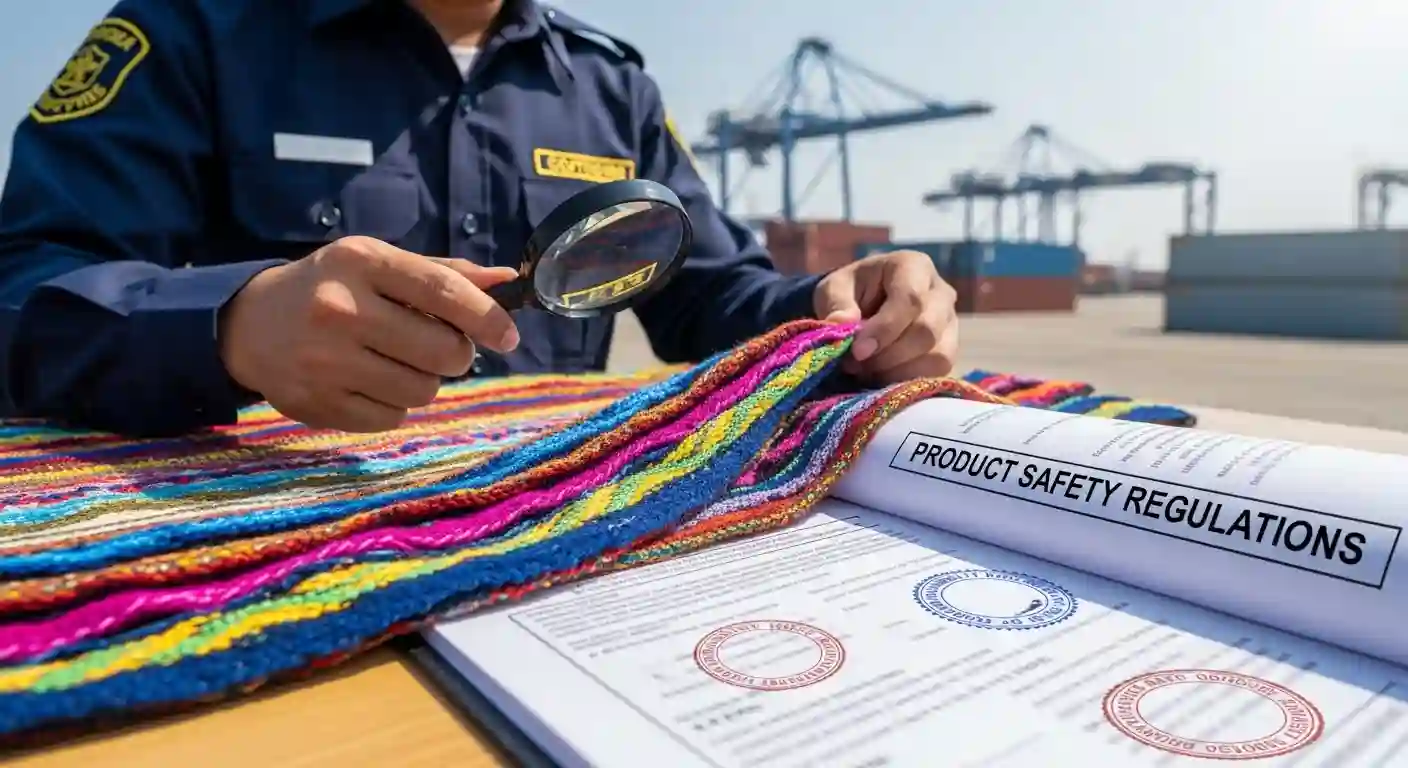
The primary legal framework governing textile product safety in the UK includes several overlapping regulations, depending on the product category:
• General Product Safety Regulations 2005 (GPSR): Applies to all consumer products, including textiles. Products must be safe under reasonably foreseeable conditions of use. Importers bear responsibility for ensuring compliance at the point of placing products on the UK market.
• Furniture and Furnishings (Fire Safety) Regulations 1988 (amended): Applies to upholstered furniture, cushions, and filling materials. Strict flammability standards apply to fabrics used in these applications, a critical compliance area for home textile exporters.
• UK REACH (Registration, Evaluation, Authorisation and Restriction of Chemicals): Controls the use of hazardous substances in textile manufacturing. Restricted substances lists are enforced at the border.
• Consumer Protection Act 1987: Provides a legal basis for enforcement action against unsafe products, including civil liability for damage caused by non-compliant goods.
Regulatory oversight for import control is managed by HM Revenue & Customs (HMRC), while product regulation frameworks fall under the Department for Business and Trade. Exporters of home textiles, garments, and fabrics must each verify which specific regulations apply to their product category before shipment.
What Chemical Compliance Standards Apply to Textiles Entering the UK?
Chemical compliance is one of the most technically complex and most strictly enforced areas of UK textile import regulation. Key requirements include:
• Restricted Substances in Dyes and Finishes: Azo dyes that release carcinogenic aromatic amines are prohibited. Certain flame retardants, formaldehyde levels, and heavy metals are also restricted under UK REACH annexes.
• Chemical Safety Documentation: Importers should maintain Safety Data Sheets (SDS) for chemical treatments applied during production. The Border Force may request these documents during an inspection.
• Material Testing and Reporting: Independent laboratory testing against restricted substances lists (RSL) is the accepted method for demonstrating compliance. Test reports should reference the relevant UK REACH restriction entries.
Many sourcing partners and importers align their chemical compliance processes with UK REACH frameworks to ensure restricted chemical control and supply chain transparency. Vigour Impex supports buyers in verifying chemical compliance across all product categories, including yarns and processed fabrics. Learn about Vigour Impex’s sustainability and compliance approach.
▎ See how our quality inspection and compliance management process reduces rejection risk for UK-bound shipments. View Vigour Impex services.
What Are the Textile Labeling Requirements for UK Market Entry?
Incorrect or incomplete labeling is the most common reason textile shipments are delayed or rejected at UK customs. The UK Textile Products (Labelling and Fibre Composition) Regulations 2012 require that all textile products placed on the UK market carry accurate, clearly readable labels that include:
• Fiber Composition Disclosure: All fiber types present at 80% or more must be named. Mixtures may use ‘other fibers’ for components below this threshold, but exact percentages must be declared for the principal fibers.
• Country of Origin Labeling: While not universally mandatory for all textile types, country of origin must be declared accurately on customs documentation and, in many cases, on the product label itself.
• Care Instructions and Safety Warnings: Products sold to consumers must carry internationally recognized care symbols (ISO 3758) indicating washing, drying, ironing, and bleaching instructions.
• Importer or Manufacturer Identification: The name and address of the UK-based responsible party must appear on the label or packaging.
Labels must appear in English for the UK market. Products intended for both UK and EU markets require separate labeling compliance EU rules differ and the two frameworks are no longer harmonized.
Which Quality Certifications Improve Market Acceptance for UK Textile Imports?
While not all certifications are legally mandatory, holding recognized quality and safety certifications significantly improves market acceptance, reduces customs scrutiny, and strengthens buyer confidence. The table below compares the most widely recognized standards:
| Certification | What It Verifies | Best For |
| OEKO-TEX Standard 100 | Absence of harmful substances | All textile categories |
| BSI Kitemark | Product performance vs British Standards | Consumer & industrial textiles |
| ISO 9001 | Quality management systems | Manufacturer-level compliance |
| GOTS | Organic fiber & ethical processing | Sustainable / organic ranges |
| bluesign® | Chemical & resource-use safety | Technical & performance fabrics |
Why certifications matter in practice: buyers sourcing for major UK retail chains typically require OEKO-TEX or equivalent chemical safety certification before placing orders. Certified suppliers move through customs faster, face fewer inspection holds, and command higher buyer trust all of which directly affect commercial outcomes.
Vigour Impex works with certified suppliers and can advise on which certifications are most relevant to your specific product category. Explore our sustainable sourcing framework.
What Documentation Is Required for UK Textile Import Clearance?
Incomplete or inaccurate documentation is a leading cause of customs delays. The following documents are required or strongly recommended for UK textile import clearance:
• Commercial Invoice: Must include accurate product descriptions, HS codes, declared value, and country of origin.
• Packing List: Detailed breakdown of contents, quantities, weights, and dimensions for each carton or package.
• Bill of Lading or Airway Bill: Primary transport document confirming shipment details between exporter and carrier.
• Material Safety Data Sheets (where applicable): Required for shipments containing chemically treated textiles or products subject to REACH restrictions.
• Test Reports and Certification Records: Laboratory test reports demonstrating restricted substances compliance should accompany shipments or be available on request.
• Import Declaration (C88): Filed electronically with HMRC via the Customs Declaration Service (CDS). Accurate commodity codes and declared values are mandatory.
Proper documentation ensures smooth customs processing and prevents shipment holds that can cost importers days or weeks of delay. Vigour Impex manages full export documentation as part of its shipping and logistics support.
What Are the Most Common Compliance Mistakes Textile Importers Make?
Understanding where other importers fail is the fastest way to build a resilient compliance strategy. The most frequently cited compliance failures for UK textile imports include:
• Missing Chemical Test Reports: Shipments arriving without restricted substances test reports are flagged for inspection. This single gap causes more delays than any other documentation issue.
• Incorrect Fiber Labeling: Declared fiber compositions that do not match laboratory testing results can result in import rejection and Trading Standards investigation.
• Non-Approved Dyes or Finishes: Using azo dyes or chemical finishes that appear on UK REACH restriction lists even if previously acceptable under EU regulations results in product prohibition.
• Outdated Certification Documents: Certifications expire. Submitting lapsed OEKO-TEX or ISO certificates does not satisfy compliance requirements.
• Poor Supplier Compliance Verification: Importers who rely solely on supplier self-declaration without independent testing or audit are exposed to significant compliance risk.
Stay current on regulatory changes affecting textile imports via the Vigour Impex Market Watch blog.
How Can Importers Ensure Their Textile Products Meet UK Quality Standards?
A structured compliance strategy eliminates guesswork and protects importers from the financial and reputational cost of shipment failures. Best-practice compliance preparation includes:
• Pre-Shipment Laboratory Testing: Independent testing against UK REACH restricted substances lists before goods are loaded. This is non-negotiable for chemical compliance verification.
• Supplier Compliance Audits: Factory audits verify that production processes, raw material sourcing, and chemical management align with stated compliance claims.
• Certification Verification: All certifications presented by suppliers should be checked for validity, scope, and expiry date before orders are confirmed.
• Quality Control Inspections: In-line and final inspections during production catch defects and specification deviations before they become shipment-level problems.
• Documentation Review Before Shipping: A complete documentation checklist review before goods are loaded eliminates the most common cause of customs delays.
Optional upgrades for importers managing higher compliance risk:
• Third-party inspection agencies for independent quality verification
• Sustainability certification for buyers targeting ethical sourcing commitments
• Compliance management software for tracking certification expiry dates and test report validity
• Traceability systems to document fiber sourcing from raw material through to finished product
When Should Importers Start UK Compliance Preparation?

Compliance preparation is not a final-stage activity it is a process that should begin before production starts and continue through to customs submission. The optimal timeline is:
• Before production begins: Confirm supplier certifications, verify chemical compliance of raw materials, and align fiber composition with labeling requirements.
• During material sourcing: Request material test reports and safety data sheets from raw material suppliers before bulk production is approved.
• Prior to shipping approval: Complete pre-shipment laboratory testing and compile all export documentation before booking freight.
• Before customs submission: Review all import declarations for accuracy of HS codes, declared values, and country of origin data.
Importers who build compliance into their sourcing process rather than treating it as a final check experience significantly fewer shipment rejections, lower total compliance costs, and faster customs clearance.
Ready to ensure your textile shipments meet UK compliance requirements from the first order? Request a compliance consultation with Vigour Impex and ship with confidence.
FAQs: UK Textile Import Compliance and Quality Standards
What is the most important regulation for UK textile imports?
Chemical safety and accurate labeling are the most strictly enforced compliance areas. UK REACH controls restricted substances in dyes and finishes, while the UK Textile Products Regulations govern fiber composition labeling. Both are non-negotiable for market entry.
Are textile certifications mandatory for UK imports?
Not all certifications are legally mandatory, but they are strongly recommended. OEKO-TEX and BSI-aligned certifications reduce customs inspection risk, build retail buyer confidence, and demonstrate due diligence in the event of a compliance dispute. See how Vigour Impex supports certification verification.
What happens if textiles fail UK compliance checks?
Shipments may be held at the border, returned to the exporter, recalled from market, or destroyed at the importer’s cost. In serious cases, Trading Standards may pursue enforcement action against the responsible party. The financial and reputational costs can be significant.
How can importers reduce compliance risk when sourcing from Pakistan?
Use certified suppliers, conduct pre-shipment laboratory testing, maintain full documentation, and work with a sourcing partner who manages compliance as part of the procurement process. Vigour Impex provides end-to-end compliance support for buyers importing textiles from Pakistan into the UK and international markets.
Does UK compliance differ from EU compliance post-Brexit?
Yes. Since January 2021, the UK operates its own regulatory framework independently from the EU. EU REACH compliance and CE marking do not automatically satisfy UK requirements. Exporters targeting both markets must manage separate compliance pathways.
Where can I find current updates on UK textile import regulations?The UK Government’s official guidance is published via GOV.UK and the HMRC Trade Tariff. For supply chain and market intelligence relevant to Pakistani textile exporters, follow the Vigour Impex Market Watch.