

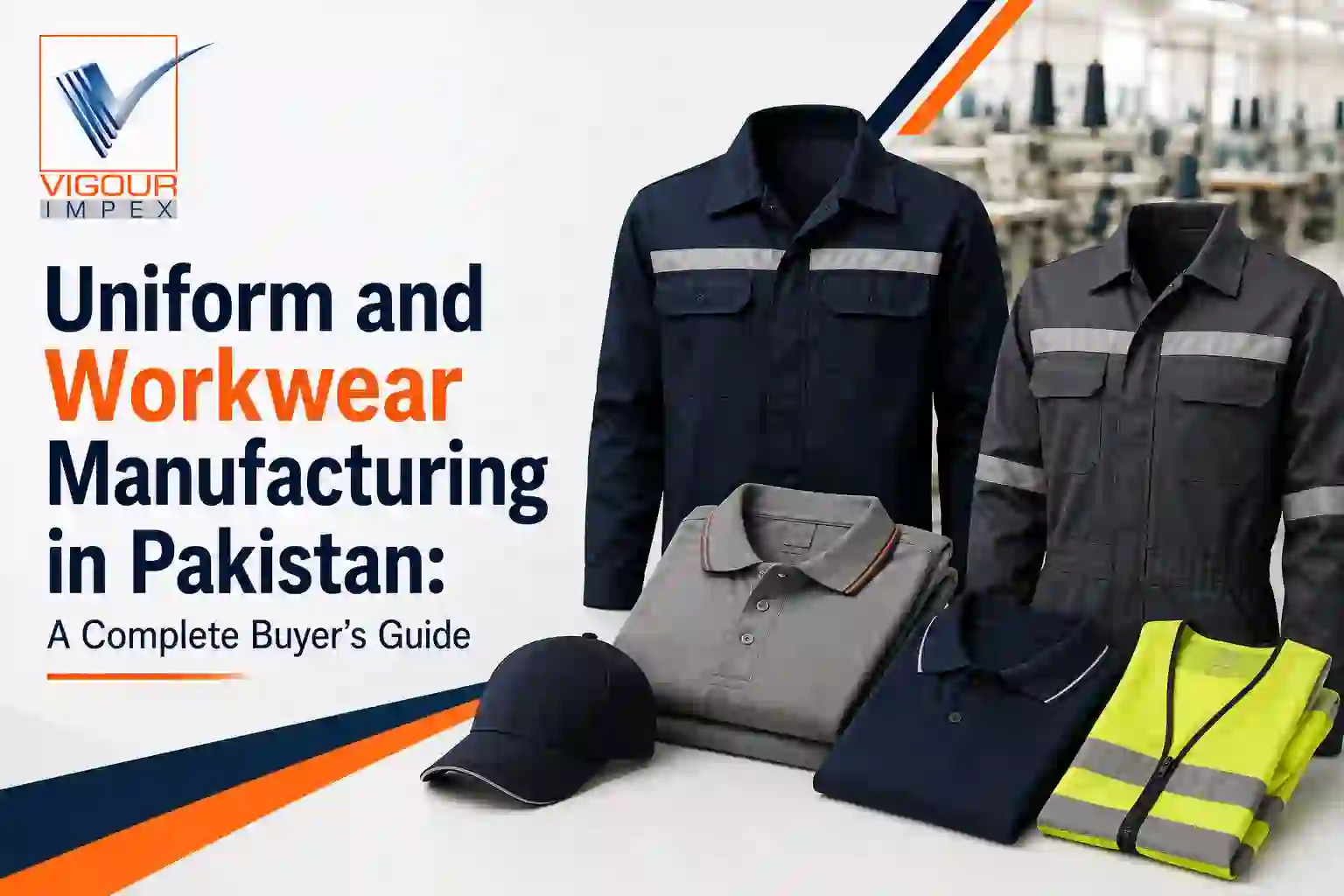
Pakistan has quietly become one of the world’s most reliable sourcing destinations for uniform and workwear manufacturing in pakistan. From corporate office attire to heavy-duty industrial coveralls, medical scrubs, school uniforms, and hospitality garments, the country’s textile infrastructure supports the entire production chain spinning, weaving, dyeing, cutting, sewing, and finishing often under one roof. For international buyers, brand owners, distributors, and procurement managers looking for cost-effective, high-quality uniform manufacturing in Pakistan, this guide walks through everything you need to know before placing your first order.
Why Pakistan Has Become a Global Hub for Uniform and Workwear Manufacturing
Pakistan is the world’s fourth-largest cotton producer and home to one of Asia’s most vertically integrated textile industries. This matters enormously for workwear manufacturers in Pakistan, because vertical integration means a single supply chain from raw cotton to finished garment can be managed domestically, cutting lead times and reducing the price volatility that comes with importing fabric.
Several factors make Pakistan particularly attractive for custom uniform manufacturing:
1. Raw Material Availability Because Pakistan grows and processes its own cotton, manufacturers have direct access to yarn and greige fabric without relying on imports. This keeps base material costs competitive compared to countries that must import cotton or polyester blends.
2. Skilled and Affordable Labor Cities like Karachi, Lahore, Faisalabad, and Sialkot have generations of stitching and garment-finishing expertise. Labor costs remain significantly lower than in China, and increasingly competitive even against Bangladesh and Vietnam, while skill levels for technical workwear (multi-panel cutting, reinforced stitching, reflective tape application) remain high.
3. Established Export Infrastructure Pakistan’s textile sector is export-oriented by design. Ports in Karachi, bonded warehouses, and established freight-forwarding relationships with Europe, the Middle East, and North America mean buyers aren’t dealing with a fledgling industry they’re working with decades of export experience.
4. Compliance and Certification Culture Many workwear factories in Pakistan are already certified for international buyers ISO 9001 (quality management), ISO 14001 (environmental management), OEKO-TEX Standard 100 (chemical safety), WRAP (ethical manufacturing), and SEDEX/SMETA social compliance audits are common among established exporters, particularly those already supplying European and American brands.
5. Currency Advantage The Pakistani Rupee’s valuation against the US Dollar and Euro gives international buyers strong purchasing power, often translating into 15–30% cost savings compared to sourcing from more expensive manufacturing hubs, without a proportional drop in quality when working with a vetted supplier.
Types of Uniforms and Workwear Produced in Pakistan
Pakistani manufacturers cover an unusually broad product range. Understanding these categories helps you communicate specifications clearly and find a factory with relevant experience.
Corporate and Office Uniforms
This includes formal shirts, blazers, trousers, skirts, and branded polo shirts for banks, airlines, retail chains, and hospitality groups. Manufacturers here focus on tailored fits, consistent sizing across large batch orders, and embroidery or heat-transfer branding.
Industrial and Safety Workwear
Coveralls, cargo pants, high-visibility (hi-vis) jackets, flame-resistant (FR) clothing, and reinforced work shirts fall into this category. These are used by oil and gas, construction, manufacturing, and logistics companies. Factories producing industrial workwear in Pakistan often work with treated fabrics flame retardant, anti-static, waterproof, or oil-repellent finishes and follow international safety standards such as EN ISO 11612 (heat and flame) or EN ISO 20471 (high visibility).
Medical and Healthcare Uniforms
Scrubs, lab coats, patient gowns, and disposable protective wear are a growing export category, especially since global supply chain disruptions pushed buyers to diversify away from single-country sourcing. Pakistani manufacturers producing medical scrubs and healthcare uniforms typically use antimicrobial and fluid-resistant fabric treatments to meet hospital procurement standards.
School Uniforms
Domestically, school uniform manufacturers in Pakistan serve a massive local market, but many also export blazers, pinafores, and PE kits to schools in the Middle East and Africa. This category demands strict size-range consistency (since orders span very young children through teenagers) and durable, easy-care fabrics.
Hospitality and Service Industry Uniforms
Hotels, restaurants, airlines, and catering companies source chef coats, aprons, front-desk attire, and housekeeping uniforms. These require a balance of professional appearance and functional comfort for long shifts.
Sportswear and Team Uniforms
Pakistan, particularly Sialkot, has an established reputation for sports apparel manufacturing a natural crossover into athletic team uniforms, training kits, and branded sportswear for clubs and academies worldwide.
PPE and Protective Clothing
Beyond standard workwear, some facilities also manufacture disposable and reusable PPE gowns, coveralls, and protective suits, a category that expanded rapidly and remains part of many factories’ regular production lines.
Common Fabrics Used in Pakistani Uniform Manufacturing
Fabric choice drives both cost and performance, and Pakistani mills produce an extensive range domestically:
- Cotton and Cotton-Poly Blends (Twill, Poplin, Drill): The workhorse fabrics for corporate shirts, school uniforms, and light industrial wear. Common blends like 65/35 poly-cotton balance breathability with durability.
- Ripstop and Canvas: Used for cargo pants, coveralls, and heavy-duty workwear requiring tear resistance.
- Polyester and Polyester-Viscose: Popular for blazers, formal trousers, and hospitality uniforms due to wrinkle resistance and color retention.
- Flame-Resistant (FR) Fabrics: Treated or inherent FR fabrics for oil, gas, and electrical utility workwear.
- High-Visibility Fabric with Reflective Tape: For road, construction, and warehouse safety garments, typically meeting ANSI/ISEA or EN ISO standards.
- Moisture-Wicking Performance Fabric: Increasingly used for sportswear and outdoor-facing industrial uniforms.
- Antimicrobial and Fluid-Repellent Textiles: For medical scrubs and healthcare-sector garments.
Buyers should specify GSM (grams per square meter), weave type, and any required finishes clearly in their tech pack, since fabric weight directly affects both cost and garment performance.
The Manufacturing Process: What Happens Behind the Scenes
Understanding the production workflow helps buyers set realistic timelines and ask informed questions during supplier vetting.
1. Sampling and Prototyping Before bulk production, reputable factories create a sample based on your tech pack or reference garment. This stage typically takes 7–15 days and is your opportunity to adjust fit, fabric, and construction details.
2. Fabric Sourcing and Cutting Once the sample is approved, fabric is sourced (or pulled from mill stock) and cut using either manual or computerized cutting systems. Larger factories use CAD-based marker planning to minimize fabric waste a detail worth asking about, since waste percentage affects your final price.
3. Stitching and Assembly Garments move through assembly lines where different operators handle specific tasks collar attachment, sleeve setting, pocket construction. Factories producing technical workwear will have specialized machinery for bar-tacking, reinforced seams, and reflective tape application.
4. Embellishment and Branding Embroidery, screen printing, heat-transfer logos, woven labels, and name tags are applied at this stage critical for corporate and branded uniform orders.
5. Quality Control and Finishing Multi-point inspection checks stitching, measurements, and fabric defects before pressing and folding. Ask your supplier about their AQL (Acceptable Quality Level) standard most reputable exporters work to AQL 2.5 or tighter for uniform orders.
6. Packing and Export Documentation Garments are packed per buyer specification (polybag, cartons, size-ratio packing) with export documentation prepared for customs clearance.
Key Manufacturing Hubs in Pakistan
- Karachi: The country’s largest industrial city, home to many export-oriented garment units, including workwear and corporate uniform specialists with strong port access.
- Lahore: A major hub for both textile production and finished garments, with many mid-to-large-scale uniform factories serving domestic and export markets.
- Faisalabad: Known as Pakistan’s “Manchester” for its textile weaving and processing base an important source for fabric used in uniform production nationwide.
- Sialkot: Globally recognized for sportswear, leather goods, and technical apparel manufacturing, with strong relevant experience for athletic and outdoor workwear.
- Multan and Gujranwala: Growing secondary hubs with competitive pricing, often used for cotton-based garment production.
How to Choose the Right Uniform Manufacturer in Pakistan
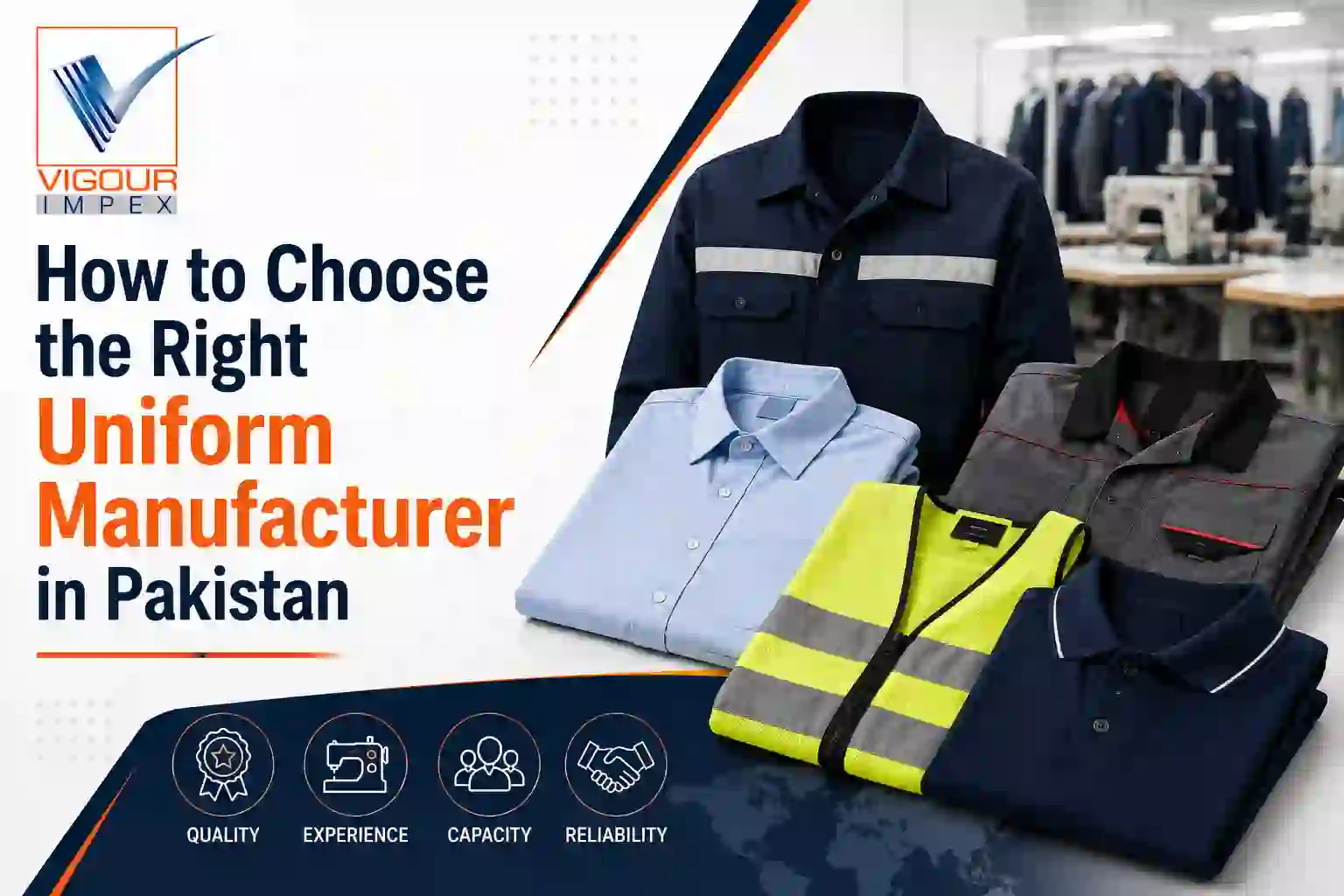
With hundreds of factories claiming export capability, vetting matters. Here’s a practical checklist:
Verify Export History Ask for references or case studies from buyers in your region. An established uniform exporter from Pakistan should be able to show shipping records, client testimonials, or third-party audit reports.
Check Certifications Confirm ISO, OEKO-TEX, WRAP, or SEDEX certification if compliance matters for your market many European and North American retailers require these as a baseline.
Assess Minimum Order Quantities (MOQs) MOQs vary widely from 300–500 pieces per style/color at smaller factories to several thousand at larger mills. Clarify this early, since it affects whether a factory suits a small pilot order or a large recurring contract.
Request Physical Samples Never approve bulk production based on photos alone. A physical pre-production sample lets you check fabric hand-feel, stitching quality, and fit before committing.
Evaluate Communication and Responsiveness Time zone differences and language can complicate sourcing. Factories with dedicated export/merchandising teams that respond promptly and understand tech packs are far easier to work with long-term.
Discuss Lead Times Honestly Typical production lead time for uniform orders ranges from 30–60 days after sample approval, depending on order size and fabric availability. Factor in shipping time (sea freight to Europe or the Middle East typically takes 3–5 weeks; to North America, longer).
Understand Payment Terms Common structures include 30% advance / 70% before shipment, or letters of credit for larger orders. Established factories are generally flexible but expect some upfront commitment, especially for first orders.
Customization Options Available
Pakistani manufacturers generally offer strong customization capability, which is a major draw for brand-conscious buyers:
- Custom color matching (Pantone-based)
- Logo embroidery, printing, or woven badges
- Size-range customization for specific demographics (children, petite, plus-size)
- Fabric weight and finish adjustments (e.g., water-repellent coating, anti-wrinkle treatment)
- Private labeling and branded packaging
- Design adaptation from existing reference garments or original tech packs
Pricing Factors to Understand
Uniform pricing from Pakistani manufacturers depends on several variables, and understanding them helps you evaluate quotations accurately:
- Fabric type and GSM: Heavier, treated, or performance fabrics cost more per meter.
- Order quantity: Larger orders reduce per-piece cost due to economies of scale in cutting and fabric buying.
- Complexity of construction: Multi-panel workwear with reinforced stitching costs more to produce than a basic polo shirt.
- Branding and embellishment: Embroidery, especially multi-color or large-format designs, adds cost versus simple screen printing.
- Certifications required: Factories with higher compliance standards may price slightly higher but reduce risk for regulated markets.
- Packing requirements: Individual polybagging, size-ratio cartons, or branded packaging add incremental cost.
As a general benchmark, basic cotton-blend corporate uniforms from Pakistan are typically priced competitively against most South Asian alternatives, while technical workwear (FR, hi-vis) sits closer to mid-range global pricing due to specialized fabric costs though exact figures depend heavily on specification and volume, so requesting a formal quotation against your tech pack is the only reliable way to budget.
Quality Standards and Compliance to Look For
For buyers in regulated industries healthcare, construction, oil and gas compliance isn’t optional. When evaluating a PPE or workwear manufacturer in Pakistan, check for:
- EN ISO 20471 for high-visibility clothing
- EN ISO 11612 for heat and flame protection
- EN 13034 for limited chemical protection
- ANSI/ISEA 107 for the US high-visibility market
- OEKO-TEX Standard 100 for chemical safety in fabrics, particularly relevant for healthcare and children’s school uniforms
- BSCI or SEDEX/SMETA for social and labor compliance audits
Reputable factories will readily share test reports and certificates rather than making verbal assurances treat hesitation here as a red flag.
Sustainability in Pakistani Uniform Manufacturing
Sustainability has become a growing differentiator. A number of Pakistani textile groups have invested in:
- Organic and recycled cotton programs
- Water-efficient dyeing and finishing technology
- Solar-powered production facilities
- GOTS (Global Organic Textile Standard) certified supply chains
- Recycled polyester (rPET) blends for workwear and sportswear lines
If sustainability credentials matter for your brand positioning or your end clients’ procurement requirements, ask suppliers directly for certification documents rather than assuming green claims are verified.
Working With a Sourcing Agent vs. Direct Factory Relationships
First-time buyers often weigh whether to work through a sourcing agent or approach factories directly.
Sourcing agents can be valuable for smaller buyers unfamiliar with the market they vet factories, handle quality inspections, and manage communication, usually for a commission or markup. This reduces risk but adds cost.
Direct factory relationships offer better margins and more control over the process but require more due diligence on your end factory visits (or third-party inspection services), sample verification, and clear contractual terms.
For recurring, large-volume orders, most experienced buyers eventually transition to direct relationships once trust is established, often starting with a sourcing agent or trial order to de-risk the first transaction.
Common Mistakes Buyers Make When Sourcing Uniforms from Pakistan
- Skipping the sample stage to save time, then facing costly rework on bulk orders.
- Underspecifying fabric details, leading to mismatched GSM or hand-feel versus expectations.
- Ignoring seasonal capacity constraints factories can get booked up during peak export seasons, extending lead times.
- Not confirming size charts against target markets, since regional sizing standards vary.
- Overlooking Incoterms clarity confirms whether pricing is FOB, CIF, or EXW to avoid unexpected freight costs.
- Choosing the cheapest quote without verifying capability extremely low pricing sometimes signals subcontracting to unverified units with inconsistent quality control.
Frequently Asked Questions
What is the typical minimum order quantity for custom uniforms from Pakistan?
MOQs generally range from 300 to 1,000 pieces per style/color depending on the factory size and product complexity, though some manufacturers accept smaller trial orders for new buyers.
How long does production take?
After sample approval, bulk production typically takes 30–60 days, plus shipping time depending on destination and freight method.
Can Pakistani manufacturers handle small pilot orders before committing to bulk?
Many mid-sized factories accommodate pilot orders, particularly if there’s a clear pathway to a larger recurring contract.
Is it possible to get fabric and design consultation support?
Yes, most export-oriented factories offer in-house merchandising teams that assist with fabric selection, costing, and design adaptation from tech packs or reference samples.
What payment methods are commonly accepted?
Bank transfers (T/T) with partial advance payment are most common; letters of credit are typical for larger, first-time transactions.
Final Thoughts
Pakistan’s combination of raw material self-sufficiency, skilled labor, established export infrastructure, and increasingly rigorous compliance culture makes it a strong option for buyers seeking reliable, cost-competitive uniform and workwear manufacturing. Success in this market comes down to careful supplier vetting, clear technical specifications, realistic timeline planning, and a willingness to invest in the sampling stage before committing to bulk production.
Whether you’re sourcing corporate apparel, industrial safety wear, medical scrubs, or school uniforms, working with an established, certified manufacturer and building the relationship gradually through trial orders will set the foundation for a dependable, long-term sourcing partnership in one of the world’s most experienced textile-producing nations.