



USA retail brands evaluate home textiles suppliers on six core criteria: product quality, compliance certifications, competitive pricing, private label capability, sustainability credentials, and supply chain reliability.
Meeting one or two of these criteria is not enough. Major American textile companies and retail chains require all six to be consistently demonstrated before they commit to long-term sourcing relationships.
This guide breaks down each requirement in detail, so manufacturers and sourcing partners know exactly what it takes to qualify. Whether you supply home textiles, fabric, or garments, these are the standards you need to meet.
Most suppliers lose US retail contracts over gaps they never knew existed. See how Vigour Impex closes those gaps.
Why Is the U.S. Home Textile Market So Competitive?
The U.S. home textile market is one of the largest and most demanding retail categories in the world. American textile companies and retail chains source globally, which means Pakistani and Asian manufacturers compete directly with each other on price, quality, and service.
Three trends are reshaping buyer expectations right now. Private label growth is accelerating as major retailers cut branded inventory and replace it with their own labels. Consumer demand is shifting toward sustainable, premium, and value-driven products simultaneously. And online retail is raising the bar on packaging quality and delivery speed.
Suppliers who understand these shifts and build their operations around them win contracts. Those who do not get replaced. Follow Vigour Impex Market Watch for regular updates on U.S. retail sourcing trends.
What Product Quality Standards Do U.S. Buyers Expect?
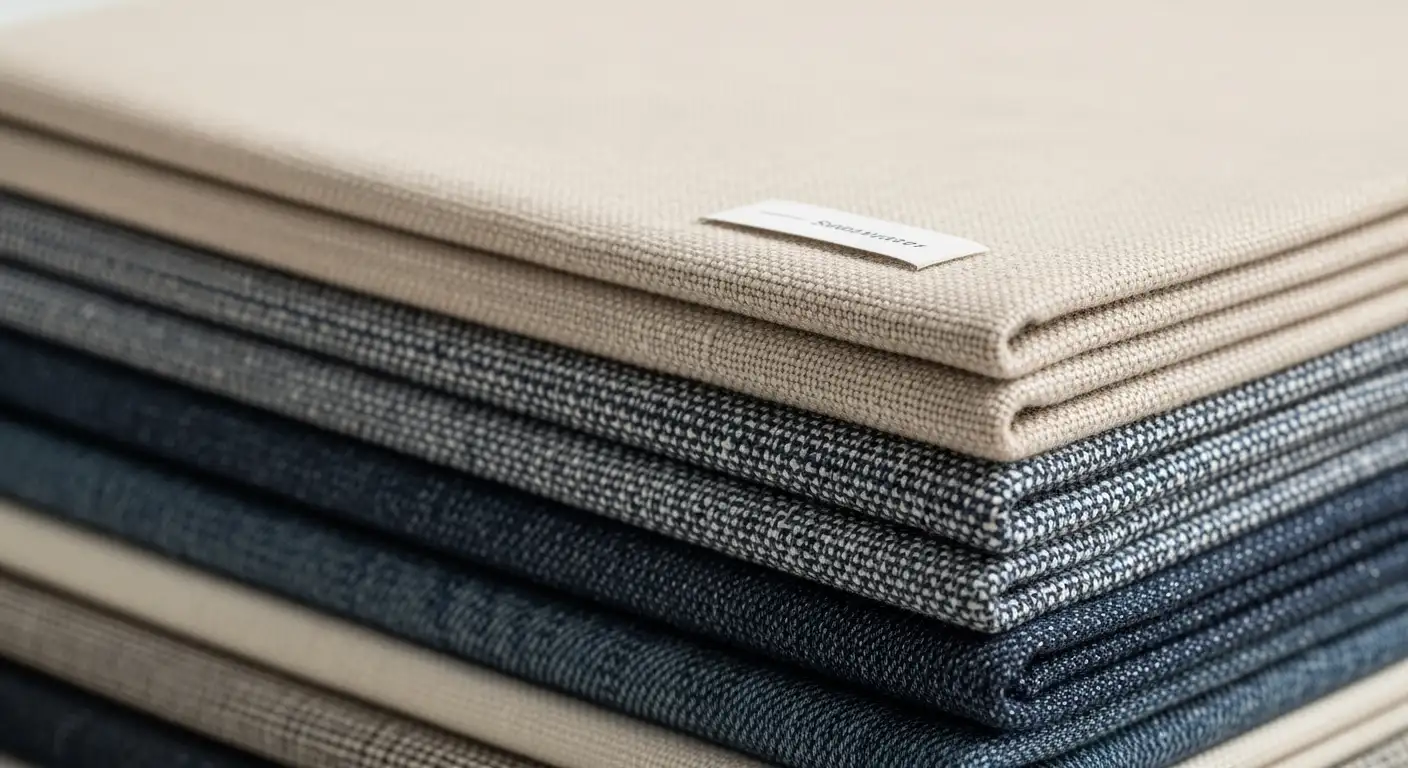
U.S. retail buyers evaluate product quality against precise, measurable benchmarks. Subjective claims about quality carry no weight. Buyers need documented test results.
Quick Answer: U.S. retail buyers require fabric GSM consistency, colorfastness ratings of Grade 4 or above, shrinkage below 3 percent, and stitching density standards that meet ASTM testing protocols.
Fabric composition and GSM tolerance must fall within a 5 percent variance of the declared specification. A bedsheet quoted at 400 GSM cannot arrive at 370 GSM without triggering a rejection. Stitching quality is tested for seam strength and stitch density per inch, with ASTM D1683 being a common benchmark for apparel and home textile seam performance.
Colorfastness to washing, rubbing, and light exposure must meet minimum ratings. For most U.S. retail buyers, Grade 4 or above on the ISO colorfastness scale is the standard. Shrinkage after washing must stay below 3 percent for most woven home textile categories.
Packaging is also evaluated. Retail-ready packaging requires poly-bagging, folding consistency, and barcode placement that matches the buyer’s warehouse scanning systems. Vigour Impex quality control services cover all of these checkpoints before goods are shipped.
Which Compliance Certifications Do U.S. Retail Brands Require?
Compliance is the single most common reason suppliers are disqualified during vendor onboarding. U.S. retail buyers operate in a heavily regulated consumer market, and they transfer compliance risk directly to their suppliers through contractual requirements.
CPSIA compliance is legally mandatory for products sold to children. OEKO-TEX Standard 100 is the most widely requested chemical safety certification. GOTS is required for organic textile claims. Social compliance audits (BSCI, WRAP, or Sedex) are standard for factory approval.
• CPSIA (Consumer Product Safety Improvement Act): Mandatory for textiles sold in the children’s category. Requires third-party testing and a General Certificate of Conformity (GCC).
• OEKO-TEX Standard 100: Verifies that textile products are free from harmful substances. Required by most major U.S. retail chains before products are placed on shelves.
• GOTS (Global Organic Textile Standard): Required for any product making organic fiber claims. Covers both fiber content and processing chemicals.
• Social Compliance Audits: BSCI, WRAP, or Sedex audits are used by American retail buyers to verify ethical manufacturing, fair wages and safe working conditions at the factory level.
Vigour Impex works exclusively with certified and audit-compliant suppliers. See our sustainability and compliance framework.
How Should Suppliers Structure Pricing for U.S. Retail Buyers?
U.S. retail buyers think in landed cost, not factory price. A competitive FOB quote means nothing if freight, duties, and compliance costs push the landed cost above the buyer’s margin threshold.
Quick Answer: Target a landed cost that leaves the retailer a minimum 50 to 60 percent gross margin. For value retail, the margin expectation is even higher. Always quote FOB first, then offer CIF as an option for smaller buyers.
| Term | FOB (Free on Board) | CIF (Cost, Insurance, Freight) |
| Who pays freight? | Buyer arranges and pays | Supplier includes it in price |
| Price transparency | Higher — easier to compare | Lower — costs are bundled |
| Risk transfer | At port of origin | At destination port |
| Preferred by | Large retail chains | Smaller importers |
Most large U.S. retail chains prefer FOB pricing because it gives them control over freight costs and allows easy supplier comparison. Retail markup expectations vary by channel. Mass market retailers like Walmart expect margins above 55 percent. Mid-tier department stores target 50 to 55 percent. Specialty retailers may accept 45 to 50 percent for premium or certified products.
Bulk discount structures should be tiered clearly. Buyers want to know the price at 500 units, 1000 units, and 5000 units. Presenting this upfront signals professionalism and makes the negotiation faster.
See how Vigour Impex structures competitive pricing for U.S. retail buyers while protecting supplier margins. Explore our sourcing services.
How Do MOQ Flexibility and Scalability Affect Supplier Selection?
Minimum order quantities are one of the first filters U.S. retail buyers apply when evaluating new suppliers. A supplier with rigid, high MOQs will lose business to one who can offer flexibility on trial orders.
Most U.S. retail buyers want trial orders of 200 to 500 units per SKU before committing to full production runs. Suppliers who can accommodate this conversion at a significantly higher rate.
Flexibility on MOQs signals operational confidence. It tells the buyer that you can manage small runs efficiently and that you are not dependent on volume to cover your cost structure. The sampling process also matters. Samples must arrive within 7 to 10 business days, match the approved specifications exactly, and be accompanied by a lab test report.
Trial order performance is the most important conversion point in the supplier qualification process. Deliver the trial on time, at specification, with correct documentation, and the buyer will almost always scale. Miss any of these, and the relationship ends.
What Private Label and Customization Capabilities Do U.S. Brands Need?
Private label is the fastest-growing segment in U.S. home textile retail. Retailers want their own brand on the product, their own packaging, and their own sizing options. Suppliers who offer end-to-end customization win this business.
Quick Answer: U.S. private label buyers need custom packaging design, retail barcode compliance (GS1 standard), custom size and color development, and design iteration support with fast turnaround.
• Custom Packaging: Must meet the retailer’s planogram specifications. Packaging dimensions, materials, and print quality are all evaluated.
• Labeling and Barcoding: GS1 barcodes must be accurate and scannable. Care labels must comply with FTC fiber content and care labeling rules.
• Custom Sizes and Colors: Buyers want color matching to Pantone standards and size flexibility beyond standard dimensions.
• Design Development Support: Buyers value suppliers who can suggest design improvements, offer trend-aligned options, and turn around revised samples quickly.
Vigour Impex supports full private label development for home textiles and garments. Contact us to discuss your program requirements.
How Important Is Sustainability to U.S. Retail Buyers in 2025?
Sustainability is no longer optional for suppliers targeting major U.S. retail chains. Environmental, Social, and Governance (ESG) reporting is now a vendor onboarding requirement at brands like Target, Walmart, and Bed Bath and Beyond successor retailers.
Quick Answer: Buyers require organic cotton sourcing, recycled material options, water-saving dyeing processes, and documented ESG metrics. Suppliers without sustainability credentials are being phased out of major retail programs.
• Organic Cotton: Must be GOTS certified. Claims without certification are not accepted.
• Recycled Materials: Recycled polyester fill and recycled fiber blends are increasingly specified by U.S. buyers, particularly for bedding and cushion categories.
• Water-Saving Dyeing: Buyers ask about water consumption per kg of fabric dyed. Low-impact dye processes and waterless dyeing technologies are viewed favorably.
• ESG Reporting: Factory-level carbon footprint data, water usage reporting, and worker welfare metrics are being requested during vendor qualification.
Read about Vigour Impex’s sustainability framework and how we support buyers with verified ethical sourcing from Pakistan.
What Logistics and Lead Time Standards Do U.S. Retailers Expect?
U.S. retail buyers operate on strict inventory planning cycles. A supplier who misses a delivery window does not just cause a logistical problem. They cause a lost sales event, a markdown, and often a contract review.
Quick Answer: Standard lead time expectations for U.S. retail orders are 60 to 90 days from order confirmation. On-time delivery performance below 95 percent is considered unacceptable by most major buyers.
• Lead Time Expectations: 60 to 90 days from PO confirmation for standard production. Expedited programs at 45 days are possible but must be agreed in advance.
• Warehouse Labeling Standards: Carton labels must include GS1 barcodes, PO number, SKU, color, size, and quantity. Non-compliant labeling triggers chargebacks.
• On-Time Delivery: Buyers track OTD percentage by supplier. Consistent performance above 95 percent is the threshold for preferred vendor status.
• EDI Integration: Large U.S. retail chains require Electronic Data Interchange (EDI) compliance for purchase orders, advance ship notices, and invoicing. Suppliers without EDI capability are excluded from certain retail programs.
Vigour Impex manages complete shipping and logistics documentation for all export orders. See how our shipping support works.
Why Do U.S. Buyers Prioritize Communication and Transparency?

Communication quality is a genuine differentiator in supplier selection. U.S. buyers manage dozens of supplier relationships simultaneously. Suppliers who are slow to respond, vague on production status, or inconsistent in reporting create operational risk.
Response time expectations are specific. Most U.S. retail procurement teams expect replies within 24 hours during business days. Production update reports should be sent weekly during active orders, with photos confirming production status.
Quality inspection reports must be shared proactively, not only when the buyer asks. Pre-production, inline, and final inspection reports with photographic evidence give buyers the confidence to approve shipments without flying to the factory.
How Do Suppliers Build Long-Term Retail Partnerships with U.S. Brands?
Long-term retail partnerships are built on three things: consistency, cost stability, and an active innovation pipeline. U.S. buyers do not want to re-qualify suppliers every season. They want reliable partners they can grow with.
Consistency means delivering the same quality on the tenth order as on the first. Cost stability means not surprising buyers with price increases without advance notice and justification. An innovation pipeline means regularly presenting new product ideas, materials, and designs that align with where the market is heading.
Vigour Impex has been building long-term sourcing partnerships with international buyers for over 30 years. Talk to our team about becoming a preferred sourcing partner.
Bottom Line: What Does It Take to Qualify as a U.S. Home Textile Supplier?
U.S. retail brands are not looking for the cheapest supplier. They are looking for the most reliable one. A supplier who consistently delivers compliant, quality products, on time, with clear communication, at a price that protects retail margins will always win the business.
The qualification checklist covers:
✓ Documented quality test results (GSM, colorfastness, shrinkage)
✓ Active OEKO-TEX, GOTS, or CPSIA certifications relevant to your category
✓ FOB pricing with clear bulk tier structure
✓ MOQ flexibility for trial orders
✓ Private label and custom packaging capability
✓ ESG credentials and sustainability documentation
✓ On-time delivery rate above 95 percent
✓ EDI capability for major retail programs
✓ 24-hour response time commitment
Ready to qualify your home textile products for the U.S. retail market? Contact Vigour Impex for a sourcing assessment.
FAQs: What USA Retail Brands Look for in Home Textiles Suppliers
What certifications do U.S. retail brands require for home textiles?
OEKO-TEX Standard 100 is the most widely required certification for chemical safety. GOTS is required for organic claims. CPSIA compliance is mandatory for children’s products. Social compliance audits (BSCI, WRAP, Sedex) are required for factory approval. See how Vigour Impex manages certification compliance.
What is the typical MOQ for U.S. retail home textile orders?
Most U.S. retail buyers start with trial orders of 200 to 500 units per SKU. Full production runs typically start at 1000 to 3000 units depending on the product category and retail channel.
Do U.S. retail buyers prefer FOB or CIF pricing?
Large retail chains prefer FOB pricing because it gives them control over freight and makes supplier price comparison straightforward. Smaller importers and private label brands often prefer CIF as it simplifies their logistics management.
How important is private label capability for U.S. retail sourcing?
Very important. Private label is the fastest-growing segment in U.S. home textile retail. Suppliers who offer custom packaging, GS1 barcode compliance, Pantone color matching, and design support win significantly more business. Explore Vigour Impex home textile sourcing.
What is a realistic lead time for U.S. home textile orders?
Standard lead times run 60 to 90 days from purchase order confirmation. Suppliers who can consistently hit this window while maintaining quality have a measurable competitive advantage in the U.S. market.
How do U.S. retailers evaluate new home textile suppliers?
New supplier evaluation typically includes a factory audit, sample review, compliance documentation check, and a trial order. Suppliers who pass all four stages are added to the approved vendor list. Contact Vigour Impex to start the qualification process.